
Last updated November 15, 2026
 Wrought iron
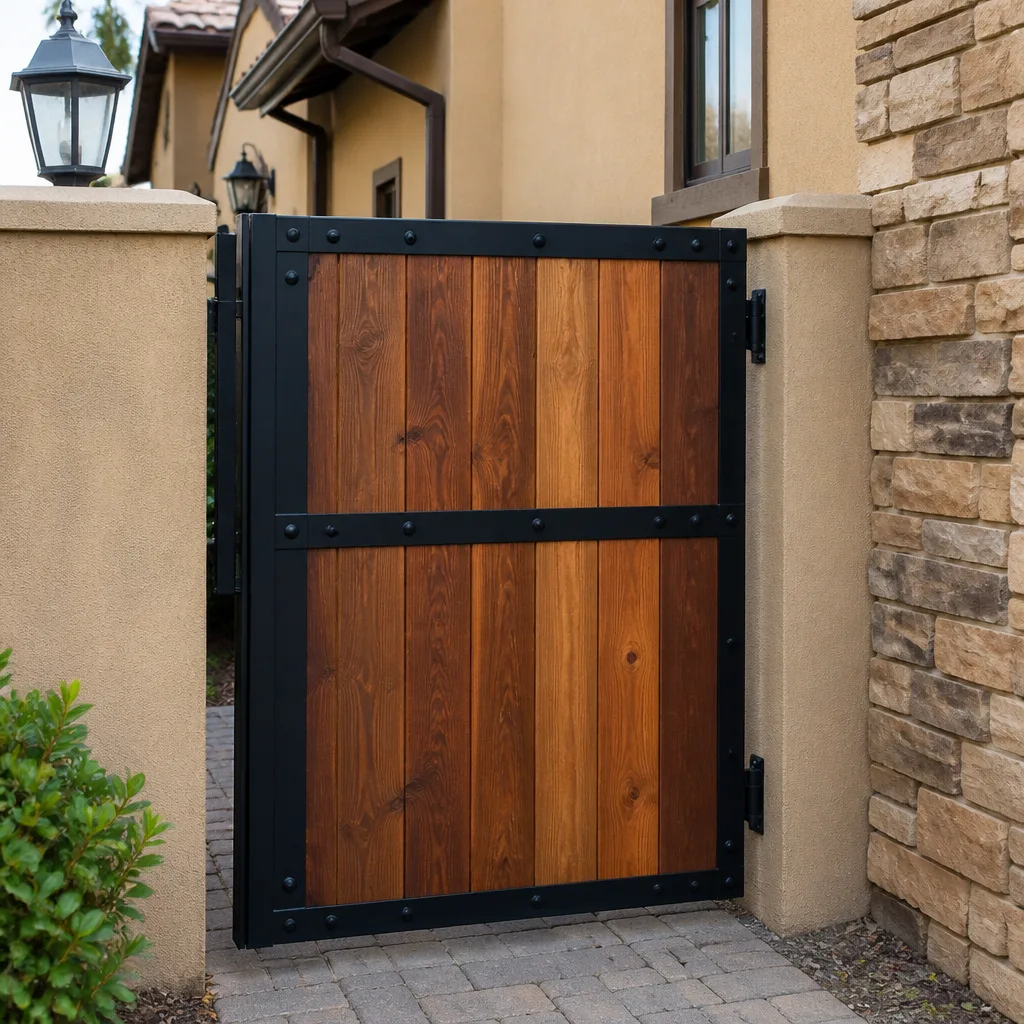 Wood & steel frame
 Farm & ranch
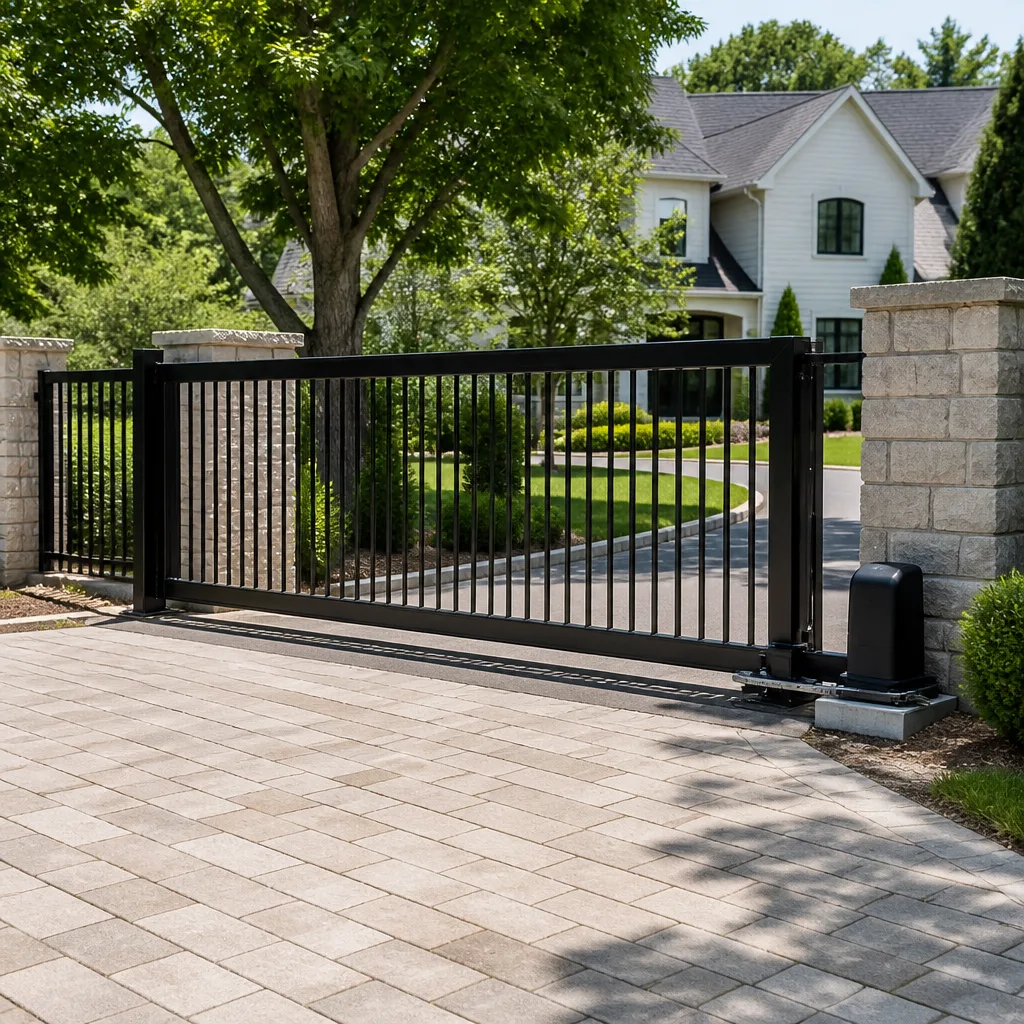 Sliding driveway gates
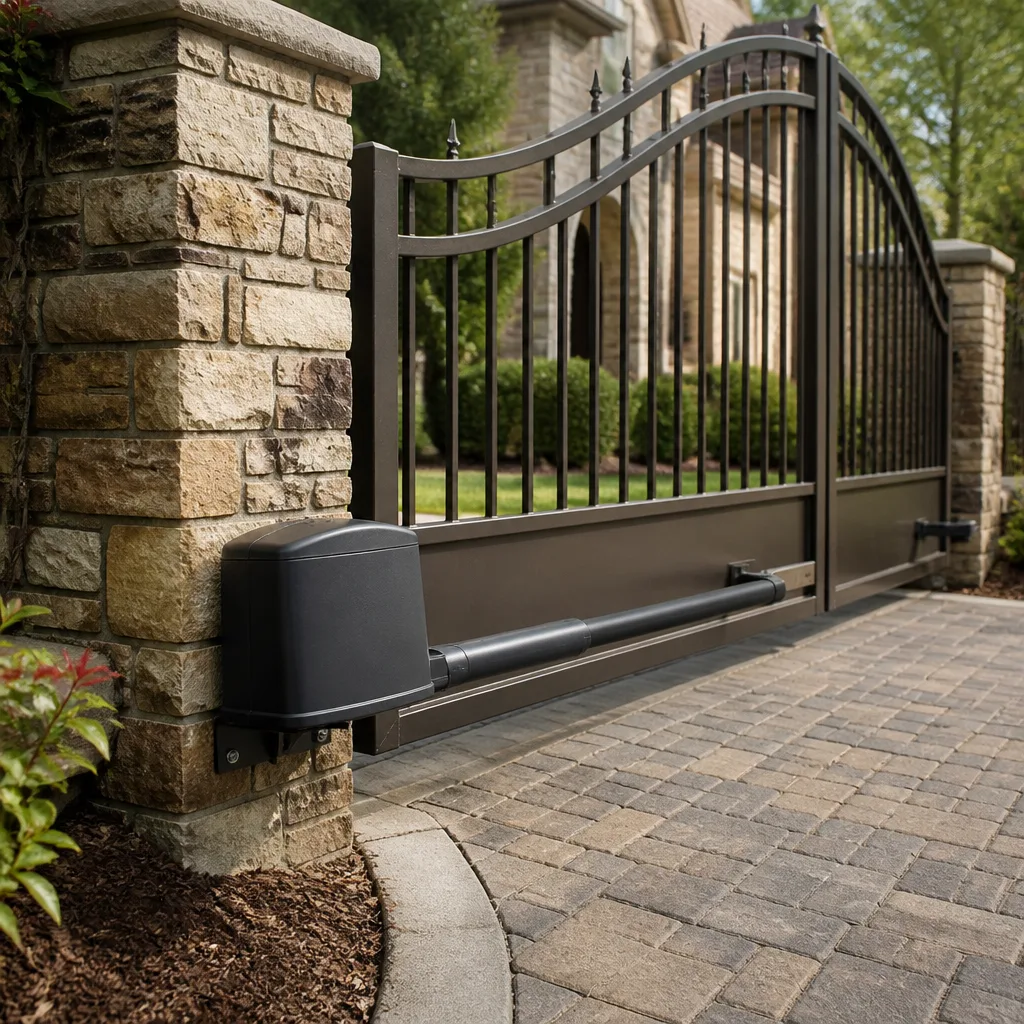 LiftMaster operators
Free on-site gate assessment - hinges, posts, and your LiftMaster or Nice gate operator checked before anything is quoted
The assessment is free and the quote is the invoice.
Get your free estimateGate Repair Maintenance Schedule: What to Do and When
Most gate maintenance advice assumes a mild, steady climate that doesn’t exist here. In Cape Coral, heat, humidity, and heavy summer rain compress the timeline manufacturers print in the manual, so a gate that follows a generic “inspect twice a year” routine is quietly falling behind. Heat stresses control boards and batteries. Humidity works on lubricant and metal. Storm season adds wind load and debris. What you’ll find below is a schedule built around how gates actually age in Cape Coral, with the tasks, timing, and products that hold up.
Quick Answer
In Cape Coral, inspect your automated gate monthly and service it on a schedule that shifts with the season: lubrication and battery checks in the hot, wet months (roughly May through October) and hardware, track, and safety-device checks in the drier stretch (November through April). Commercial gates that cycle dozens of times a day need those checks far more often than a residential driveway gate that cycles a few times a week. Document each visit in a log so warranty and liability questions have an answer.
Styles & brands we work with
- Wrought iron
- Wood & steel frame
- Farm & ranch
- Sliding driveway gates
- LiftMaster operators
Table of Contents
- Why the Manufacturer’s Schedule Falls Short in Cape Coral
- The Cape Coral Seasonal Calendar, Month by Month
- Lubrication: What Holds Up and What Makes It Worse
- Battery Backup Maintenance for Southwest Florida Heat
- Commercial vs. Residential: Two Different Schedules
- Safety Devices and Operator Checks
- How to Keep a Maintenance Log That Protects You
- Common Mistakes to Avoid
Why the Manufacturer’s Schedule Falls Short in Cape Coral
Every operator manual ships with a maintenance table built for an average climate, often one with cooler, drier summers than ours. When a gate is exposed to Cape Coral’s heat and humidity, the schedule that comes in the box is a starting point, not a plan. Following it exactly tends to make owners reactive: something fails, they call for repair, the repair fixes the symptom, and the same part wears out again because the underlying check was never on the calendar.
The parts that suffer most are the ones without much margin. Control boards sit in an enclosure that heats up through the day. Backup batteries live in that same heat. Lubricant on the track and hinges holds grit when it’s soft and thick, and thins out when the temperature climbs. Metal hardware develops surface wear faster when moisture stays on it. None of this means a gate in Cape Coral is doomed. It means the working interval is shorter, and the tasks have to be ordered around the seasons rather than spread evenly across the year.
We see this play out across residential driveways and commercial entrances alike, from a Mighty Mule on a single-family lot to a FAAC barrier arm at a multi-family complex. The brand rarely changes the principle. What changes is how hard the gate works. A gate in a quiet Cape Coral neighborhood cycling a few times a day gives you more warning before something fails. A gate at a busy entrance cycling constantly gives you almost none.
The fix is a schedule that treats the wet season and the dry season differently, checks the high-stress components on a shorter clock, and records what was done. That’s what the rest of this guide sets out.
The Cape Coral Seasonal Calendar, Month by Month
A calendar built for Cape Coral splits the year into a hot, wet stretch, a drier stretch, and a storm-prep window before the heaviest rain. The tasks below are grouped that way, so you’re working on the parts most likely to fail in each period rather than running the same checklist every time. Adjust the exact dates to your gate’s age and how often it cycles.
Wet Season (roughly May through October)
- Start of the season (May): Clean and re-lubricate the track, rollers, hinges, and chain. Check the battery and note its voltage in your log. Test the safety edges and photo-eye sensors and clear any debris that’s collected around the posts.
- Mid-season (July): Open the operator enclosure and check for moisture, insect nests, and heat stress on the control board. Confirm the manual release works. Re-check the battery, since summer heat is when a weak cell starts to slip.
- Late season (September): Inspect hinges and mounting hardware for looseness after months of heat and rain. Re-lubricate moving parts. Look at the gate panel and frame for sag or wear at the pivots or rollers.
Storm Prep Window (before the heaviest weather)
- Walk the full travel path of the gate and clear debris, growth, and anything that could jam it while it’s moving.
- Confirm the manual release works so the gate can be opened by hand if the power is out.
- Tighten fasteners and check post and hinge integrity, so wind load isn’t working against loose hardware.
- Test the safety reverse and photo-eye function, since a gate that jams during a storm needs to stop, not force.
Dry Season (roughly November through April)
- This is the window for the heavier inspection: the control board, wiring connections, the operator’s internal components, and access-control devices.
- Service the battery again, since a cell that seemed fine in cool weather can be near the end of its life.
- Inspect and clean the track and rollers, and check the gate’s alignment and level.
- Review your log and plan any repair the year’s wear has flagged before the next wet season starts.
If you’d rather have a technician run this calendar with you, our gate repair appointments cover both repair and scheduled checks, and a free estimate tells you whether anything needs replacing.
Lubrication: What Holds Up and What Makes It Worse
The single most common maintenance mistake we see is the wrong lubricant. Thin petroleum-based sprays feel like they’ve done the job because the gate moves smoothly for a week or two. In Cape Coral’s humidity, they also stay tacky and collect grit, and that grit becomes a grinding paste on the track and rollers. You get a gate that’s easier to move and wearing out faster at the same time.
What you want is a lubricant that stays where it’s put, doesn’t attract and hold dust, and keeps working through heat and moisture. The rough categories worth knowing:
- Silicone-based lubricants: good for tracks, hinges, and moving contact points; they stay slick without gathering grit and don’t swell most seals.
- Dry-film (PTFE or similar) lubricants: leave a thin, non-sticky film that’s useful on exposed hardware and the track where dust is a problem.
- Lithium or white grease: appropriate for certain gears and high-load points, applied sparingly, and only where the manual calls for it.
- General-purpose oil and WD-40 as a long-term plan: fine for freeing a stuck bolt, not for keeping a gate lubricated; it thins out and collects grit.
Apply lightly and wipe off the excess. A thick coat in this climate just holds more grit. Re-lubricate on the wet-season rhythm above rather than waiting for the gate to start squealing, because the squeal is a symptom, not the start of the problem. We work on LiftMaster and BFT systems regularly, and the lubricant advice is the same regardless of the operator: match the product to the part, and don’t overapply.
Battery Backup Maintenance for Southwest Florida Heat
A backup battery that tests fine in the cooler months can fail quietly when the heat climbs. Lead-acid batteries, the type most gate operators use, lose capacity faster in sustained heat. A cell that reads healthy in February may be at the edge of its useful life by late summer, and you won’t know until the power goes out and the gate won’t move.
That silent failure is why battery checks deserve their own place on the calendar rather than a glance once a year. What to do:
- Check voltage and record it in your log at each wet-season visit, so you can see the trend rather than a single reading.
- Look at the terminals for corrosion and clean and tighten as needed.
- Run a real test by tripping the power and confirming the gate operates on battery, ideally a couple of times a year.
- Replace on a schedule tied to observed decline, not just when it fails; if the trend is downward through the hot months, plan the replacement before it leaves you with a stuck gate.
If your operator has a battery-status indicator, treat it as a hint rather than an answer, since indicators vary in how early they warn. The log is what tells you the truth. When a battery or control board does need replacing, an electric gate repair visit is the right call, because these are the components that a general handyman won’t touch.
Commercial vs. Residential: Two Different Schedules
A gate that cycles 50 times a day is doing roughly the work of a residential gate over a much longer stretch, just in a single day. That changes the maintenance interval completely. A property manager or HOA operator running a busy entrance can’t use the same calendar as a homeowner whose driveway gate opens when they come and go.
Here’s how the two schedules differ in practice:
- Cycles drive the interval. For a high-traffic commercial gate, monthly inspection of the operator and moving parts is closer to right; for a quiet residential driveway, a seasonal check may be enough, with the wet-season tasks done a little more often.
- Wear points differ. Commercial gates wear rollers, tracks, and hinges faster, and the operator runs hot and long, so control-board and battery checks come up more often. Residential gates stress the battery and the sensors more than the mechanical parts.
- Access control adds a layer. Keypads, card readers, and loop detectors on commercial entrances need their own checks; a malfunctioning loop can leave a gate stuck open or closed regardless of the operator’s condition.
- Downtime costs more. A commercial gate that fails blocks residents, deliveries, and emergency access, so a scheduled check is cheaper than an unplanned repair.
We handle both sides under the same roof, from a residential Ghost Controls driveway operator to a DoorKing or FAAC commercial system, so the schedule can be matched to the equipment and the traffic it actually sees. If you’re not sure which tier your gate falls into, count the cycles for a week; that number settles it.
Safety Devices and Operator Checks
A gate has no springs, but it does have real hazards: the operator’s wiring and power, heavy panels that can crush, and slide gates that can come off the track. That’s why the safety devices aren’t optional add-ons on the schedule. They’re the part of the maintenance that keeps a gate from becoming dangerous.
What to check, and what to leave to a technician:
- Photo-eye and safety-edge devices: test that the gate reverses or stops when something is in its path. Clear anything blocking the sensors and check they’re aligned.
- Manual release: confirm it works and that you know how to use it, so the gate can be opened by hand if the power fails.
- Wiring and connections: look for damage or loose connections, but don’t open or work on the electrical side yourself. The power feed and the operator’s wiring should be handled by a trained technician.
- Gate panel and track: a heavy slide gate that has come loose or is off its track can fall or crush. If you see sag, wheel wear, or the gate binding, stop using it and get it looked at.
- Operator behavior: if the gate reverses at random, stops partway, or runs past its limits, that’s a control issue, not a minor annoyance.
Safety checks are the one part of the schedule we’d never tell a homeowner to do beyond the simple test-and-observe level. If a device doesn’t respond as it should, a Cape Coral Gate Repair visit is the safe next step.
How to Keep a Maintenance Log That Protects You
A maintenance log is worth more than the memory of the person who did the last check. If a warranty claim or a liability question ever comes up, a dated record of what was inspected, what was found, and what was repaired is the evidence that the gate was cared for and that a known issue was addressed. Without it, the story is just two people’s recollections.
Keep it simple and consistent. A running log with these columns covers almost anything:
- Date and cycle count (an estimate is fine) so the interval makes sense later.
- Task performed – lubrication, battery check, safety test, operator inspection, or repair.
- Findings – what you observed, including anything that looked fine.
- Parts replaced or ordered, with the brand and what the technician used.
- Who did the work – the technician, the company, or you.
For a commercial entrance, add the access-control devices checked and any cycle counts from the operator. Store the log with the operator’s manual and any warranty paperwork. When you call for service, the log lets the technician skip the guesswork and go straight to the history. That’s a real advantage with brand-specific systems, where knowing what’s already been done saves time.
Common Mistakes to Avoid
- Following the manual’s schedule exactly. The table in the book was written for an average climate; in Cape Coral, the heat and humidity mean the interval has to be shorter, especially in the wet season.
- Using a petroleum spray as long-term lubrication. It thins and collects grit, and over a Cape Coral summer it turns the track and rollers into a grinding surface. Use a product that stays put.
- Skipping the battery because it “seemed fine.” A battery can pass a glance in cool weather and fail in the heat. Test it under load and track the voltage over time.
- Treating a commercial gate like a residential one. A gate cycling dozens of times a day needs a much closer interval, and the access-control side needs its own checks.
- Not testing safety devices. Photo-eyes and safety edges are only useful if they work; test them on the schedule, not after a near miss.
- Doing electrical work yourself. The power feed and operator wiring belong to a trained technician; opening that enclosure is how people get hurt.
- Keeping no records. Without a log, warranty and liability questions become a matter of memory, and the gate’s history is lost.
See the difference
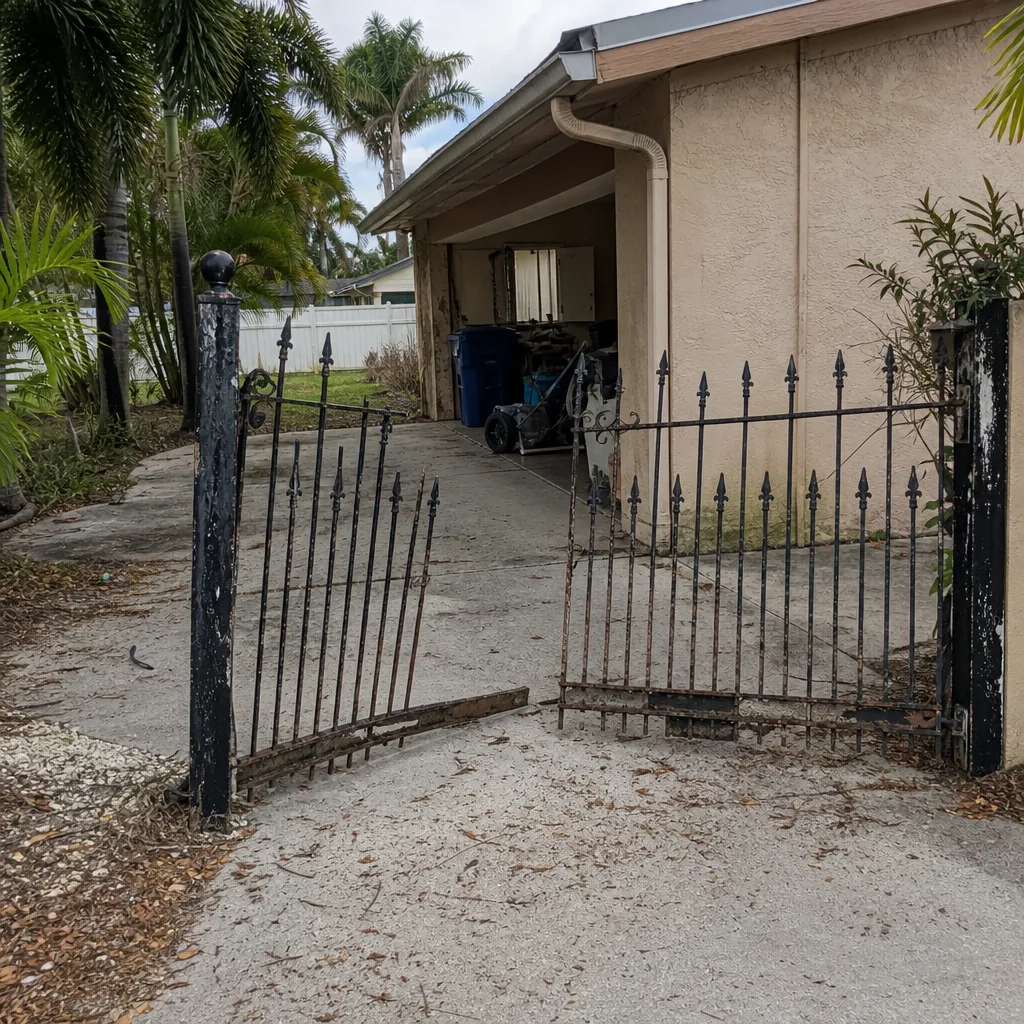 Before
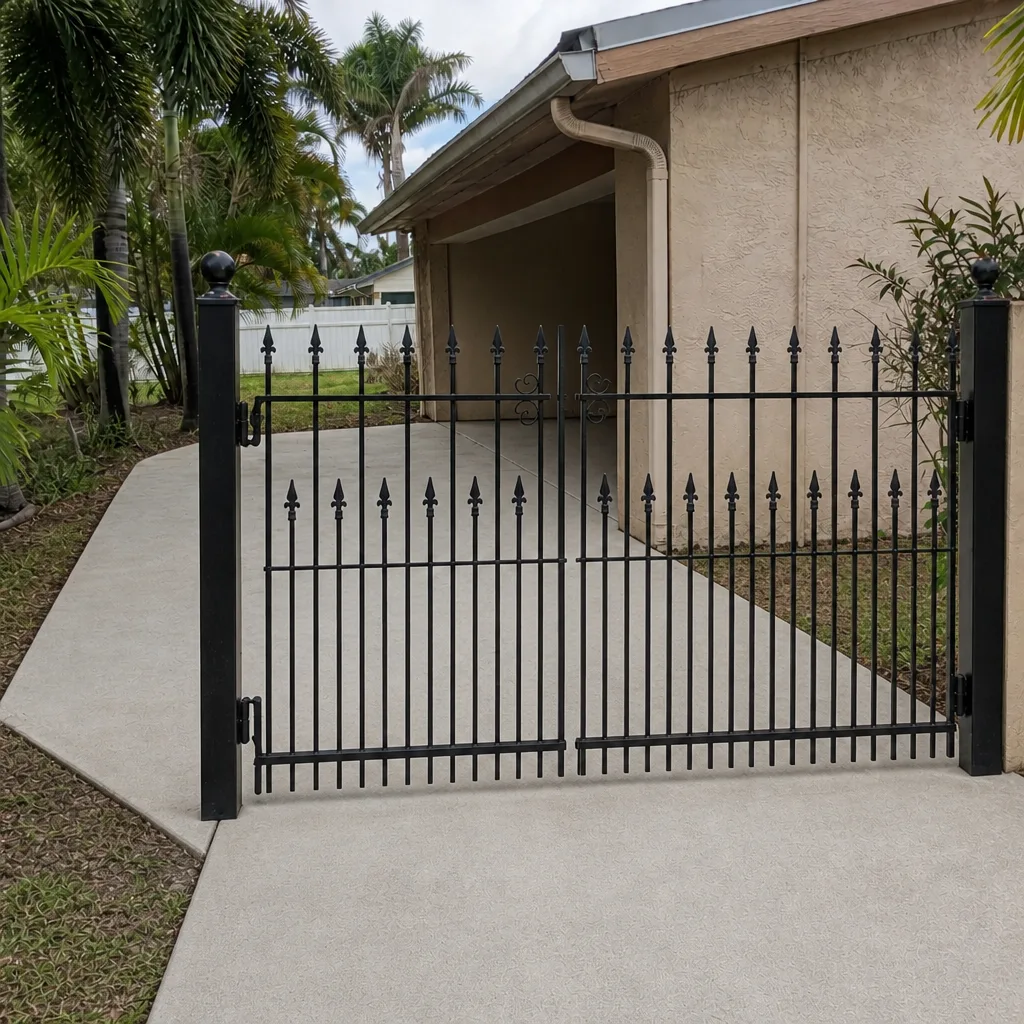 After
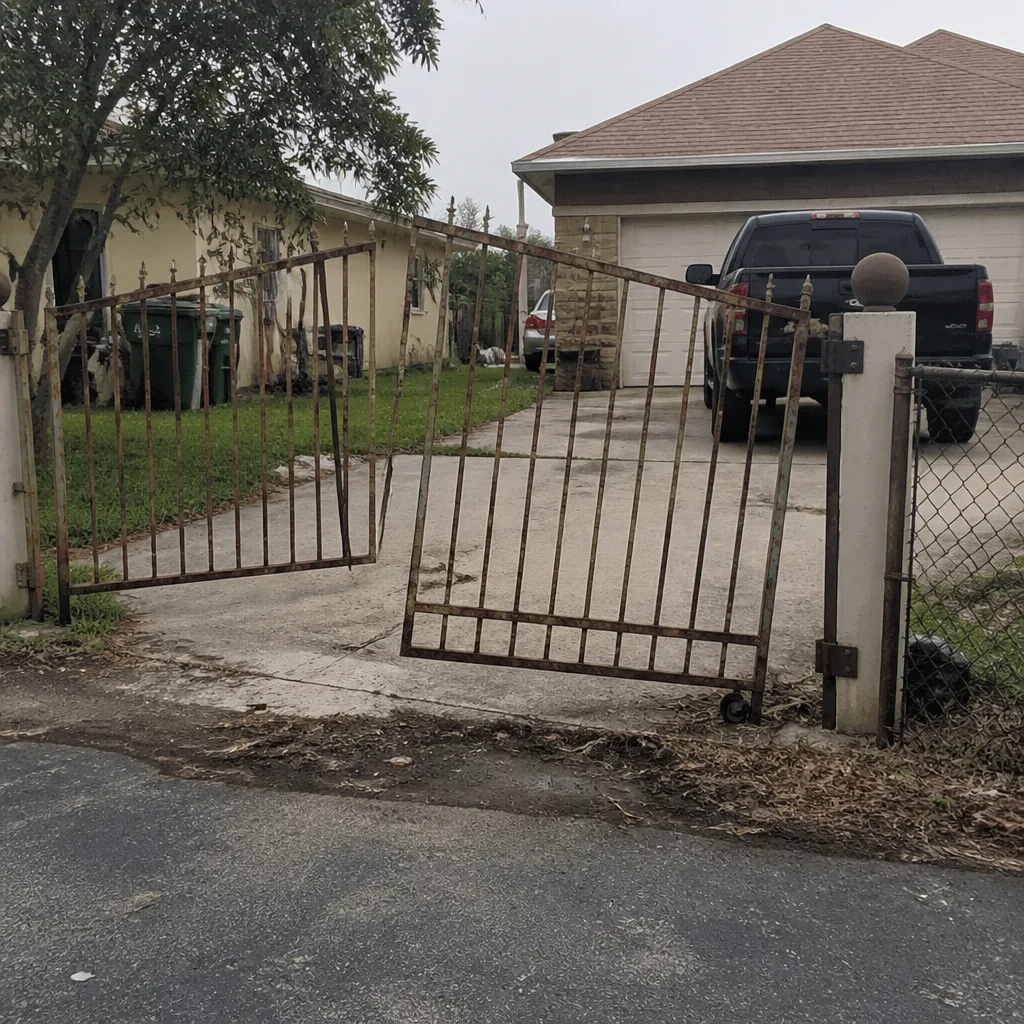 Before
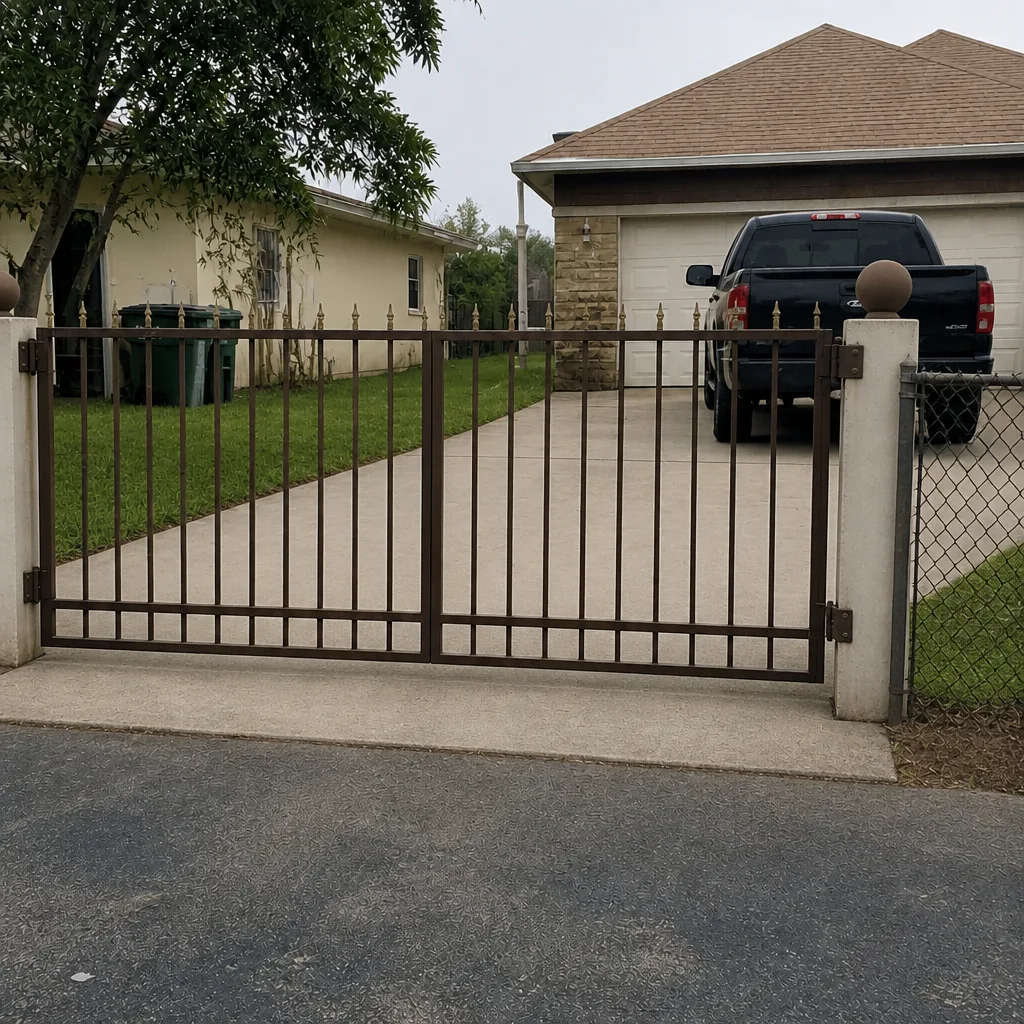 After
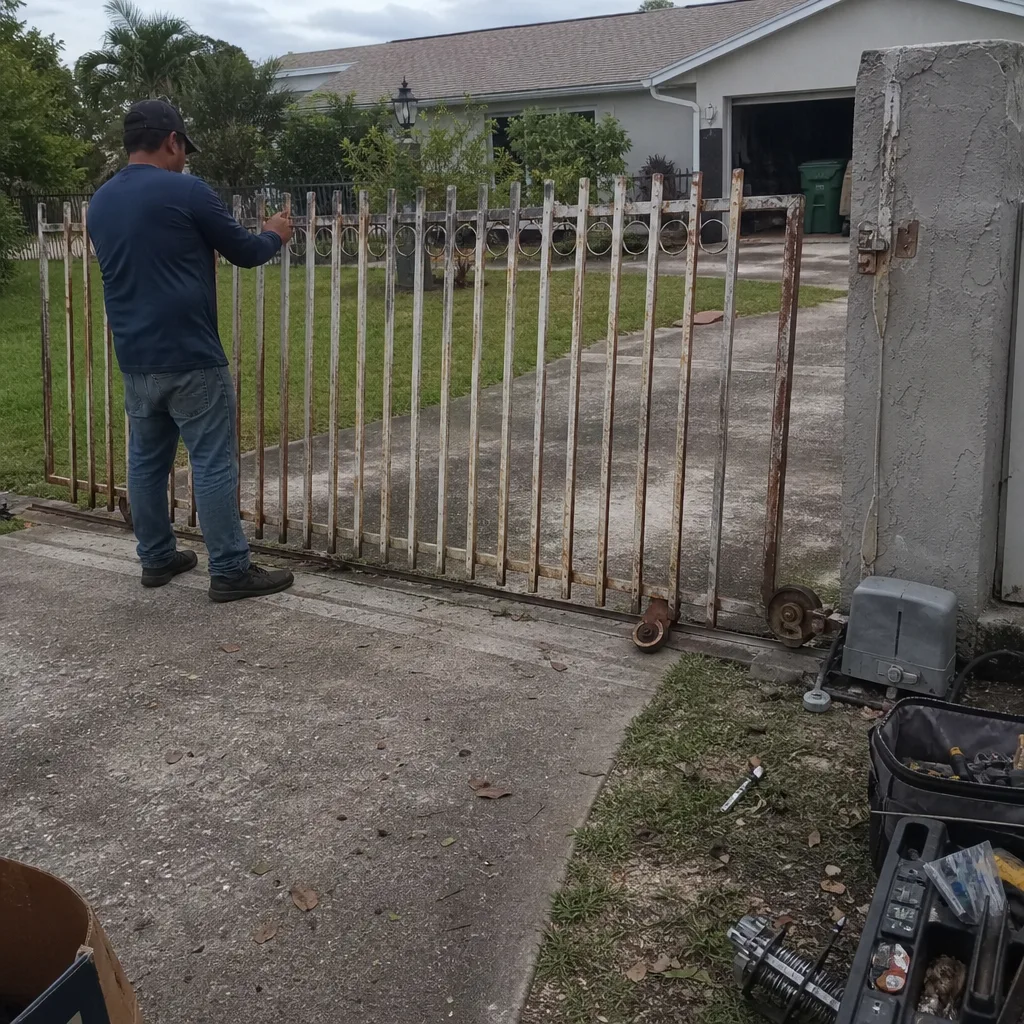 Before
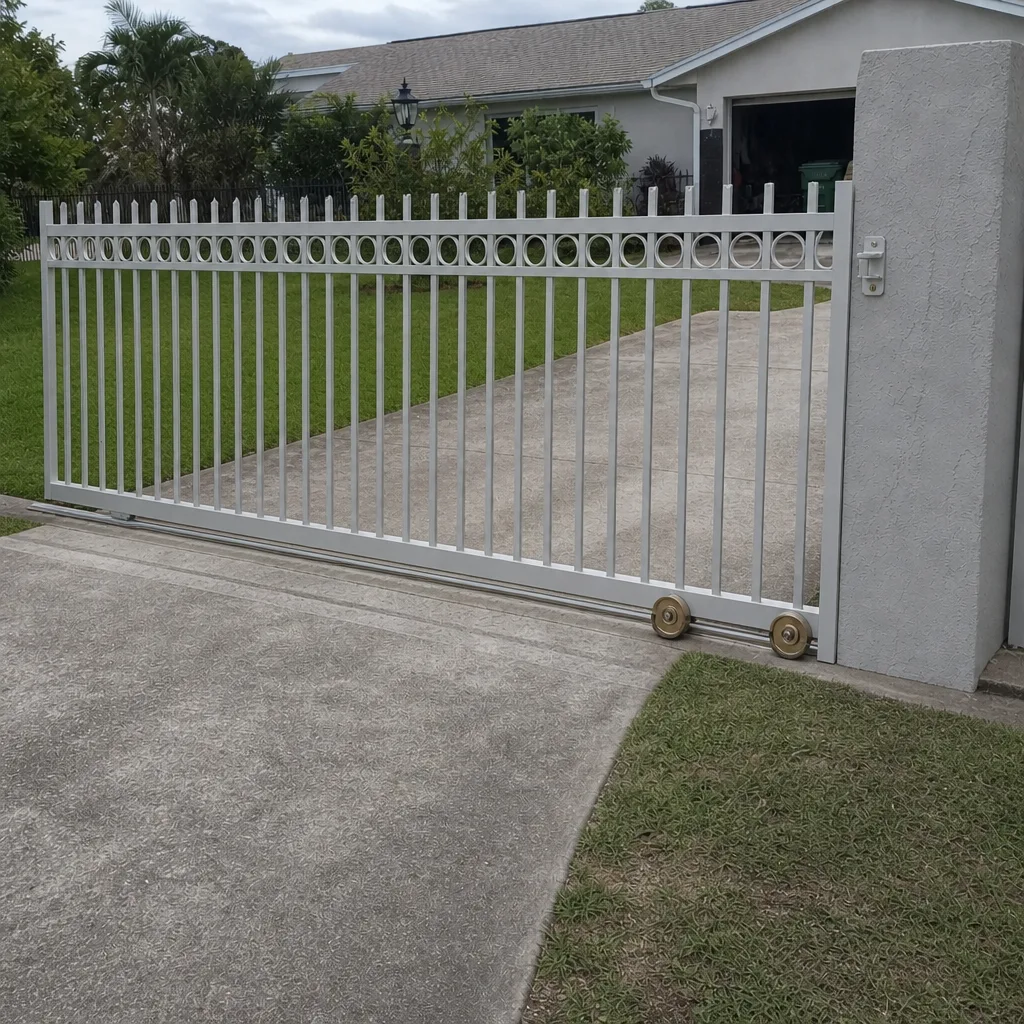 After
When to Call a Professional
Some issues are a maintenance task; others are a repair. Call a technician when the gate won’t open or close reliably, when it reverses or stops at random, when the operator runs but the gate doesn’t move, when a safety device doesn’t respond, or when you see the gate sagging, off its track, or the panel loose. Wiring, control-board faults, and access-control problems also need a trained hand, not a general fix. If you’re not sure, a free estimate sorts it out. Cape Coral Gate Repair offers free estimates in Cape Coral. Call (855) 687-9638. We answer 24/7. Fast dispatch from 7am to 7pm, Sunday through Friday. Our technicians have up to 10 years of experience, and the written estimate sets the price before any work starts.
Frequently Asked Questions
A residential gate in Cape Coral should get a monthly check of the basics and a fuller service each season, with the lubrication and battery tasks repeated more often through the hot, wet months. A commercial gate that cycles dozens of times a day needs closer to a monthly inspection of the operator and moving parts. The cycle count, not the calendar alone, tells you which schedule fits.
A silicone-based or dry-film lubricant holds up best in Florida humidity because it stays slick without collecting grit. Petroleum sprays and general-purpose oil feel good for a week and then attract dust, which wears the track and rollers faster. Apply lightly and wipe off the excess.
Heat is the main reason. Backup batteries lose capacity faster in sustained high temperatures, so a cell that looks healthy in cooler weather can slip quietly by late summer. That’s why we recommend a load test and a voltage log rather than a single glance, plus a planned replacement when the trend turns down.
You can handle the safe parts: cleaning and lubricating the track and hinges, testing the safety devices, checking the battery voltage, and keeping the log. Leave the electrical side, the control board, and the operator’s internal components to a technician. If a safety device or the wiring looks wrong, stop and call.
We work on equipment from nine brands – LiftMaster, FAAC, BFT, Linear, Viking, Ghost Controls, DoorKing, Elite, and Mighty Mule – spanning residential driveway operators and heavy-duty commercial systems. We’re independent, experienced with each, and we service both electric and automated systems and manual hardware.
If the gate moves as it should and the safety devices respond, it likely needs maintenance. If it won’t open or close reliably, reverses at random, or the panel sags or leaves the track, that’s a repair. In Cape Coral, a free estimate is the fastest way to know which. Call (855) 687-9638 to set one up.
The Bottom Line
The right schedule for a gate in Cape Coral isn’t the one in the manual. It’s a working calendar that shortens the interval through the hot, wet season, checks the battery under load, uses a lubricant that holds up in humidity, and matches the frequency to how hard the gate actually cycles. Add a simple log, test the safety devices every time, and leave the electrical side to a technician. Do that and you’re maintaining the gate proactively instead of reacting to failures. If you’d rather have it run on schedule, we can help.
If your gate is due for a check, Cape Coral Gate Repair is ready to take the call. We repair and install electric and automated gates, work on the nine brands listed above, and give free estimates with the price agreed before any work starts. Call (855) 687-9638 for a free estimate. We answer 24/7. Fast dispatch from 7am to 7pm, Sunday through Friday.
Written by the team at Cape Coral Gate Repair.