
Last updated November 15, 2026
 Wrought iron
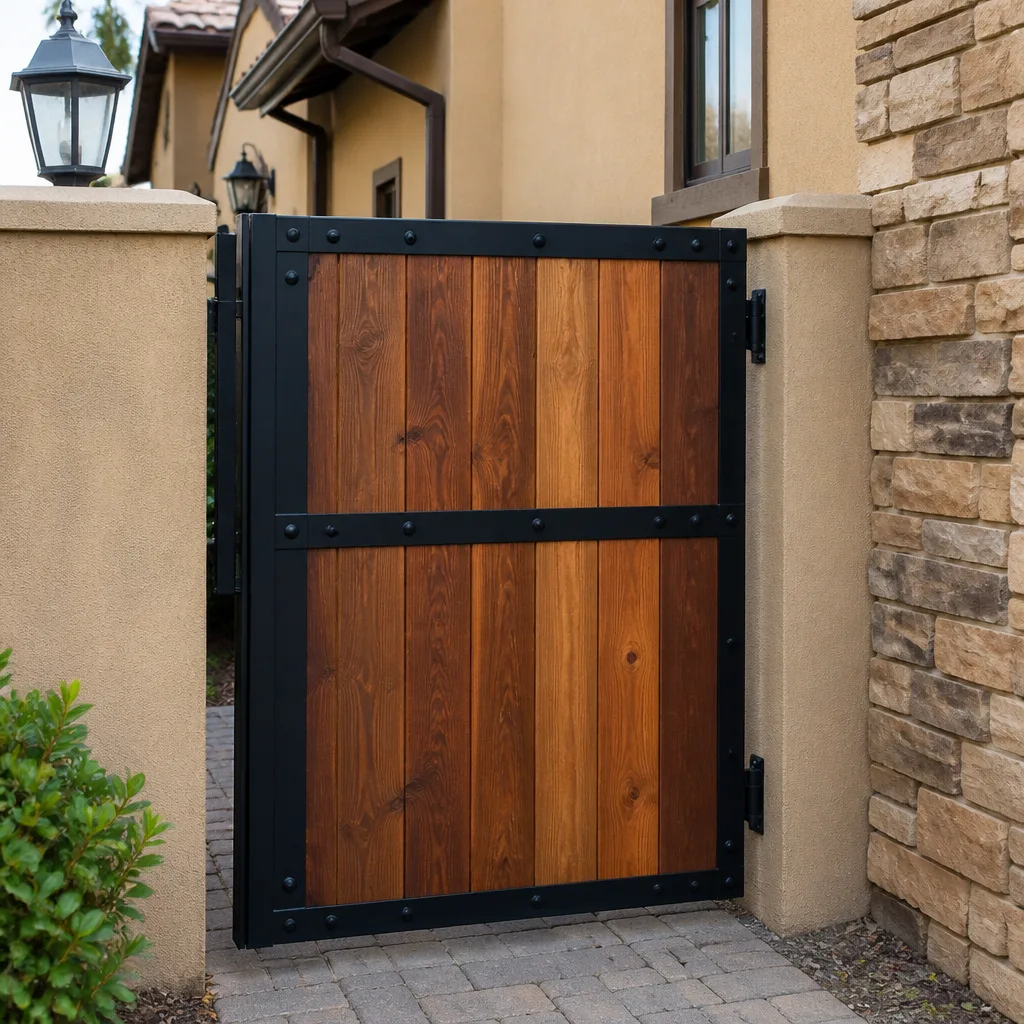 Wood & steel frame
 Farm & ranch
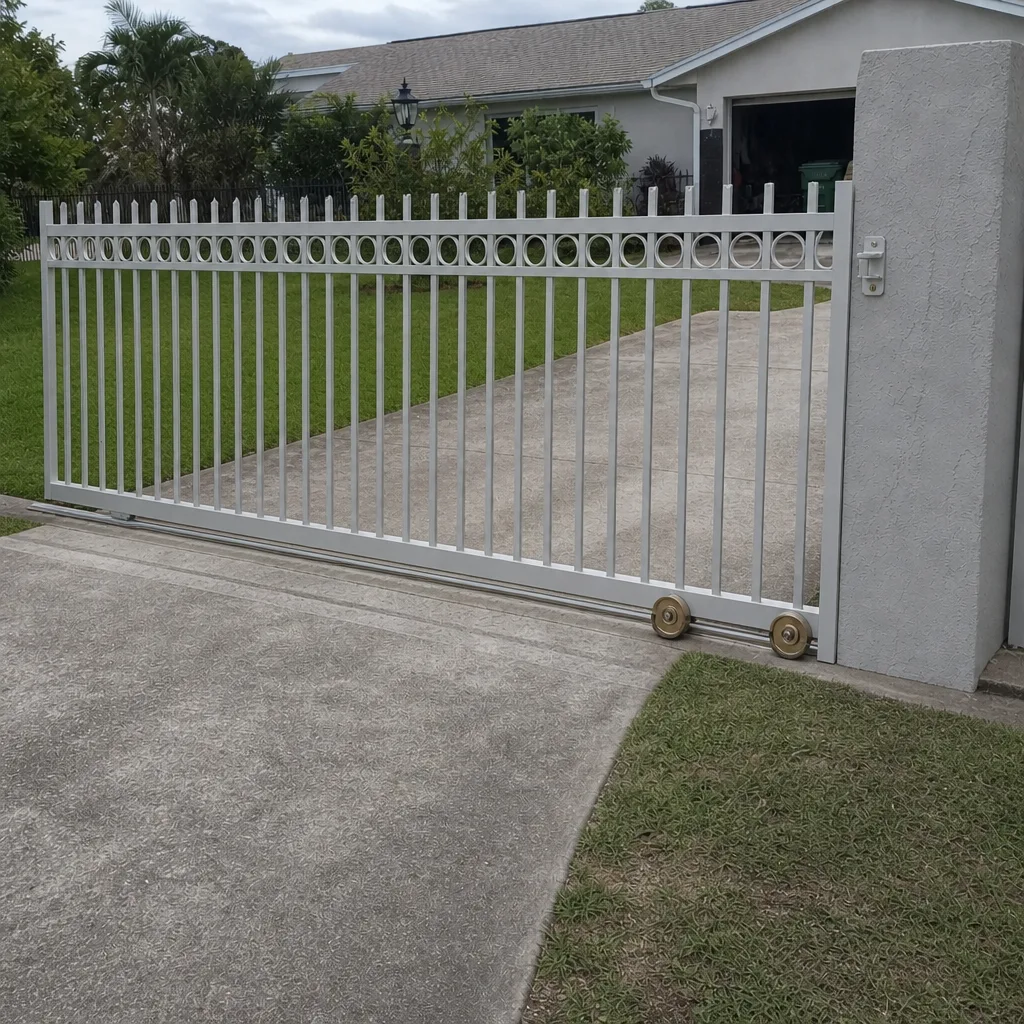
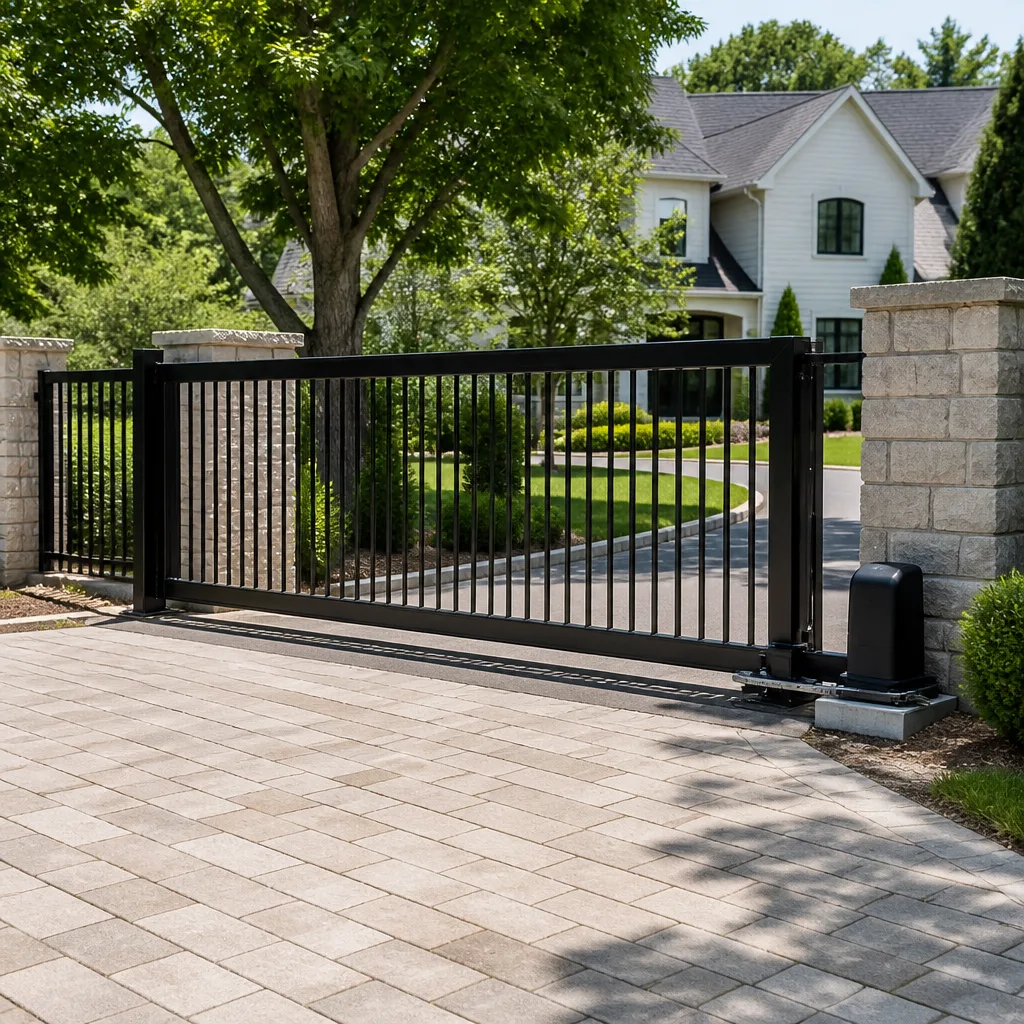 Sliding driveway gates
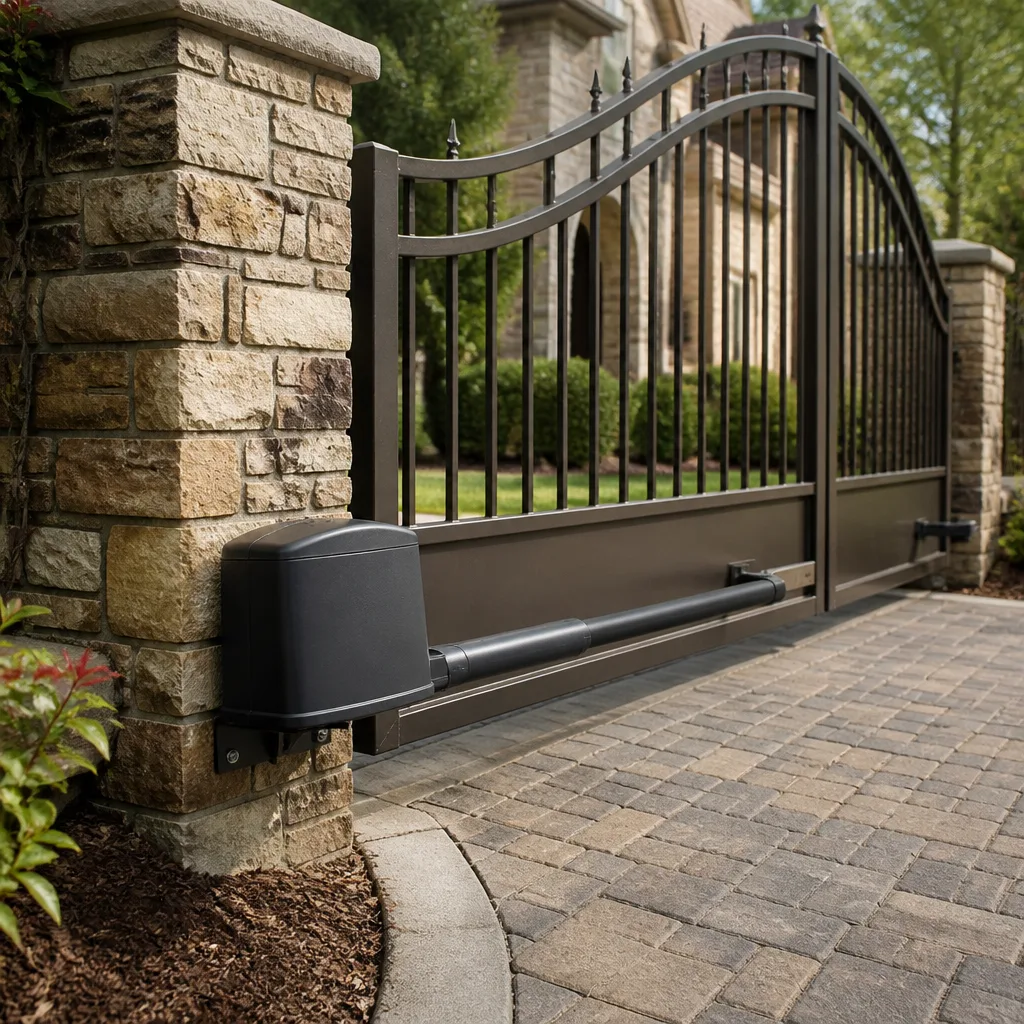 LiftMaster operators
Free on-site gate assessment - hinges, posts, and your LiftMaster or Nice gate operator checked before anything is quoted
The assessment is free and the quote is the invoice.
Get your free estimateGate Repair Emergency Preparedness Guide for Cape Coral Homes
Most gate failures we see in Cape Coral aren’t sudden. They build up quietly over months, then announce themselves at the worst possible moment: a windstorm rolling in, a family trying to leave, or a delivery that never reaches the door. Homeowners tend to think about gate repair only after the operator quits, but the real shift happens before that. A gate is a piece of safety equipment with a motor attached, and like any safety equipment it deserves a plan. This guide covers how to build that plan: where the manual release lives on the brands we work on, what to do when a gate is stuck open, how to cut power safely after flooding, what belongs in a gate emergency kit, and which failures can wait until morning. You’ll finish knowing exactly what to do the next time your gate stops cooperating in Cape Coral.
Quick Answer
A gate emergency plan for a Cape Coral home means three things: knowing where your manual release is and how to use it, keeping a small kit with the release key, a spare remote and your operator manual, and knowing which failures are urgent versus which can wait for a scheduled appointment. Every automated gate sold for residential and commercial use is required to have a manual release, so the knowledge is already within reach – most homeowners just never test it. What separates a five-minute recovery from a security crisis is preparation done well before the storm.
Styles & brands we work with
- Wrought iron
- Wood & steel frame
- Farm & ranch
- Sliding driveway gates
- LiftMaster operators
Table of Contents
- Why Gate Emergencies in Cape Coral Are Predictable
- How to Find and Use the Manual Release on Common Gate Operators
- What to Do When a Gate Is Stuck Open After a Storm
- How to Disconnect a Gate Operator From Power After Flooding
- Building a Gate Emergency Kit
- When a Gate Call Can Wait and When It Cannot
- Seasonal Gate Prep Before a Storm Forms
- Why Brand Knowledge Matters in a Repair
Why Gate Emergencies in Cape Coral Are Predictable
Cape Coral sits in a region where summer thunderstorms arrive fast and hurricane season stretches across half the year. That means the same event – a storm knocking out power or flooding a low-lying lot – repeats almost annually. A gate stuck open isn’t an accident of bad luck. It’s an outcome you can anticipate, and that means you can plan around it.
Two failure modes dominate here. The first is a gate stuck open because the operator lost power and the homeowner never learned to engage the manual release. The second is a gate stuck closed in the middle of an evacuation or a medical emergency, which turns a routine repair into a genuine safety problem. Both are avoidable. Neither requires a technician standing by during the storm – they require five minutes of preparation on a calm day.
Think about what your gate actually does. It controls who reaches your front door, it secures a pool cage or a side yard with equipment in it, and it closes off a driveway that leads to your vehicles. When it fails, you lose not one function but three at the same time. In our experience, the homes that weather a storm well are the ones where somebody in the household has physically operated the manual release at least once. Reading about it isn’t the same.
What nearly every automated gate has in common
- A manual release mechanism, required by code on automated gates for exactly this reason
- An operator with a control board, a motor, and a battery or capacitor that can fail independently
- Safety devices – photo eyes, edge sensors, or a loop detector – that can stop a gate mid-travel
- A power feed that can be interrupted by the homeowner safely at the breaker
- A housing that traps heat, which is worth remembering in a Florida summer
For background on how gate repair works on a standard residential or commercial system, the main gate repair page covers the diagnostic sequence our technicians follow when they arrive. That’s useful to read before you need it.
How to Find and Use the Manual Release on Common Gate Operators
Finding the manual release is the single most valuable thing a gate owner can learn. Every automated gate sold for residential or commercial use is designed to be manually operable, and the release is almost always accessible from outside the housing. The question is where, and whether it needs a key.
On most residential slide and swing operators, the release falls into one of three designs. On industry-standard residential openers, it’s a lever under a small hinged cover, often locked with a key that matches the one in your remote kit. On commercial-grade operators, it’s frequently a hand crank or a released chain loop that lets you pull the gate open by hand. On lighter residential models, it’s a simple keyed knob or a lever on the side of the operator that disengages the motor.
Step-by-step: disengaging a gate operator by hand
- Find the release housing. Look on the motor housing itself, usually on the side facing the driveway. Most are under a small flap or a keyed cover.
- Check for a key. If your release requires a key, it should have come with the operator documentation. If the key is missing, call us before an emergency so we can help you identify the correct replacement.
- Turn the release. Depending on the model, this is a quarter-turn of a keyed knob, a lever pull, or a hand crank that disengages the drive gear. You’ll feel the motor release – the gate should now move freely by hand.
- Move the gate by hand. Open it slowly and steadily, watching the track or the swing arc. If it catches or binds, stop and call a technician; forcing a stuck gate can bend the panels or damage the operator housing.
- Re-engage the release. Once power returns, turn the release back to its operating position before you test the remote. Running the motor while the release is still disengaged does no good and can confuse the limit settings.
If your operator needs a key and you don’t have one
Some operators ship with a release key that lives in a lock box or hangs from a hook inside the garage. If that key is missing, don’t force the release with a screwdriver – you can strip the mechanism. Instead, identify the brand and model on the operator housing or the manual and call us. Most brand-specific release keys are recoverable, and a technician can help you get a replacement before the next storm, not after. This is the sort of thing we’d rather solve on a quiet Tuesday than during a power outage.
If the gate is on a commercial entrance for a property you manage, the same principle applies, but there may be more than one release point and a separate key control for the property manager. Locating it ahead of time is part of what we handle on electric gate repair calls.
What to Do When a Gate Is Stuck Open After a Storm
A gate stuck open after a storm is a security problem first and a repair problem second. The most common cause is loss of power to the operator, which in Cape Coral often means a widespread outage rather than a fault in your gate. Verify power at the breaker before assuming the operator failed. If the neighborhood is dark, your gate probably isn’t broken – it just has nothing to run on.
If power is out, the fastest way to secure the property is to disengage the operator, close the gate by hand, and physically secure it. On swing gates, a gate stop or a strap around the frame and a fixed post works for a night. On sliding gates, a temporary clamp on the track or a gate lock through the frame keeps it from sliding. Neither is a permanent fix; both buy you time until the opener is back online.
Sometimes the gate is stuck open even with power restored. That usually points to a control board that took water, an operator that overheated, or a safety sensor that’s out of alignment. If the gate still won’t respond after you’ve checked the breaker and tried the remote, stop cycling it. Repeated attempts to run a gate with water in the control housing can make a repairable board unrepairable.
Temporary security measures while you wait for a repair appointment
- Close the gate by hand with the release disengaged and secure it with a chain or strap to a fixed post
- Move vehicles and equipment behind a second barrier if you have one, such as a garage or a side gate
- Tell your household the gate is manual for now so nobody tries to run it with the remote
- If you’re a property manager, notify residents and put a temporary closure notice on the entrance
- Photograph the gate and operator before a technician arrives – it speeds up brand-specific diagnostics
- Keep the phone line open: we answer 24/7, and fast dispatch from 7am to 7pm, Sunday through Friday, gets a technician onto a scheduled repair quickly
The best outcome is a technician who arrives already knowing your brand and what tends to fail on it. Call (855) 687-9638 for a free estimate and we’ll get the right repair scheduled.
How to Disconnect a Gate Operator From Power After Flooding
Shutting off power to a flooded gate operator correctly is one of the few tasks we recommend a homeowner performs, because the alternative – leaving a waterlogged control board energized – is genuinely dangerous. Water and electricity are a bad combination, and the operator housing sits right at the level floodwater reaches. The goal is simple: cut power at the source before anyone touches the operator.
Safe shutdown sequence for a flooded operator
- Don’t touch the operator housing if you’re standing in water. This is the first rule. If the ground is wet and there’s any chance the housing is energized, keep clear.
- Turn off the dedicated breaker. Gate operators are typically on their own circuit. Find it in your main panel; if it’s not labeled, turn off the breaker that controls the area, then confirm the operator is dead by trying the remote.
- Unplug the operator’s transformer or disconnect the low-voltage feed only after the breaker is confirmed off. Low-voltage wiring still carries a shock headache, and the control board can be damaged by back-feed if you rush this.
- Don’t open the housing to dry it yourself. A wet control board with the cover off invites short circuits and personal injury. Leave it closed and call a technician.
- Photograph the water line on the housing. This helps the technician tell which components got wet and which didn’t, which affects whether you’re looking at a control board replacement or a full operator rebuild.
As a general rule, a gate operator that has taken on water should be professionally evaluated before it’s re-energized – not just for function but for safety. Age is part of the picture here: our technicians have up to 10 years of experience and have seen control boards fail in a dozen ways, and flood exposure is one of the most common in this area. If you’re unsure whether your operator took water, err on the side of having it checked. A free estimate is cheaper than a fire.
Building a Gate Emergency Kit
An emergency kit for a gate is small enough to live in a shoebox, and it saves hours during a storm when you may not be thinking clearly. Every item in it serves one purpose: to get your gate moving or your property secured without relying on a phone call at the wrong moment.
What belongs in the kit
- Spare remote – one designated remote that stays in the kit, not the sun visor, so a dead remote isn’t a crisis
- Manual release key – label it with the brand and model so it’s obvious which gate it belongs to
- The operator manual – the original manual or a printed copy of the spec sheet, because it lists the release location, wiring diagram and diagnostics
- A printout with your technician contact and the brand/model of your operator – because the phone isn’t always charged during a storm
- A small flashlight and a set of basic tools – a screwdriver and an adjustable wrench cover most releases
- A length of chain or a heavy-duty strap – for temporarily securing a gate that won’t close
Where to keep it
Store the kit inside, in a spot that stays dry during a flooding event – a hallway closet or a shelf in the garage above flood line, never a ground-level cabinet. Print a second copy of the technician contact information and tape it inside a kitchen cabinet, because a phone with a dead battery is useless in a storm. Make sure every adult in the house knows where the kit lives, and show younger household members how to use the release mechanism before they ever need it.
If you’re a property manager, the kit lives in a lock box that both maintenance and management can access, and the contact card should point to whoever handles your commercial gate schedule. Our team works with residential and commercial customers, so a single point of contact works for both.
When a Gate Call Can Wait and When It Cannot
Not every gate fault is an emergency. Sorting failures by risk is the core of preparedness, because it tells you whether to call immediately or schedule an appointment. Here’s how we categorize gate problems in Cape Coral, from most urgent to least.
Call immediately
If a gate is stuck closed and your only way in or out is through it, call now. The same applies to any gate that’s jammed in a half-open position over a driveway while a vehicle is beneath it, or a commercial gate that’s failed open leaving a multi-family entrance or pool area unsecured. A gate fallen off its track and blocking a driveway, or an operator that’s smoking or making a burning smell, is also immediate. For the last one, cut the breaker first, then call. Our phone line answers 24/7 and fast dispatch from 7am to 7pm, Sunday through Friday, gets a technician scheduled promptly. A call outside dispatch hours is booked into the next opening, Sunday through Friday, 7am to 7pm.
Call today or tomorrow, but schedule it
A gate that opens but won’t close reliably, an operator that responds only to one remote, a photo eye that stops the gate halfway through travel, or a commercial gate that opens too slowly for property flow. These are repair jobs, not emergencies, and scheduling them promptly is the right move. A gate that won’t close is a security weakness; a gate that opens fine but limps is going to fail soon.
Schedule at your convenience
Cosmetic damage – a scrape on a panel, a remote that needs re-pairing, a gate that opens a foot slower than it used to. These can wait for a routine appointment. If you’re unsure which category a problem falls into, call and describe it. We’ll tell you honestly whether it’s urgent or not, and the estimate is free.
Seasonal Gate Prep Before a Storm Forms
Preparing a gate for storm season is mostly a walkthrough and a checklist. The work you do in the calm weeks before hurricane season closes the gaps that cause post-storm crises. In Cape Coral, where storms are a seasonal given, this should be a routine every spring.
Pre-storm gate checklist
- Test the manual release today. Physically disengage it, move the gate by hand, and re-engage it. If it’s stiff or stuck, get it serviced before the storm.
- Test the gate through five full open-close cycles. A gate that stops, sticks or reverses partway through is telling you something is failing.
- Inspect the control housing for water intrusion. If you can see moisture inside a cover you’re allowed to open, or rust stains on the housing, call us.
- Confirm the breaker is labeled. You’ll want to know exactly which breaker cuts the operator if you need to shut it down in a hurry.
- Clear vegetation and debris from the track or swing path. A single palm frond under a slide gate can trip a safety sensor for weeks.
- Check that the gate’s manual release key is findable. If it’s missing, replace it now, not during an evacuation.
- Write your technician contact on the manual. That’s the card you’ll be glad to have when the power’s out.
If you’d rather have a technician walk it with you, our team can check the release, the operator housing and the safety devices in a single visit. That’s the kind of work we do for households and HOAs across Cape Coral.
Why Brand Knowledge Matters in a Repair
Two gates can fail in identical ways, but the correct repair depends entirely on the brand and model of the operator. A lift-and-shift release on one residential opener is a hand crank on another. A control board that resets by clearing the limits on one system is a board that needs replacement on another. A safety sensor that fails open on a residential opener is a loop detector that needs a different test on a commercial barrier arm.
We work on equipment from nine brands – LiftMaster, FAAC, BFT, Linear, Viking, Ghost Controls, DoorKing, Elite, and Mighty Mule – which covers the range from a residential driveway gate to a heavy-duty commercial entrance. That matters because a technician who isn’t familiar with the specific brand is guessing, and guessing in gate repair costs time. We’re experienced with these brands, and the range is what lets a homeowner with a residential opener and a property manager with a commercial barrier arm both get help from the same company rather than being handed off.
The brand question also comes up when you call for a storm-damaged gate. A technician who knows the model arrives with the right diagnostics in mind, which shortens the visit and reduces the chance of a second call. For a fuller picture of the brand lineup, see our main Cape Coral Gate Repair page.
Common Mistakes to Avoid
- Waiting until the storm to test the manual release. A release that was never tested on a calm day is a release you can’t find during an emergency. Test it once a year at minimum, before hurricane season.
- Forcing a stuck gate by hand without disengaging the operator. Pushing a gate against an engaged motor can bend the operator housing, strip the drive gear or warp a panel. Release the mechanism first, always.
- Repeatedly cycling a wet operator. Every attempt to run a waterlogged control board can turn a repairable board into a replacement. Cut the power and wait for a technician.
- Assuming a dark street means a dead operator. A neighborhood-wide outage kills everyone’s gate; check the breaker and the grid before calling for a repair.
- Calling a general handyman for a control board or motor problem. Gate electronics aren’t general handyman work. A specialist who knows the brand is usually faster and safer for the same job.
- Keeping only one remote and no spare. A single remote in the car and no backup means a dead battery leaves you stuck outside the gate. Keep a spare in your kit.
- Leaving the manual release key with the previous owner of the house. A gate transfer should include the operator manual, the release key, and any spare remotes. If you inherited a gate without them, get replacements before the next storm.
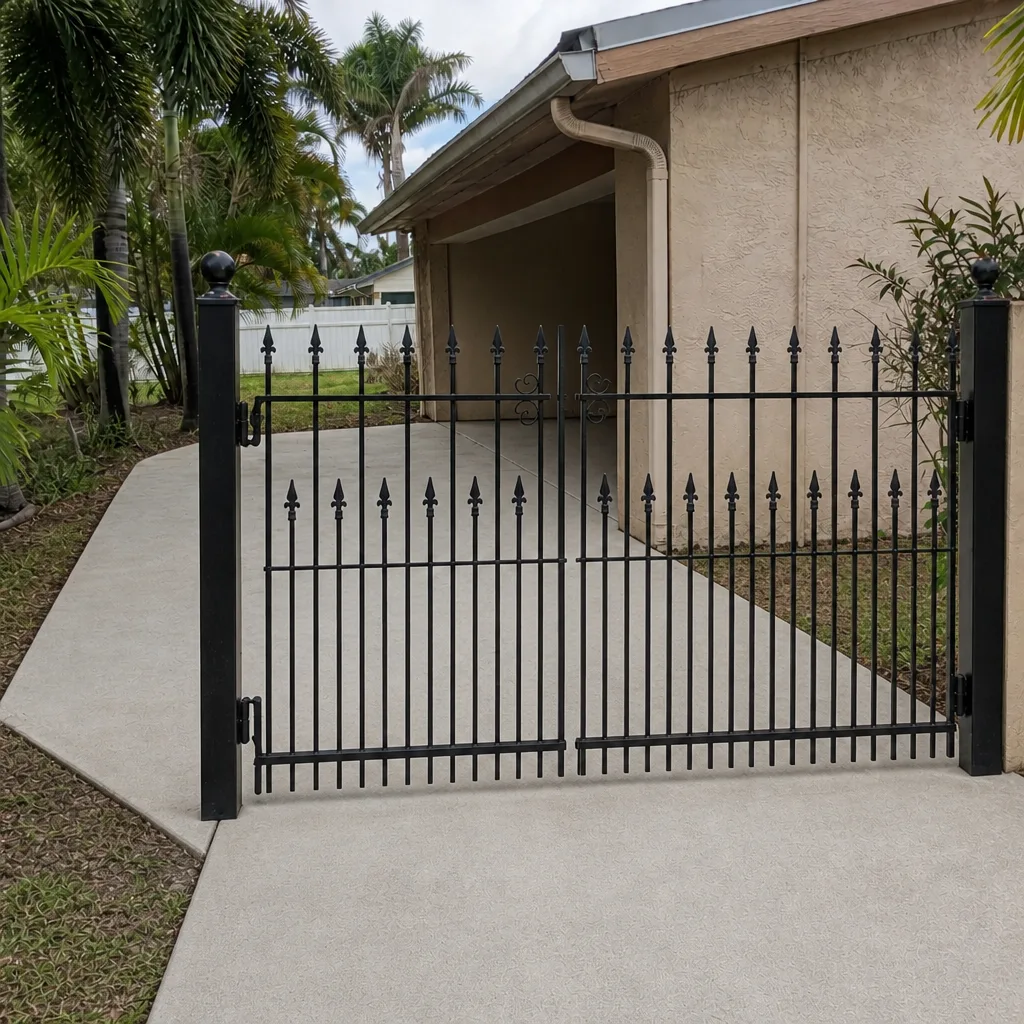
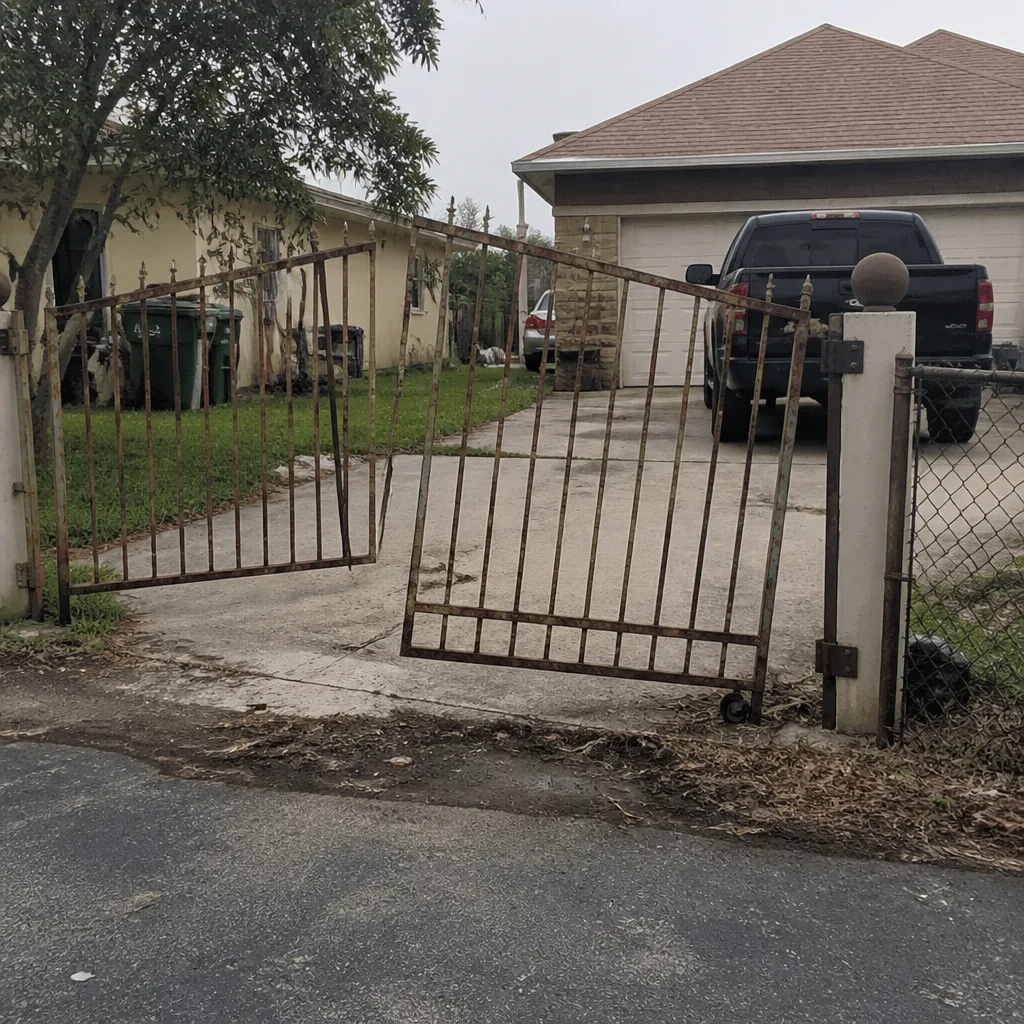
See the difference
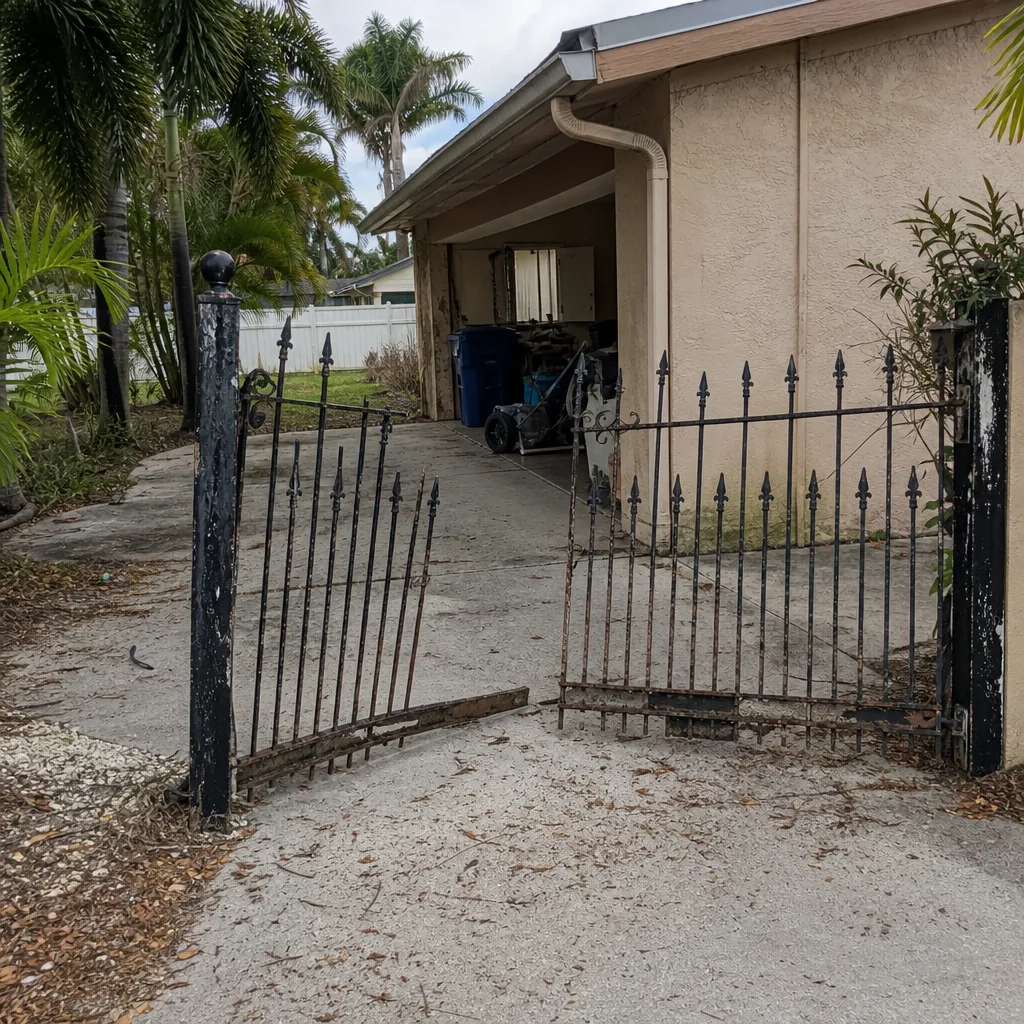 Before
 After
 Before
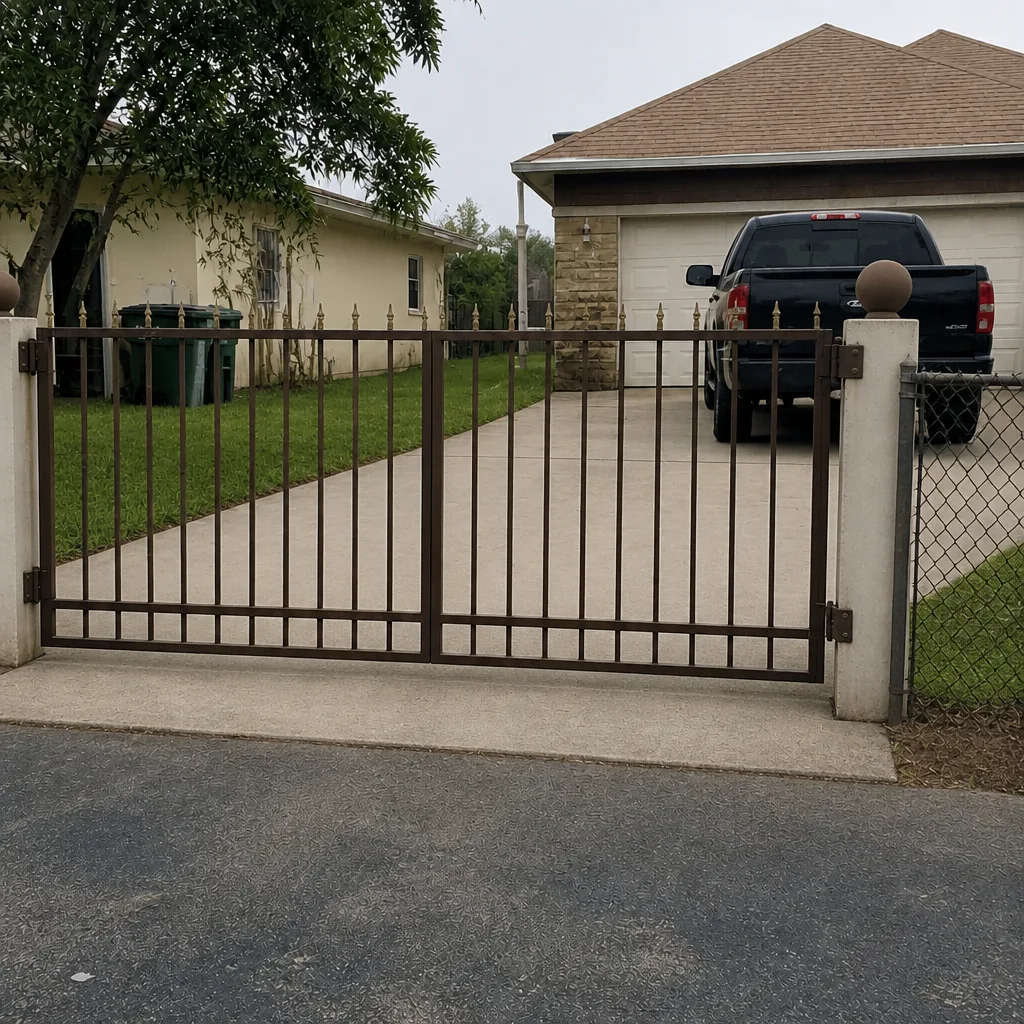 After
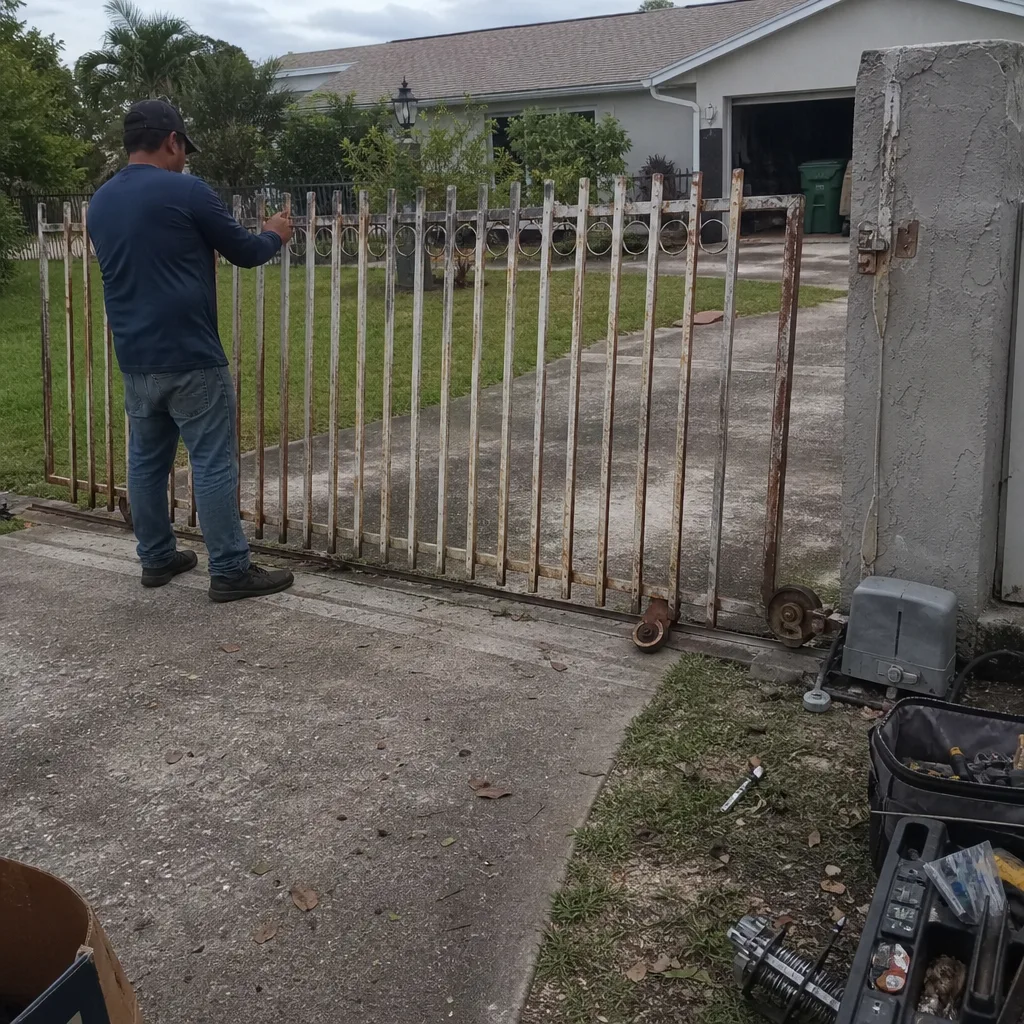 Before
 After
When to Call a Professional
Call a professional when the gate is stuck closed and blocking access, when an operator has taken on water, when a control board is unresponsive after power has been restored, when a commercial entrance has failed open and left the property unsecured, or when a gate has come off its track. Call when you smell burning or see smoke from the operator, or when any safety device has failed and the gate no longer stops for an obstruction. And call if you simply don’t know where the manual release is on your own gate – that’s exactly the conversation we’d rather have before a storm. Cape Coral Gate Repair offers free estimates in Cape Coral – call (855) 687-9638. We work on residential and commercial systems and we’re experienced with the brands that fail here. Repair or replace, the goal is the same: your gate back in operation.
Frequently Asked Questions
Find the manual release on the operator housing – usually under a small flap or a keyed cover – and turn the key or pull the lever to disengage the motor, then open the gate by hand. Every automated gate has a release, but the exact mechanism depends on the brand. If you can’t find it, call us and we’ll help you identify it before the next storm.
First check whether the neighborhood has power, then look at the gate’s own breaker. If the gate still won’t respond after power is restored, disengage the operator and secure the gate by hand with a chain or strap until a technician can look at it. Don’t keep trying to run it with the remote if the housing may have taken on water.
Sometimes it can be repaired and sometimes it needs replacement, and the deciding factor is how deeply the water reached the control board and motor housing. Cut power at the breaker, don’t open the housing yourself, and call for an on-site evaluation. A technician can tell you whether you’re looking at a control board replacement or a full operator rebuild after inspecting it.
At minimum: a spare remote, the manual release key, the operator manual with the brand and model, a printout of your technician’s contact information, a small flashlight and basic tools, and a chain or strap for securing the gate. Store it indoors above flood level, and make sure every adult in the household knows where it is.
Most repairs take one visit, assuming the technician arrives with the right brand knowledge and the parts needed are available. A control board or motor replacement may take longer depending on the brand. The written estimate you receive before work starts tells you exactly what’s included and how long the job is expected to take on your gate.
Yes. We handle residential driveway gates and commercial entrances, including barrier arms and access control systems, and we repair as well as install. Whether it’s a Mighty Mule driveway gate or a DoorKing or Elite commercial operator, we work on your brand. Call (855) 687-9638 for a free estimate.
The Bottom Line
A gate emergency plan is about three habits, done before you need them. Test the manual release, keep a small kit with the key and a spare remote, and know which failures are urgent versus which can wait. If your gate is stuck, the first move is to check power and find the release – not to force it. If it’s waterlogged, cut the breaker before touching anything. And when you need a technician, call one who knows your brand. Cape Coral Gate Repair works on residential and commercial systems across nine brands – LiftMaster, FAAC, BFT, Linear, Viking, Ghost Controls, DoorKing, Elite, and Mighty Mule – and repairs or replaces as the job demands. Free estimates are available; call (855) 687-9638. We answer 24/7, with fast dispatch from 7am to 7pm, Sunday through Friday.
Written by the team at Cape Coral Gate Repair.