
Last updated November 15, 2026
 Wrought iron
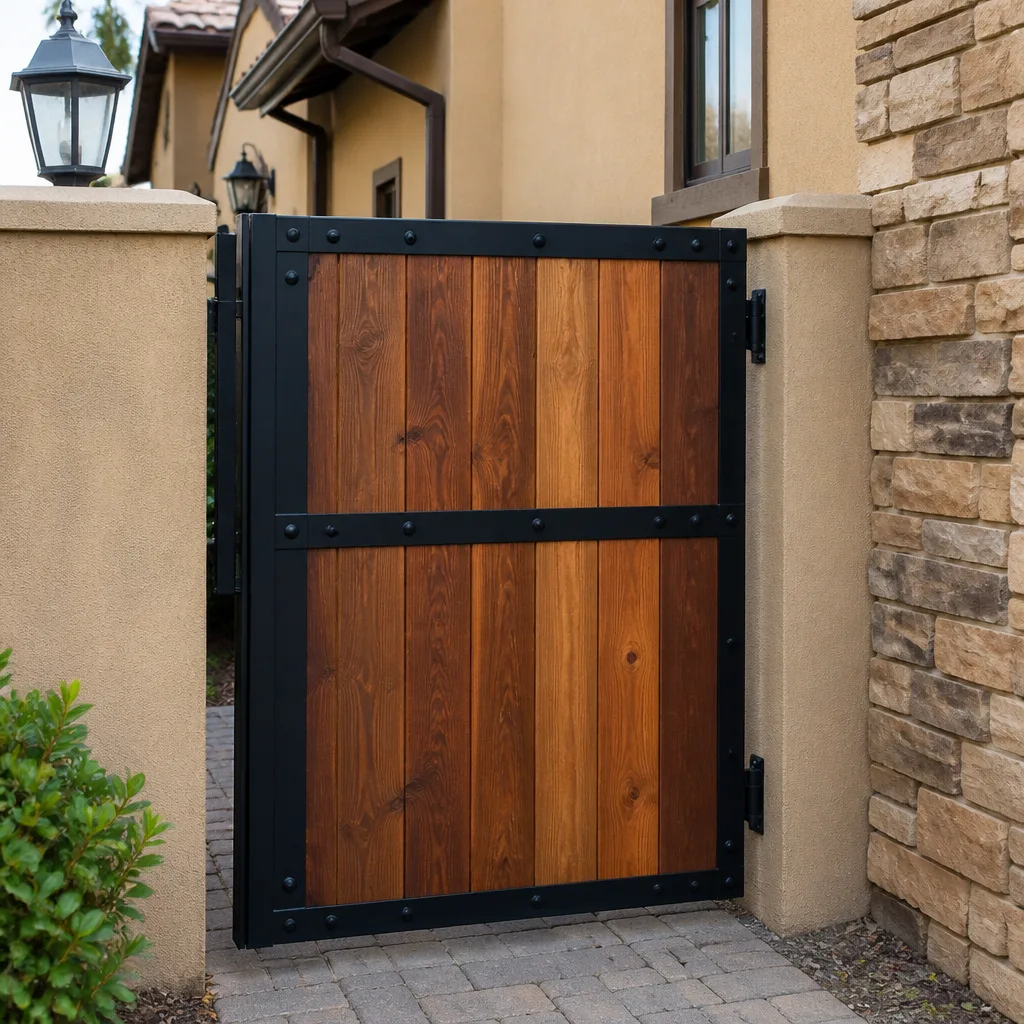 Wood & steel frame
 Farm & ranch
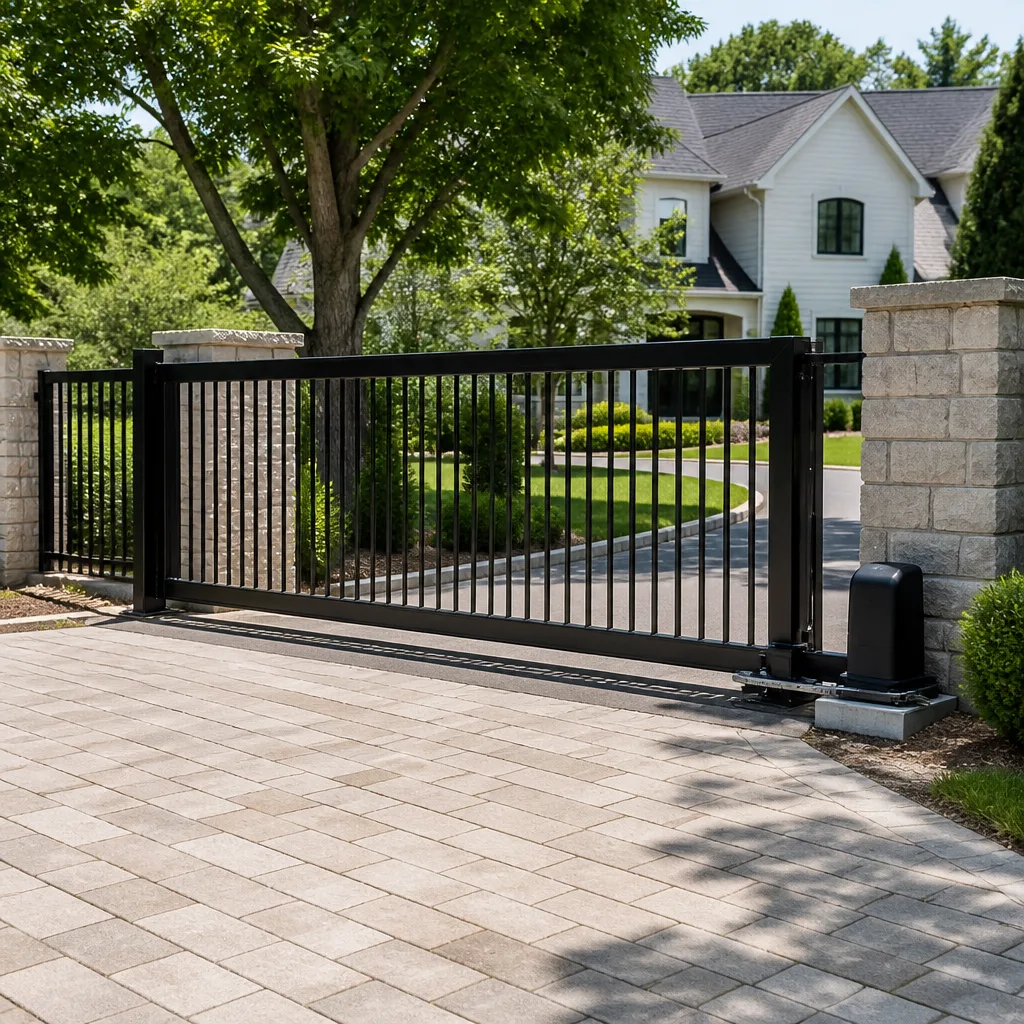 Sliding driveway gates
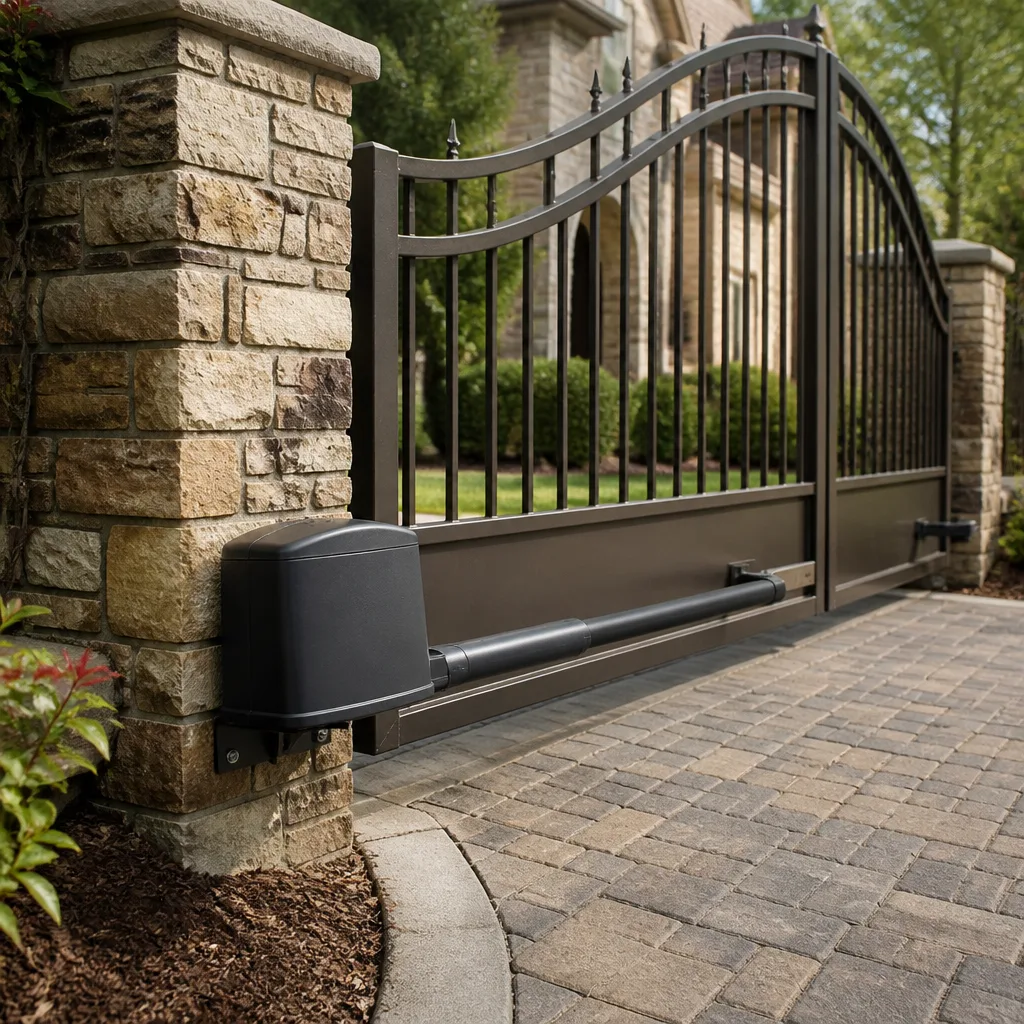 LiftMaster operators
Free on-site gate assessment - hinges, posts, and your LiftMaster or Nice gate operator checked before anything is quoted
The assessment is free and the quote is the invoice.
Get your free estimateGate Repair Maintenance Checklist for Cape Coral Homeowners
A gate that gets lubricated twice a year in a dry climate needs attention far more often in Cape Coral. The same generic 12-point checklist that works elsewhere gives homeowners false confidence here, because heat, humidity, and heavy summer rain put different stress on hinges, tracks, control boards, and operators. This guide is built around the failure sequence we actually see on Cape Coral gates, ordered by the damage each task prevents rather than alphabetically by component. You’ll learn the lubrication schedule that suits this climate, how to spot moisture intrusion early, the wear patterns unique to Southwest Florida gates, and which maintenance mistakes void manufacturer warranties.
Quick Answer
A practical gate maintenance checklist for Cape Coral homeowners covers five things: lubricating hinges and tracks on a schedule suited to local humidity, checking the operator control board for moisture before it fails, inspecting hinges and tracks for heat-related wear, running pre-storm and post-storm checks during hurricane season, and documenting every task so manufacturer warranties stay intact. Most gates in Cape Coral need a visual check every month and a full lubrication pass every six to eight weeks, not the twice-a-year schedule common in drier climates. Anything involving the operator, control board, or safety edges belongs with a trained technician, not a homeowner with a can of spray.
Styles & brands we work with
- Wrought iron
- Wood & steel frame
- Farm & ranch
- Sliding driveway gates
- LiftMaster operators
Table of Contents
- Lubrication Schedule Built for Cape Coral’s Humidity
- How to Spot Moisture Intrusion in the Control Board Before It Fails
- Hinge and Track Wear Patterns Unique to Southwest Florida Gates
- Pre-Storm and Post-Storm Inspection for the June-November Window
- Which Maintenance Tasks Void a Manufacturer Warranty
- The Full Monthly and Seasonal Checklist
- Brand-Specific Maintenance Notes
Lubrication Schedule Built for Cape Coral’s Humidity
Gate hinges and tracks in Cape Coral need lubrication every six to eight weeks, not every six months. The humidity here keeps bare metal damp for long stretches, and that changes how grease behaves: a product that clings and protects in a dry climate can thin out, wash away, or hold moisture instead of repelling it. We’ve found that the right schedule matters as much as the right product.
Use a lithium or silicone-based grease for hinges, rollers, and pivot points. These products stay put under humidity and resist washing out during afternoon storms. Apply a light coat with a brush or rag, then work the gate open and closed a few times so the grease reaches the bearing surfaces. Wipe off the excess so grit doesn’t stick and turn into an abrasive paste.
WD-40 is not the answer. It’s a solvent and light lubricant, not a protective grease, and on a gate in this climate it does more harm than good over time. It thins out existing grease, evaporates quickly, and leaves tracks and hinges drier than before. Using it as a stand-in for proper lubrication is one of the most common things we correct on Cape Coral gates.
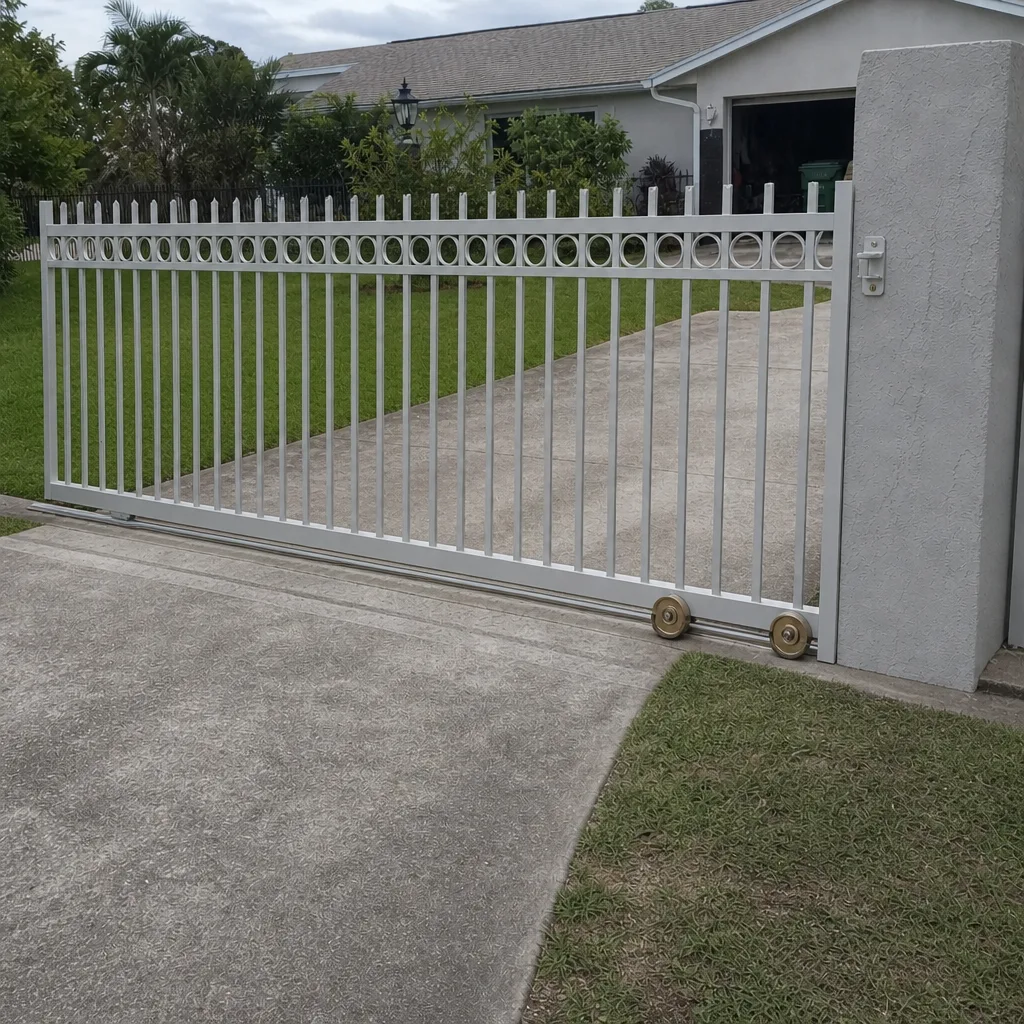
For tracks on sliding gates, use a dedicated track lubricant or a dry silicone spray, and clean the channel before you apply anything. Debris, sand, and plant matter collect in the track and grind against rollers every time the gate moves. Cleaning first, then lubricating, prevents that grinding.
- Hinges and pivot points: lithium or silicone grease every six to eight weeks
- Rollers and tracks on sliding gates: dry silicone spray after cleaning every six to eight weeks
- Operator drive chain or screw: manufacturer-specified lubricant, usually once or twice a year
- Locks and latches: graphite or dry lubricant, never wet grease that collects grit
Our technicians have up to 10 years of experience with these systems and can set up a schedule around your specific gate on a Cape Coral visit.
How to Spot Moisture Intrusion in the Control Board Before It Fails
Moisture reaching the operator’s control board is the single most expensive preventable failure on a Cape Coral gate. The board handles all the logic that tells the gate when to open, close, reverse, and stop. When it gets wet, the corrosion that follows can kill it entirely, and a full board replacement costs far more than a seal check or a re-sealed enclosure.
The operator housing on most brands – BFT and Linear among them – sits in a case that should keep water out. Humidity, heavy rain, and repeated wet-dry cycles find the weak points. Here’s what to look for when you open the housing for a visual inspection:
- Turn off power at the breaker before opening any operator housing.
- Look for water droplets, condensation, or a damp film on the inside of the cover.
- Check the board itself for white or greenish crusting around solder joints and connector pins.
- Inspect the gasket around the housing cover for cracks, flattening, or gaps.
- Look at the cable entry points – these are the most common water entry spots, so check whether the gland or seal is intact.
- Smell for a burned or musty odor, which can signal heat damage or long-term damp.
What you’re catching is early corrosion. A board that shows light crusting but still functions can often be cleaned and protected with a conformal coating, and the housing resealed so the problem doesn’t return. A board that’s already failing gives you warning signs first: erratic opening, the gate reversing for no reason, remote controls not responding, or the operator stopping partway.
This kind of inspection is a genuine safety matter. Control boards handle line voltage, and the wrong move inside a live housing can hurt you badly. We recommend a trained professional handle anything past a visual check with the power off, especially when a repair is needed. Our team works on the boards and motors themselves, not just the mechanical parts.
Hinge and Track Wear Patterns Unique to Southwest Florida Gates
Southwest Florida’s heat cycles push metal through expansion and contraction every single day, and the wear patterns that creates look different from what you’d see in cooler climates. Gates in Cape Coral expand through the afternoon, contract overnight, and the repeated movement loosens fasteners, widens clearances, and wears specific points faster than elsewhere.
Watch for these patterns first:
- Sagging at the hinge side: the gate drops slightly because hinge bolts work loose and the hinge pin wears under constant thermal movement. A gate that starts scraping the ground on the hinge side is showing this early.
- Elongated bolt holes: the mounting holes around hinges and brackets wear oval over time as the metal expands and contracts against the bolts. Once elongated, the bolts can’t stay tight.
- Track wear at the travel ends: on sliding gates, the first and last few feet of track show the most wear because that’s where the gate reverses direction and where expansion stress concentrates.
- Roller flat spots: rollers that sit under load in high heat develop flat spots, which then thud and vibrate along the whole track.
- Gate frame bowing: a long metal frame can bow slightly in sustained heat, which changes how the gate meets the latch and how the operator has to work to move it.
Check for these every month. Run a hand along the hinges and feel for looseness. Open and close the gate by hand with the operator disengaged and listen for scraping or thudding. Look down the track for grooves or shiny spots that show where metal is wearing against metal. Catching a loose hinge early costs nothing to fix. Catching it after the frame has sagged and bent means a bigger repair.
Pre-Storm and Post-Storm Inspection for the June-November Window
Cape Coral’s hurricane season runs from June through November, and gate maintenance in that window follows a different rhythm. Before a storm, the job is securing what you have so it survives. After a storm, the job is checking what changed without assuming anything still works as it did.
Pre-storm checklist:
- Disengage the operator and move the gate by hand to confirm it travels freely. A gate that binds under normal conditions will bind harder under stress.
- Tighten all visible hinge, bracket, and post bolts. Loose hardware is the first thing wind finds.
- Clear the track of debris, sand, and vegetation so water can drain and nothing jams the gate mid-travel.
- Check the housing seals and gaskets on the operator so wind-driven rain can’t get in.
- Confirm the gate latches securely and won’t swing free in high wind.
- Test the safety edges and photo eyes so the gate has working reversal protection if power stays on through the storm.
Post-storm checklist:
- Before restoring power, visually inspect the operator housing for water inside.
- Look for shifted posts, bent tracks, or a gate that no longer sits level in its frame.
- Clear debris from the track and the travel path before running the gate.
- Test the gate by hand first, then restore power and run it through a full open-close cycle.
- Watch the reversal function – the gate should back off when it meets an obstruction.
If a storm has shifted a post or bent a track, don’t force the operator to push through it. That’s how a small alignment problem becomes a burned-out motor or a stripped gear. We answer 24/7, and fast dispatch from 7am to 7pm gets a post-storm problem looked at before the next system rolls in.
Which Maintenance Tasks Void a Manufacturer Warranty
Several maintenance mistakes void the manufacturer warranty on gate operators, and homeowners often make them without realizing it. The warranty terms vary by brand, but the general patterns are consistent across the major names – Ghost Controls, Viking, and the rest.
Tasks that commonly void a warranty:
- Opening the sealed operator housing: on some units, breaking the seal to inspect internals is treated as unauthorized tampering. Read your manual before opening anything.
- Using the wrong lubricant: some manufacturers specify a particular lubricant for the drive mechanism and treat substitutions as misuse.
- Adjusting limit switches or force settings without the procedure in the manual: a misadjusted force setting that burns out the motor is often excluded from coverage.
- Modifying wiring or adding components not approved for the unit: adding an aftermarket accessory the manufacturer doesn’t list can void the electrical portion of coverage.
- Skipping required maintenance: some warranties require documented maintenance at intervals, and a claim without records can be denied.
- Using incompatible remote controls or receivers: a mismatched receiver that damages the board isn’t covered.
Document what you’ve done. Keep a simple log with the date, the task, the product used, and who did the work. Photograph the gate before and after any repair or adjustment. If a warranty claim ever comes up, that record shows the gate was maintained according to the manufacturer’s instructions rather than neglected or mistreated. It’s a small habit that protects a big investment.
Quick tip: when you hire out any task that touches the operator or wiring, ask for the brand of the unit to be noted on the written estimate along with the work performed. This gives you a warranty trail the manufacturer will accept.
The Full Monthly and Seasonal Checklist
This is the complete checklist arranged by frequency. Monthly tasks protect against the fast-moving problems; seasonal tasks protect against the slow-moving ones. Total time for a monthly pass is usually 15 to 20 minutes.
Monthly:
- Open and close the gate by hand with the operator disengaged. It should move smoothly with no scraping or binding.
- Check hinge bolts and bracket fasteners for looseness. Tighten any that have worked loose.
- Clear debris from the track and the travel path.
- Look at the operator housing gaskets and seals for cracks or gaps.
- Test the safety edges and photo eyes for correct reversal.
- Test every remote and keypad to confirm they respond consistently.
Every six to eight weeks:
- Clean the track, then apply a dry silicone spray.
- Apply lithium or silicone grease to hinges, pivots, and rollers.
- Wipe off excess lubricant so grit doesn’t collect.
Seasonal (start of hurricane season and end of it):
- Run the full pre-storm or post-storm checklist above.
- Inspect the control board for moisture with power off.
- Check rollers for flat spots and replace any that have developed them.
- Test the manual release so you can open the gate by hand during a power outage.
- Update your maintenance log with everything done in the season.
Brand-Specific Maintenance Notes
The general checklist applies across brands, but specific systems have quirks worth knowing. Here’s what we’ve found matters most with a few of the names we work on regularly.
BFT operators: the control boards are sensitive to moisture, and the housing seals are the first thing to inspect after heavy rain. A BFT board that gets wet gives erratic behavior before it fails outright, so catch it early.
Linear: the drive mechanism benefits from the manufacturer-specified lubricant on schedule. Using the wrong product on the drive screw or chain shortens its life.
Viking: these operate well with documented maintenance, but the force settings should be checked by a technician rather than adjusted by guesswork. A misadjusted force setting is a warranty concern and a safety concern.
Ghost Controls: popular on residential driveways, and the DIY-friendly design sometimes leads to aftermarket accessories that don’t match the unit’s specifications. Keep accessories matched to the system.
When a brand-specific quirk turns into a real problem, our team is familiar with all nine brands we service: LiftMaster, FAAC, BFT, Linear, Viking, Ghost Controls, DoorKing, Elite, and Mighty Mule. Brand-specific diagnostics mean faster, more accurate repairs because the technician knows what to look for on your system instead of guessing at a generic fix. If you’d rather not troubleshoot on your own, our electric gate repair service covers motors, boards, and access-control components that a general handyman won’t touch.
Common Mistakes to Avoid
- Following a dry-climate watering schedule. Twice-yearly lubrication is fine in Arizona and a problem in Cape Coral, where humidity keeps metal damp for most of the year. Match your schedule to the climate, not the manual’s generic line.
- Treating WD-40 as a lubricant. It’s a solvent that thins existing grease and evaporates. Using it on hinges and tracks leaves them drier than before and attracts grit that grinds away the surfaces.
- Ignoring a gate that scrapes or drags. A gate that drags on the hinge side has a loose hinge or an elongated bolt hole. Waiting for a bigger repair costs more than tightening a bolt.
- Forcing an operator through an obstruction. When a post has shifted or a track has bent, pushing through it burns motors and strips gears. Fix the alignment before restoring power.
- Opening the operator housing without power off. Control boards handle line voltage, and this is genuinely dangerous. Cut the breaker before even a visual check.
- Skipping post-storm inspection. A gate can look fine and still have a shifted post, a cracked gasket, or water inside the board. Check before you run it.
- No maintenance log. Without records, a warranty claim can be denied for lack of documented maintenance. A simple log protects an expensive repair.
See the difference
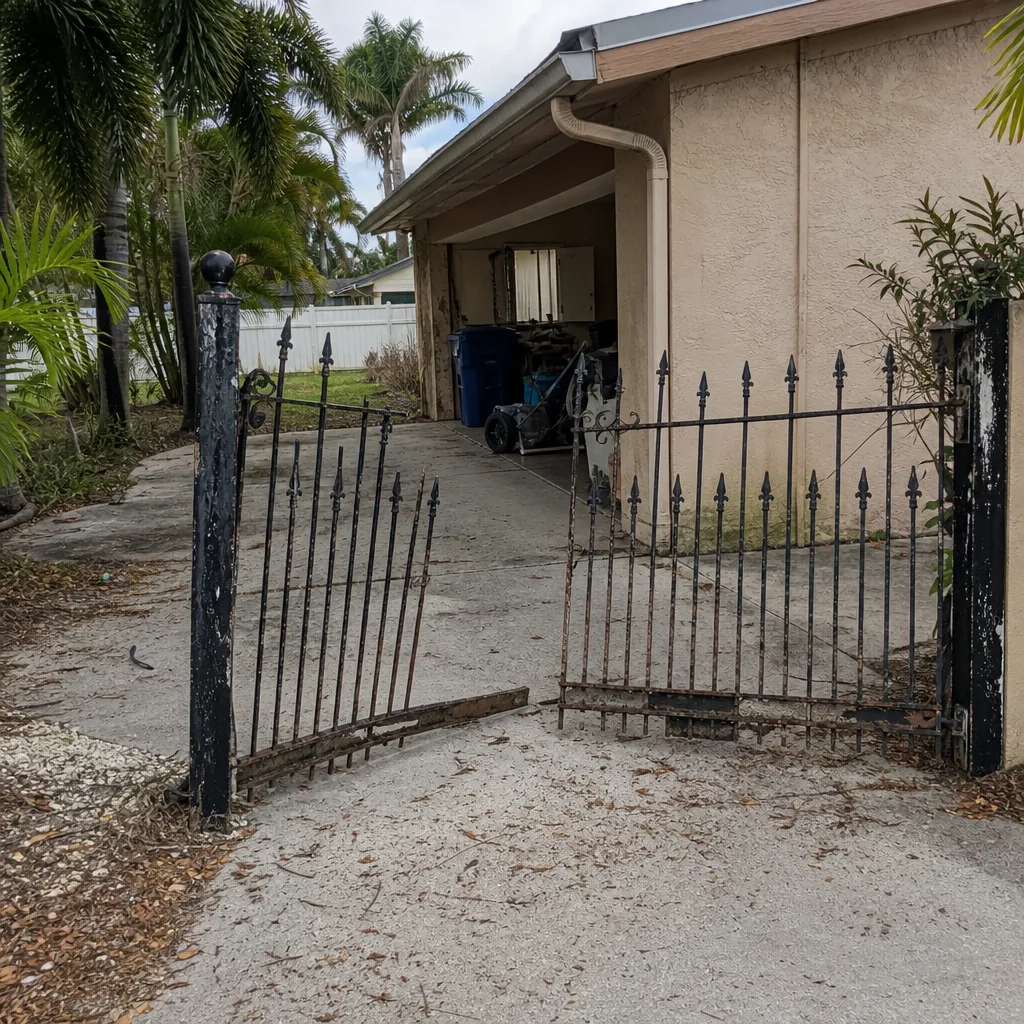 Before
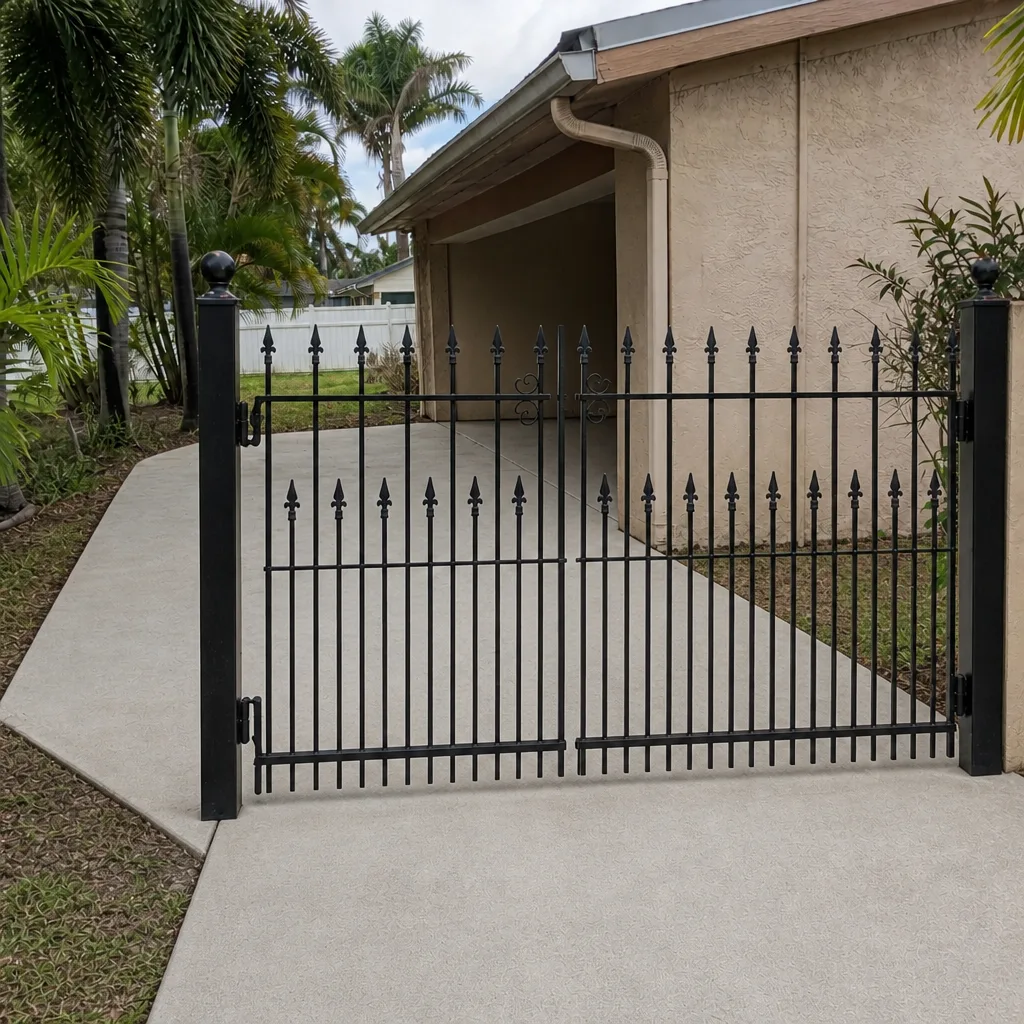 After
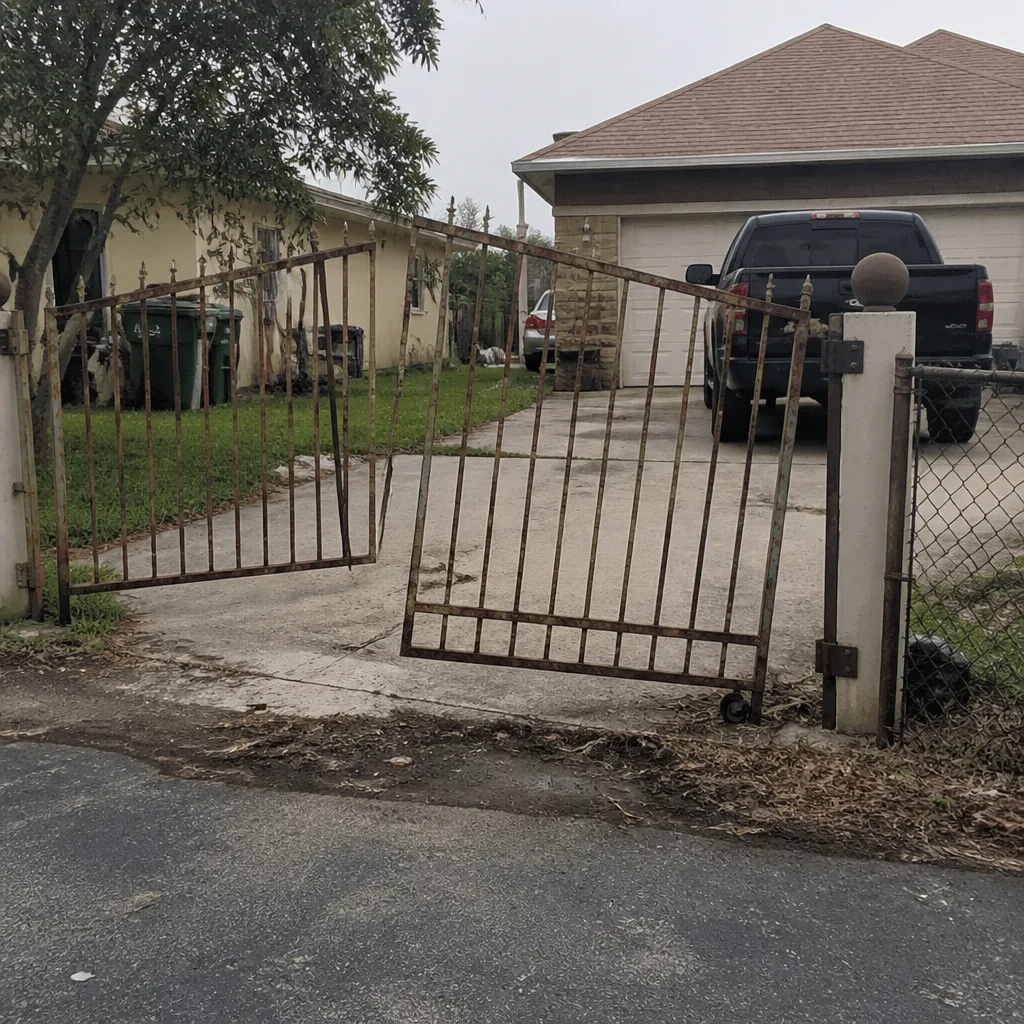 Before
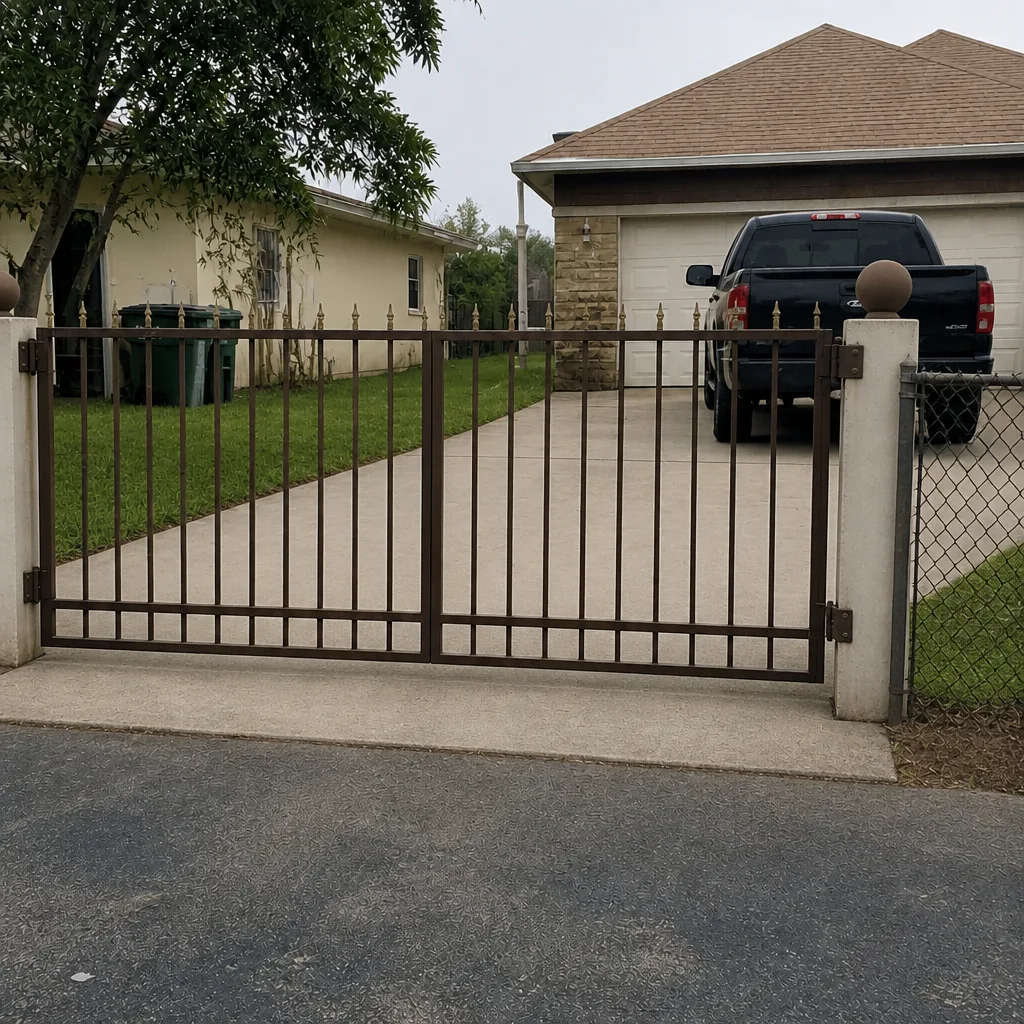 After
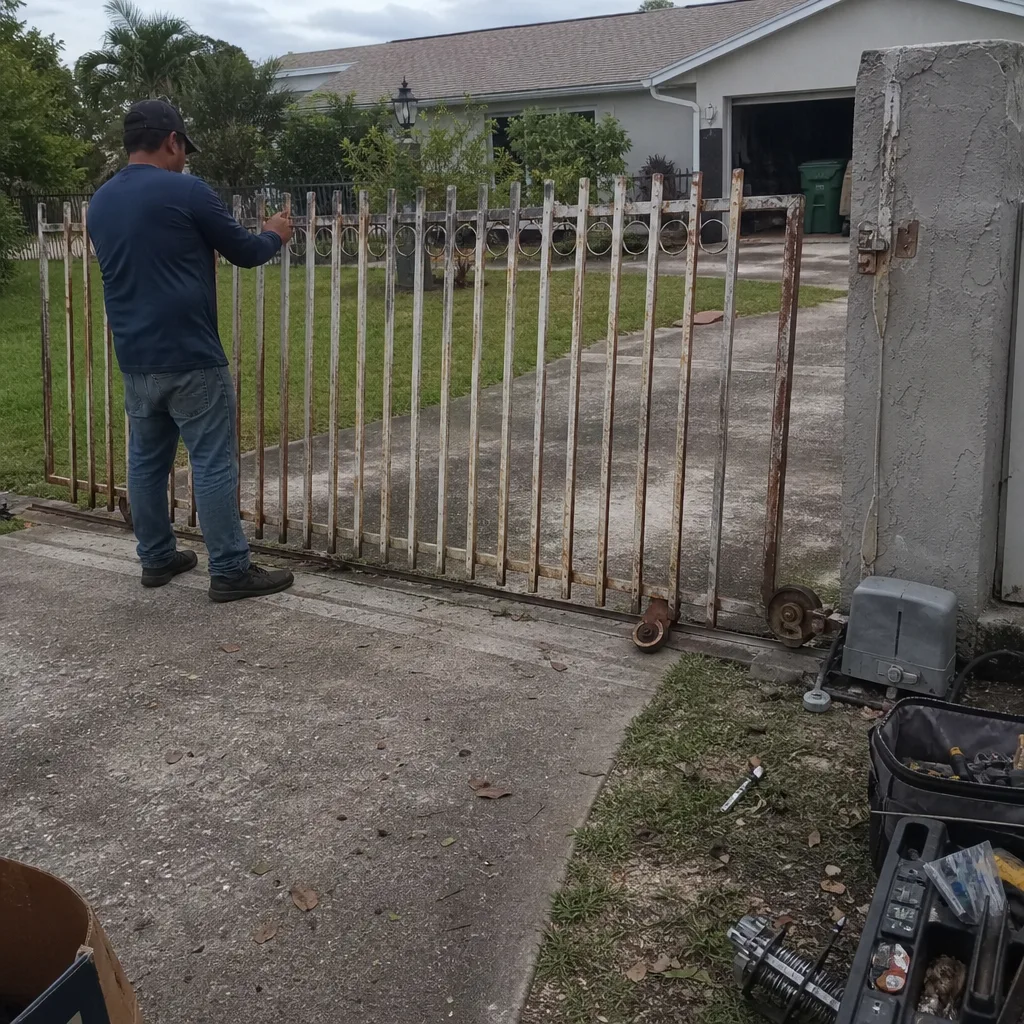 Before
 After
When to Call a Professional
Some tasks belong with a trained technician. If the control board shows corrosion or water damage, if the operator gives erratic behavior – reversing, stopping partway, or ignoring remotes – or if the gate has shifted and no longer aligns in its frame, call a specialist. These are the problems that turn into a full operator replacement if handled wrong. The same goes for anything involving the wiring, the safety edges, or a force setting that needs adjustment. A gate on a slope or one that carries a heavy commercial panel should always be serviced by a technician, since a failure there is a genuine safety issue.
Cape Coral Gate Repair offers free estimates in Cape Coral and works on both residential driveway gates and commercial entrance systems. We can repair a broken system or install a new one, so you don’t need separate contractors for each side of the job. Call (855) 687-9638 to get a written estimate before any work begins.
Frequently Asked Questions
Every six to eight weeks in Cape Coral’s humidity, which is much more often than the twice-yearly schedule common in drier climates. Use lithium or silicone grease on hinges and pivots, and a dry silicone spray on sliding gate tracks after cleaning. Skip WD-40 entirely – it thins existing grease and leaves surfaces drier than before. If your gate is on a commercial entrance with constant traffic, the schedule tightens further. Call (855) 687-9638 for an exact quote on a maintenance visit.
A visual inspection with the power off is fine for a homeowner, but anything past that belongs with a trained technician. Look for water droplets, condensation, gasket cracks, and white or greenish crusting near solder joints and connectors. Control boards handle line voltage, so opening a live housing is dangerous. If you see corrosion or the gate is giving erratic behavior, stop and call a specialist. Our team works on boards and motors on-site. Call (855) 687-9638 for a free estimate.
Opening a sealed operator housing, using the wrong lubricant, adjusting force settings without the manual’s procedure, and adding unapproved components are the most common tasks that void coverage. Some warranties also require documented maintenance at intervals. Keep a log with the date, task, product, and who did the work, and photograph the gate before and after any repair. That record protects you if a claim ever comes up. Call (855) 687-9638 with your brand and model and we’ll tell you what the warranty requires.
Run a pre-storm checklist starting in late May: disengage the operator and confirm the gate travels freely by hand, tighten every hinge and bracket bolt, clear the track, check operator housing seals, and test the safety edges and photo eyes. After a storm, inspect the housing for water, clear debris, test by hand, then restore power. If a post has shifted, don’t force the operator through it. We answer 24/7, and fast dispatch from 7am to 7pm gets it looked at. Call (855) 687-9638 for a free estimate.
The most likely culprits are a misaligned photo eye or safety edge, a control board with moisture damage, or a force setting that’s too low. This is exactly the pattern we see when a board starts failing from humidity – it works fine until the conditions shift, then reverses mid-travel. It’s not something a homeowner can safely diagnose past the visual check. Call (855) 687-9638 for an on-site diagnosis and a free estimate.
We work on nine gate brands: LiftMaster, FAAC, BFT, Linear, Viking, Ghost Controls, DoorKing, Elite, and Mighty Mule. That covers everything from a residential Mighty Mule driveway opener to a commercial FAAC barrier arm. Brand-specific diagnostics mean we know the common failure points for your unit instead of guessing. We handle both gate repair and full installation, so we’re the same team from the first diagnosis to the final adjustment. Call (855) 687-9638 for a free estimate.
The Bottom Line
The checklist that works in Cape Coral is not the one that works in a dry climate. Lubricate every six to eight weeks with lithium or silicone grease, not WD-40. Inspect the control board for moisture often, with the power off. Watch for the heat-driven wear patterns that show up first on Southwest Florida gates – sagging hinges, elongated bolt holes, and flat spots on rollers. Run the pre-storm and post-storm checklists through the June-November window. Document everything so manufacturer warranties stay intact. Do the monthly visual pass yourself, and hand the operator, board, and wiring work to a trained technician. A small amount of regular attention keeps the gate working and the repair bill small. You can read more about our full range of services on our Cape Coral Gate Repair page.
If something on this list has gone wrong – or you’d rather a technician handle it – Cape Coral Gate Repair offers free estimates in Cape Coral. We work on residential and commercial systems, repair or replace, and handle the motors, boards, and access-control components that a general handyman won’t touch. Call (855) 687-9638. We answer 24/7. Fast dispatch from 7am to 7pm, Sunday through Friday.
Written by the team at Cape Coral Gate Repair.