
Last updated November 15, 2026
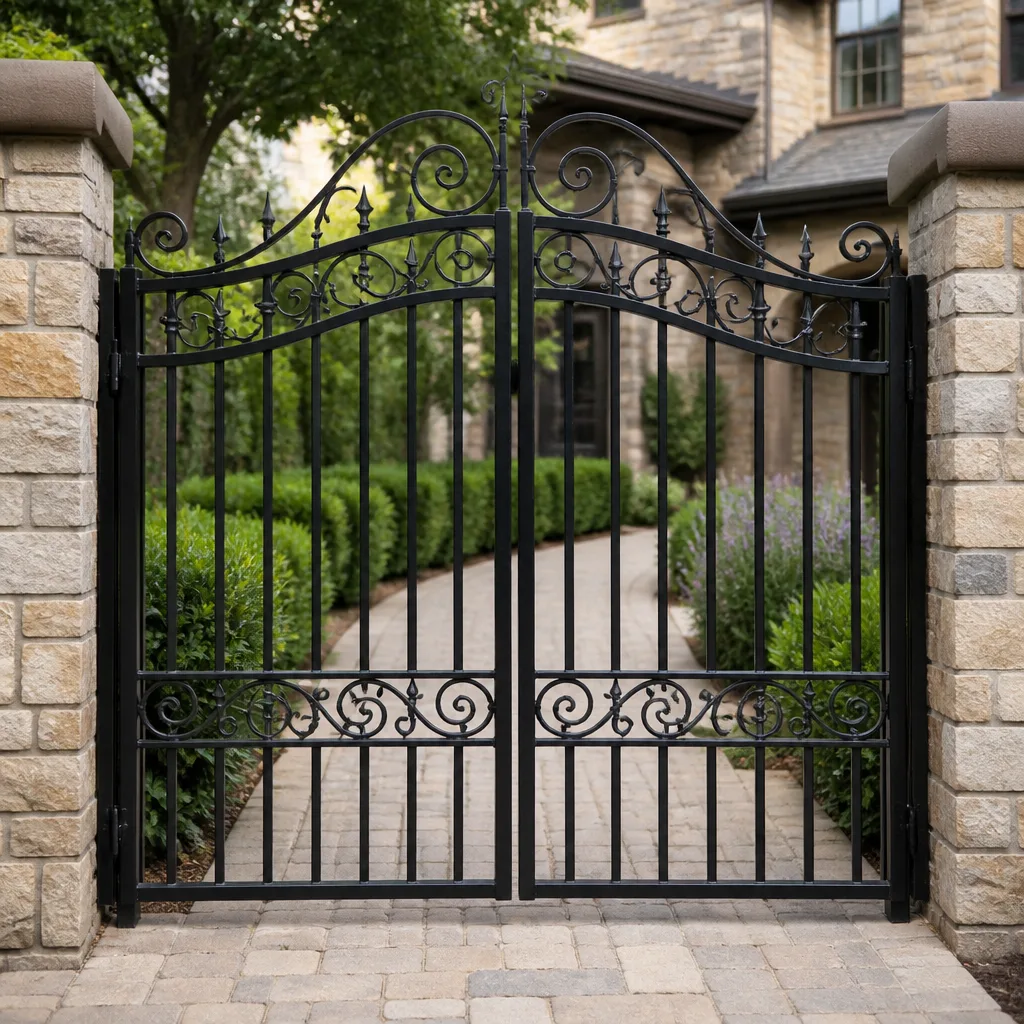 Wrought iron
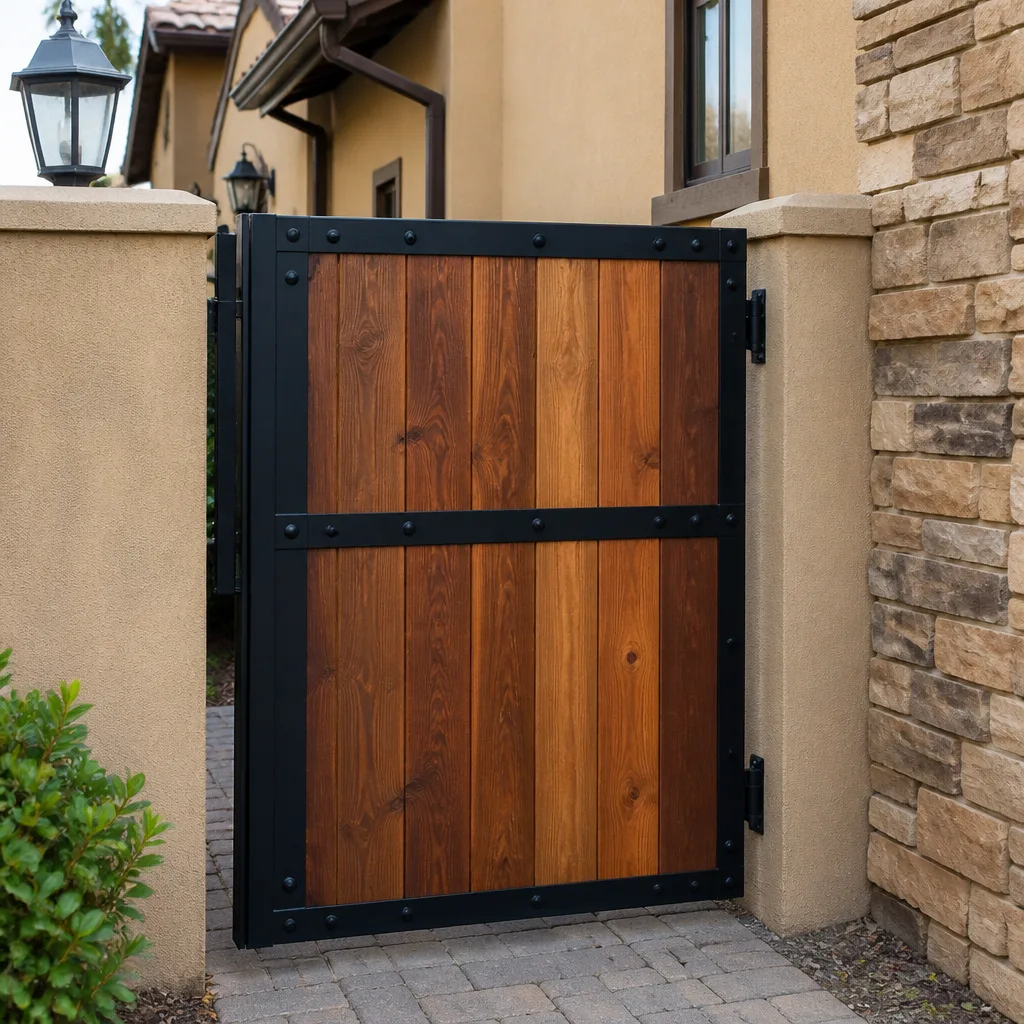 Wood & steel frame
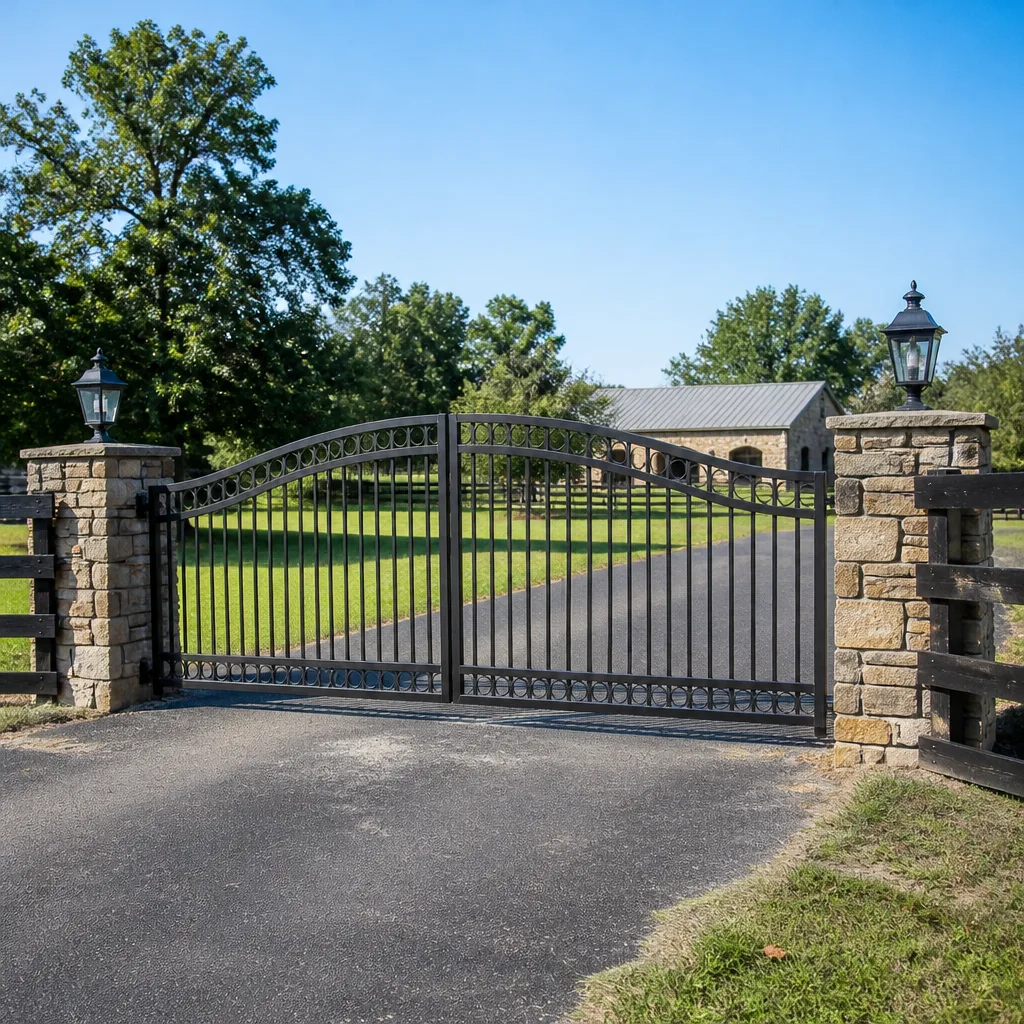 Farm & ranch
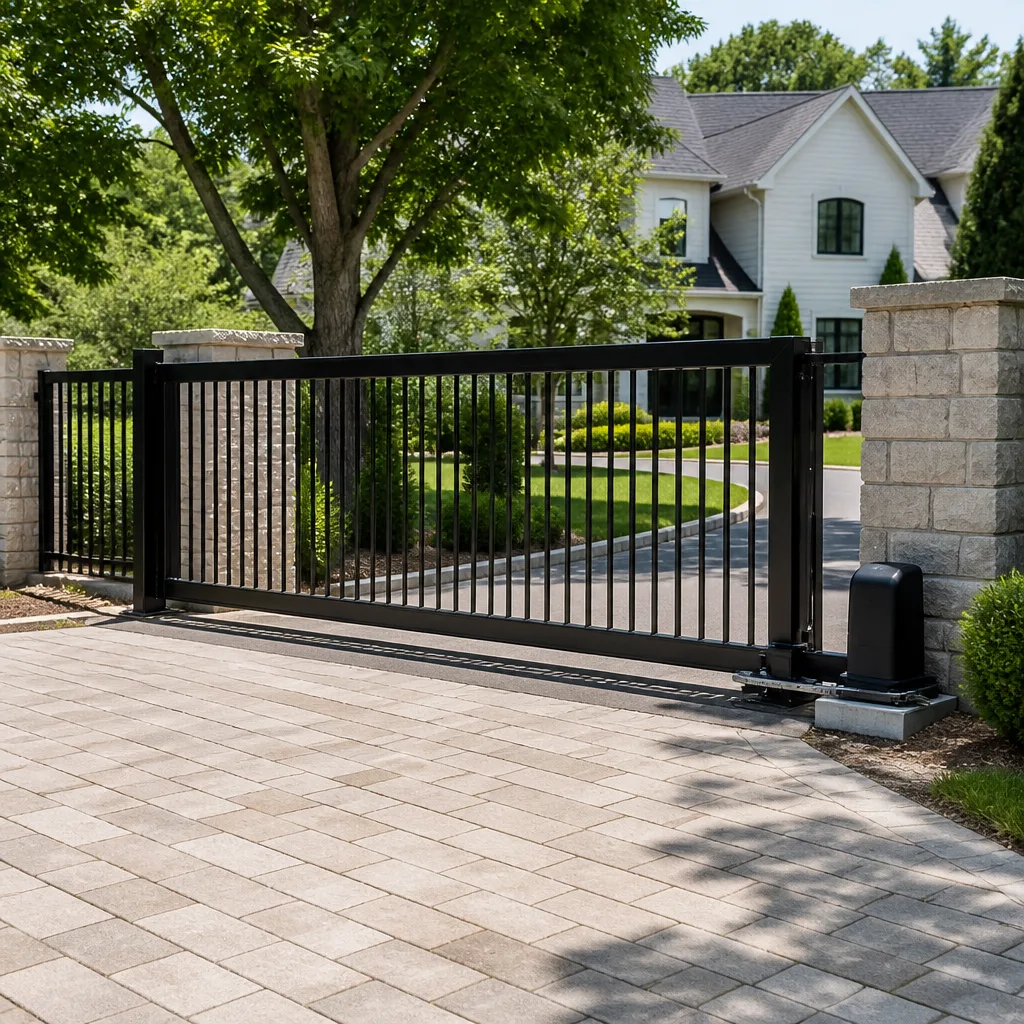 Sliding driveway gates
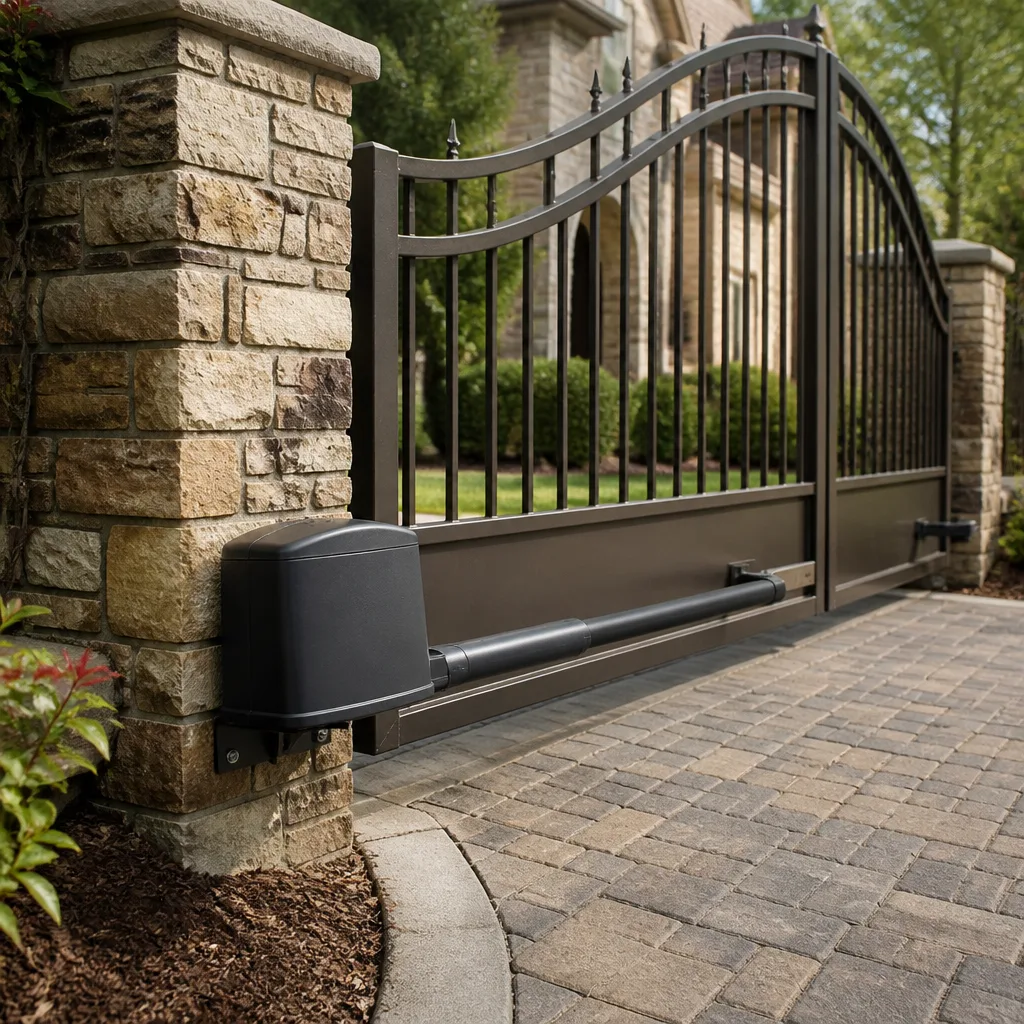 LiftMaster operators
Free on-site gate assessment - hinges, posts, and your LiftMaster or Nice gate operator checked before anything is quoted
The assessment is free and the quote is the invoice.
Get your free estimateSeasonal Gate Repair Care for Cape Coral: Year-Round Homeowner’s Guide
Most gate failures in Cape Coral don’t happen during a hurricane. They happen in October and November, in the quiet weeks after storm season ends, when damage that accumulated through months of heat, humidity, and grid instability finally catches up all at once. A gate that limped through August suddenly won’t open in November, and the owner is sure something new broke. Usually nothing new broke. The season just stopped hiding it.
Cape Coral doesn’t run on four seasons. It runs on a dry season, a wet season, and a hurricane window, and each one stresses a gate system in a different way. This guide walks through all three, plus the snowbird effect that ambushes so many seasonal homes. You’ll learn what to check, when to check it, and when to stop and call someone.
Quick Answer
Seasonal gate care in Cape Coral means matching your maintenance to three distinct stress periods: dry season (November through April), when heavy cycle counts and dry air wear on moving parts; wet season (May through October), when standing water around posts and frequent power surges attack buried wiring and control boards; and the hurricane window, which requires pre-storm lockdown of the operator and a specific post-storm inspection order before you restore power. Gates that sit unused for months during snowbird season usually fail on reactivation, not during use.
Styles & brands we work with
- Wrought iron
- Wood & steel frame
- Farm & ranch
- Sliding driveway gates
- LiftMaster operators
Table of Contents
- Why Cape Coral Gates Fail on a Seasonal Clock
- Dry Season Care: November Through April
- Wet Season Care: May Through October
- Pre-Hurricane Prep: Locking Down an Automated Gate Safely
- The Post-Storm Inspection Sequence
- The Snowbird Effect: Reactivating a Gate That Sat Idle
- Brand-Specific Seasonal Notes
- Your Year-Round Seasonal Calendar
Why Cape Coral Gates Fail on a Seasonal Clock
Cape Coral’s climate puts gate hardware through a cycle most manufacturers never designed around: months of intense heat and near-constant humidity, a storm season that brings standing water and power interruptions, then a dry stretch when everything dries out and contracts. Repeat that loop year after year and you get a predictable failure pattern.
Two things make it worse here. First, the canal network. Cape Coral has more canals than any other city in the world, and a lot of driveway gates sit on lots where the water table stays high. That means soil around gate posts stays damp far longer after rain than it would on higher ground, which puts constant pressure on buried conduit, low-voltage wire, and post footings. Second, the new-build pattern. Much of Cape Coral’s housing went up in waves, and gates installed at the same time across whole neighborhoods tend to reach the end of their component life on the same schedule. When one neighbor’s operator control board goes, expect a run of them nearby.
What we see in the field follows the calendar almost exactly. Dry-season calls are mostly mechanical: worn rollers, strained hinges, gates that drag. Wet-season calls are electrical: boards that took a surge, loops that flooded, motors that tripped. And the late-fall calls, right after the storm window closes, are the deferred damage calls. That’s the pattern this guide is built around.
Dry Season Care: November Through April
Dry season is when your gate works hardest. Humidity drops, the afternoon storms stop, and everyone comes outside. In Cape Coral that means a real jump in cycle count: more comings and goings, more deliveries, more visitors, more rental turnover in the seasonal months. An operator rated for a set number of cycles per day can quietly blow past it in February and March.
What to watch during dry season:
- Cycle count. If your operator tracks cycles, check it. A gate that runs 40 times a day in season behaves very differently from one that runs 10.
- Mechanical drag. Dry air and dust make rollers and hinges stiffer. A gate that needs a push to get moving is adding strain to the motor on every cycle.
- Battery backup. Test it now. A backup battery that won’t hold a charge is invisible until the grid drops during a storm.
- Photo-eye alignment. Sun angle shifts through the winter. Sensors that worked all summer can catch glare and false-trip in the afternoon.
The dry season is also the best window for scheduled work that takes the gate out of service for an hour or two, because the weather is predictable and the gate isn’t needed for storm prep. If you’ve been putting off gate repair on a dragging slide gate or a sticky swing arm, this is when to do it.
Wet Season Care: May Through October
Wet season is where the expensive failures come from, and most of them start underground where you can’t see them. Standing water around a gate post doesn’t just sit there. It works its way into conduit joints, junction boxes, and the wire insulation itself. Above-ground, everything looks fine. Below ground, copper is corroding and the loop detector is one heavy rain from failing outright.
Here’s the uncomfortable part: an above-ground inspection will never find this. You can look at your operator, your posts, your hinges, and see nothing wrong while the buried wiring is already half gone. That’s why wet-season problems often show up as mysterious behavior rather than obvious damage. The gate opens halfway and stops. The exit loop works in light rain but not heavy rain. The operator trips its breaker once a week and then behaves for a month.
What wet season actually does to your system:
- Underground corrosion. Water in conduit attacks wire connections and loop splices. This is the single most common hidden failure we find.
- Power surges. Afternoon storms and grid flicker are hard on control boards. A board that takes repeated surges gets progressively less reliable before it fails.
- Post movement. Saturated soil shifts. A post that moves even slightly throws off gate alignment, which strains the operator and the hinges.
- Debris and drainage. Track-mounted slide gates collect storm debris. Blocked drainage around a post keeps the footing wet for weeks.
If you have an electric gate repair issue that only shows up in the rain, that pattern is the diagnosis. Tell us that when you call and we’ll go straight to the wiring and the loops instead of guessing at the operator.
Pre-Hurricane Prep: Locking Down an Automated Gate Safely
Before a storm, the goal is to get your gate into a state where the wind can’t work against the operator and the power can’t work against the gate. Do this wrong and you can damage the operator, the limit switches, or the gate itself before the storm even arrives.
- Put the operator in manual release. Every automated gate has a release mechanism, usually a keyed lever or a manual disconnect. Follow your operator’s instructions exactly. Don’t force it.
- Move the gate to the position your operator’s manual specifies for storm conditions. For most slide gates that means fully closed and latched. For swing gates, follow the manufacturer’s guidance for your specific model, since a gate left free to swing in high wind can tear out its own hinges.
- Secure the gate mechanically. A physical lock, a drop rod, or a strap rated for the load. Don’t rely on the operator’s brake to hold a gate in a storm.
- Cut power to the operator at the breaker. Storm surges are the leading killer of control boards. If the gate isn’t running, the board isn’t exposed.
- Clear the path. Remove anything loose near the gate that could become a projectile and hit the panels, the posts, or the operator housing.
One caution worth stating plainly: the dangerous parts of a gate system are the operator’s wiring and power supply, heavy gate panels that can crush, and slide gates that come off the track under load. Don’t open control enclosures, don’t work on live wiring, and don’t try to muscle a heavy panel back onto a bent track. That’s a job for a trained technician.
The Post-Storm Inspection Sequence
After a tropical event passes, the order you check things in matters. Restoring power to an operator that’s sitting on a damaged gate or a flooded enclosure is how a repairable problem becomes a replacement. Work through it in this sequence:
- Visual sweep first, power off. Walk the full travel path. Look for downed limbs, displaced panels, bent track, and posts that have shifted. Photograph anything that looks wrong.
- Check the posts and footings. Look for tilting, cracking at the base, or soil washed out around the footing. A moved post means the gate is out of alignment and the operator should stay off.
- Inspect the gate panels and hardware. Hinges, rollers, and the gate frame itself. Look for impact damage and for anything that’s bent or missing.
- Open the operator enclosure and check for water. If there’s standing water or obvious moisture inside, stop. Don’t power it up. Water plus electricity inside a control box is a call-a-technician situation, not a dry-it-out situation.
- Check the wiring and conduit. Look for pulled conduit, exposed wire, and junction boxes that took on water.
- Only then restore power and test. Test the safety devices first: photo eyes, safety edges, and the reverse function. Don’t run the gate through a full cycle until the safety systems check out.
- Test the manual release and the battery backup. Both get stressed in a storm and both are easy to forget.
If anything in steps two through five looks wrong, leave the power off and get it looked at. The cost of a service visit is nothing next to the cost of a control board, a motor, or an injury.
The Snowbird Effect: Reactivating a Gate That Sat Idle
A gate that sits unused for months doesn’t stay in the condition you left it. It degrades quietly. And the reactivation moment, when you come back, unlock the house, and hit the remote for the first time, is exactly when the accumulated problems all present themselves at once.
What happens during months of low or zero use:
- Battery backup drains. Backup batteries self-discharge and lose capacity when they sit. A battery that’s years old may not hold anything by the time you return.
- Mechanical parts seize. Hinges, rollers, and release mechanisms stiffen. The first cycle after months of sitting is the hardest cycle the gate will see all year.
- Insects and debris move in. Control enclosures, photo-eye housings, and track channels are attractive shelter. A nest in a photo eye causes a safety fault. A nest in a control box causes worse.
- Underground moisture keeps working. The wet-season corrosion we described doesn’t pause because the gate isn’t cycling. It just becomes a surprise when you press the remote.
The fix is a reactivation routine rather than a first press of the remote. Before you run the gate: walk the travel path, clear debris, check the enclosure, look at the posts, and test the manual release. Then power it up, test the safety devices, and run one slow cycle while you watch it. If it stumbles, stop and call. A gate that fails on reactivation is almost always cheaper to fix before it’s been forced through a stuck cycle.
Brand-Specific Seasonal Notes
Different operators have different seasonal weak points, and knowing your brand tells a technician where to look first. We work on systems from Viking, Ghost Controls, DoorKing, Elite, and several other manufacturers, and the seasonal patterns differ enough to matter.
Residential DIY-grade operators like Ghost Controls tend to show wet-season trouble at the control board and the battery first, because those systems are often installed with lighter enclosures and less weather protection than commercial gear. Reactivation issues are common after a long idle period.
Heavy-duty commercial operators like DoorKing and Viking, the kind running barrier arms and high-cycle entrances, tend to show dry-season wear instead. More cycles per day means mechanical wear and heat buildup in the motor become the limiting factor, not moisture. Property managers running multi-family entrances should be tracking cycle counts, not just checking that the gate moves.
Mid-range residential operators like Elite sit in between: they’ll show surge damage in wet season and mechanical drag in dry season, and the diagnosis depends on which symptom showed up first. That’s why brand-specific diagnostics save time. A technician who knows the platform isn’t guessing at generic fixes across an unfamiliar system.
One thing to be clear about: we’re independent. We’re experienced with these brands, not factory-authorized by them.
Your Year-Round Seasonal Calendar
Here’s the whole year on one page. Treat it as a general rhythm rather than a rigid schedule, since your gate’s use pattern will shift the timing.
- November (post-storm catch-up). Full inspection. This is when deferred wet-season and storm damage surfaces. Check wiring, boards, and alignment.
- December through February (peak dry season). Watch cycle counts and mechanical drag. Test the battery backup. Clear debris from the track.
- March through April (pre-season prep). Service hinges and rollers. Verify photo-eye alignment. This is the best window for scheduled repairs before storm season.
- May (storm season opens). Verify the manual release works. Confirm you know how to put the operator in manual. Check drainage around posts.
- June through September (storm season). Watch for rain-only faults. That pattern points to underground wiring and loop detectors. Pre-storm lockdown before any named system.
- October (storm season closes). Post-storm inspection sequence if anything happened. Otherwise schedule the November inspection now.
- Before any long absence. Reactivation routine on return. Don’t just hit the remote.
If you’re new to the area or new to an automated gate, the Cape Coral seasonal pattern takes one full year to learn. After that, the rhythm becomes obvious. Our full Cape Coral Gate Repair service covers both repair and new installation, so whether you’re reactivating an existing system or putting in a new one, the seasonal logic is the same.
You can also read more about electric gate repair if your issue is clearly electrical rather than seasonal.
Common Mistakes to Avoid
- Waiting until a storm is named to prep the gate. Storm prep done in a hurry is how operators get damaged by forced manual releases. Do it in May, before the season starts, and confirm the release works when nothing is at stake.
- Restoring power immediately after a storm. Water in an enclosure plus restored power equals a dead control board. Follow the inspection sequence and leave the breaker off until the box is verified dry.
- Hitting the remote on return without looking at the gate first. A gate that sat idle for months can have a nest in the photo eye or a seized hinge. One forced cycle can turn a small problem into a motor replacement.
- Assuming the problem is the operator when it’s the wiring. In wet season, mysterious intermittent faults are usually underground. Don’t replace a control board before the buried wiring has been checked.
- Ignoring an above-ground-only inspection. If nobody has looked at the conduit, the junction boxes, or the loop splices, you haven’t actually inspected the system.
- Letting a dragging gate keep running. Mechanical drag in dry season adds strain to the motor every cycle. It’s cheaper to fix the gate than the operator.
- Trying to fix heavy panel or track problems yourself. Gate panels are heavy and can crush. Track work under load is not a homeowner job.
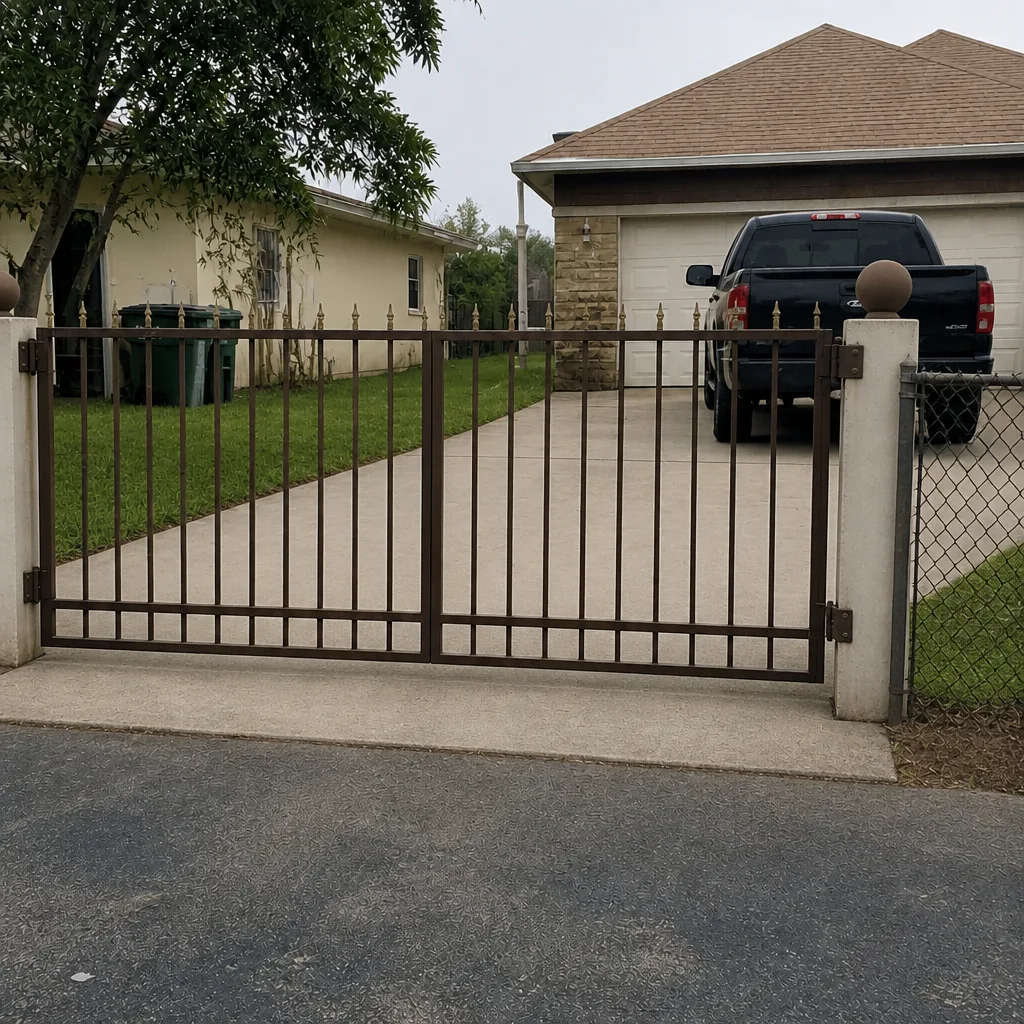
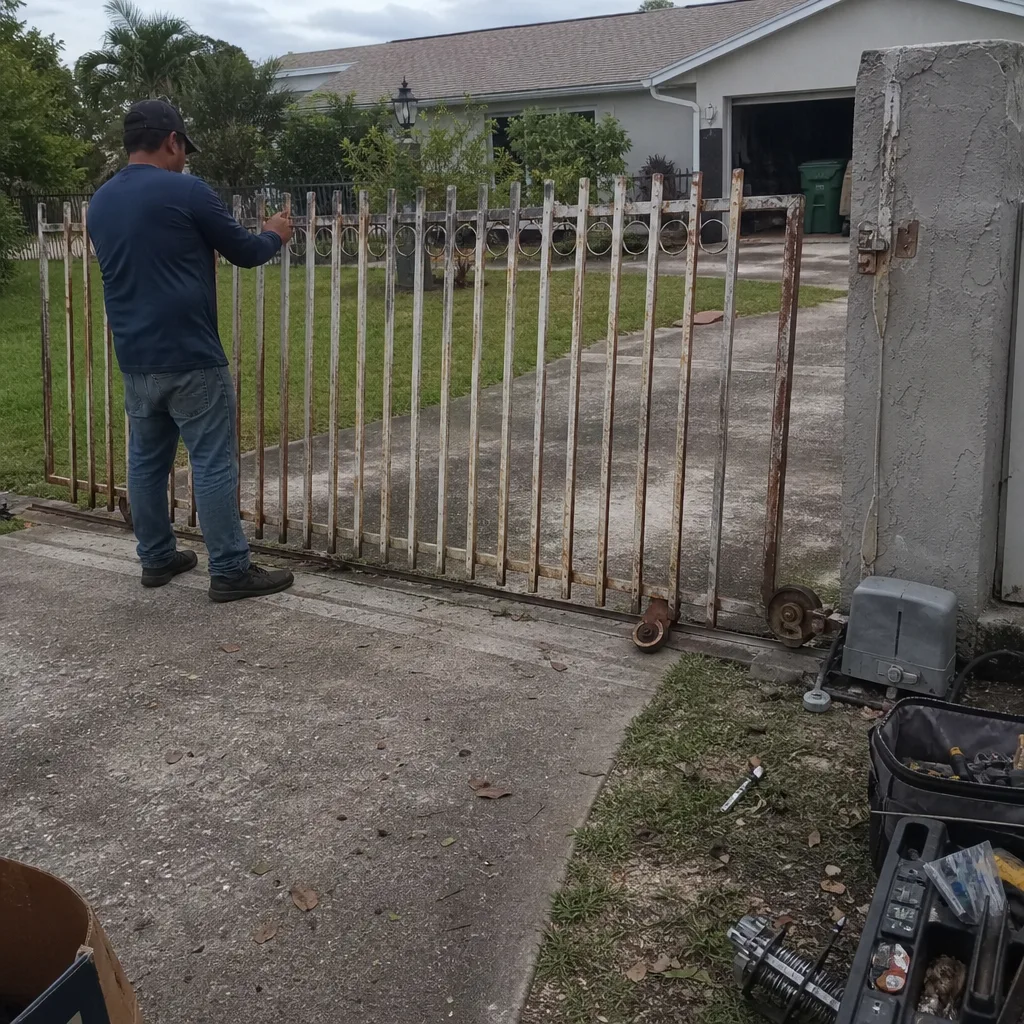
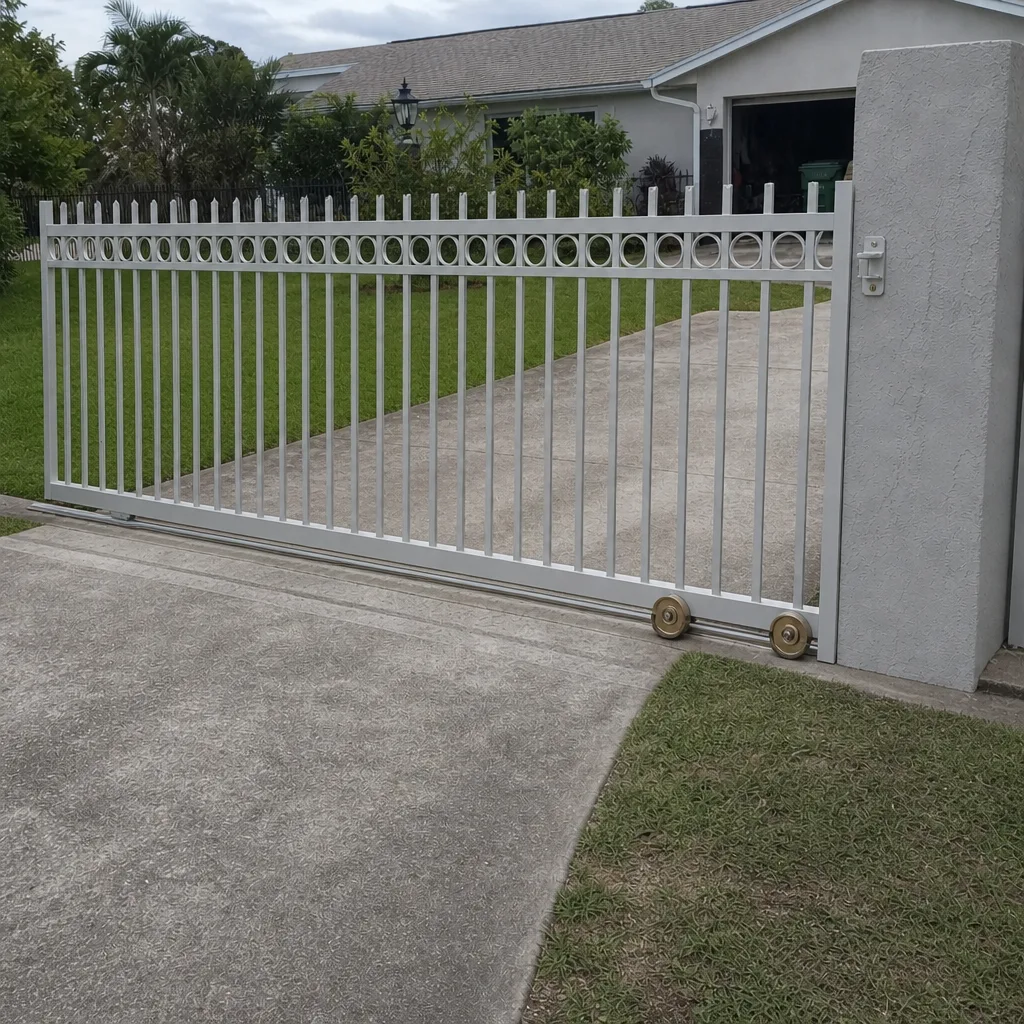
See the difference
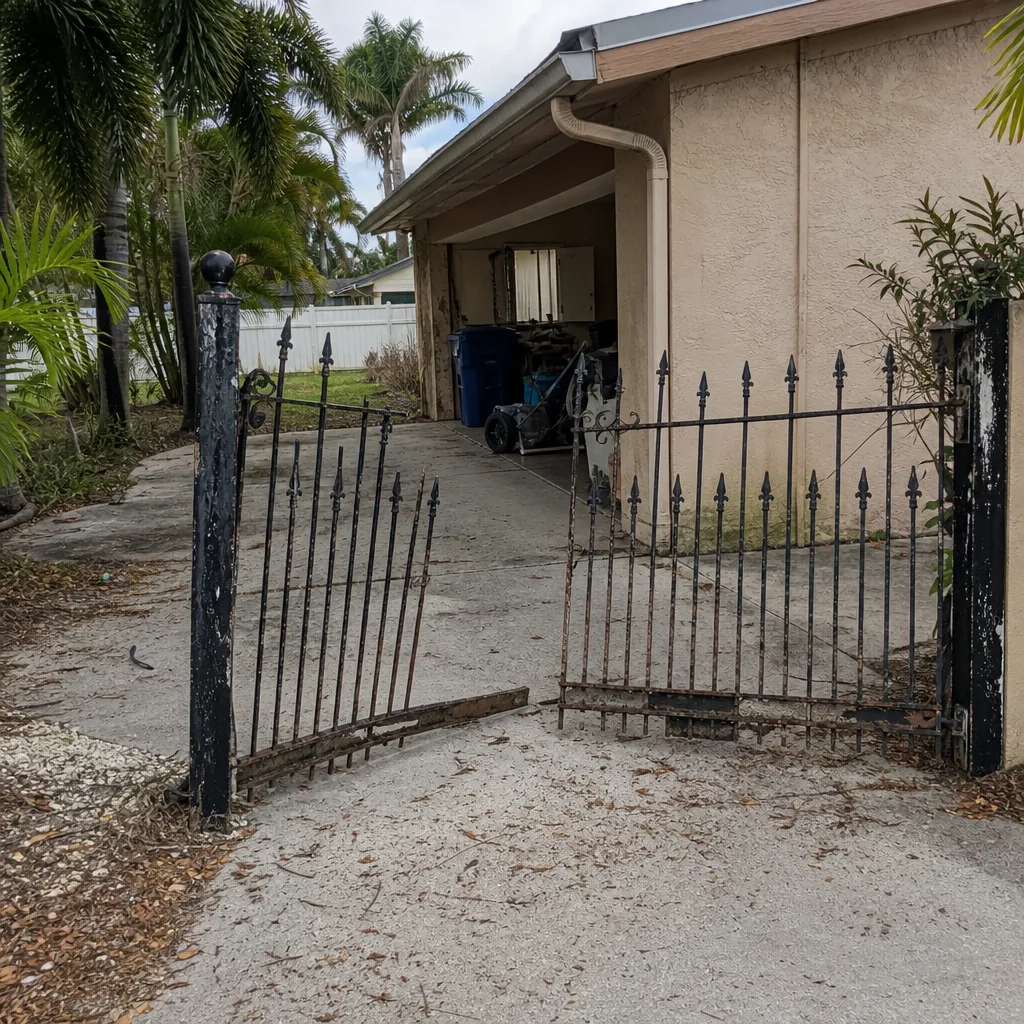 Before
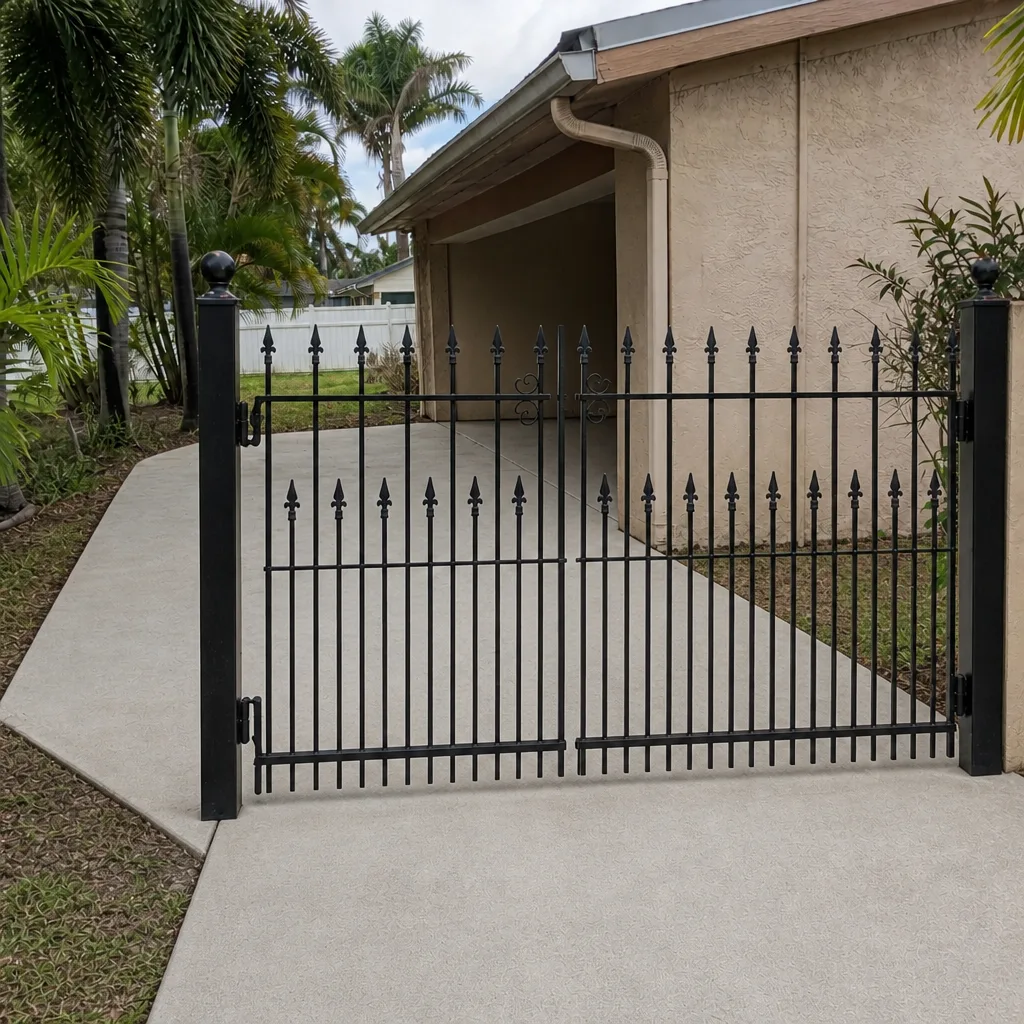 After
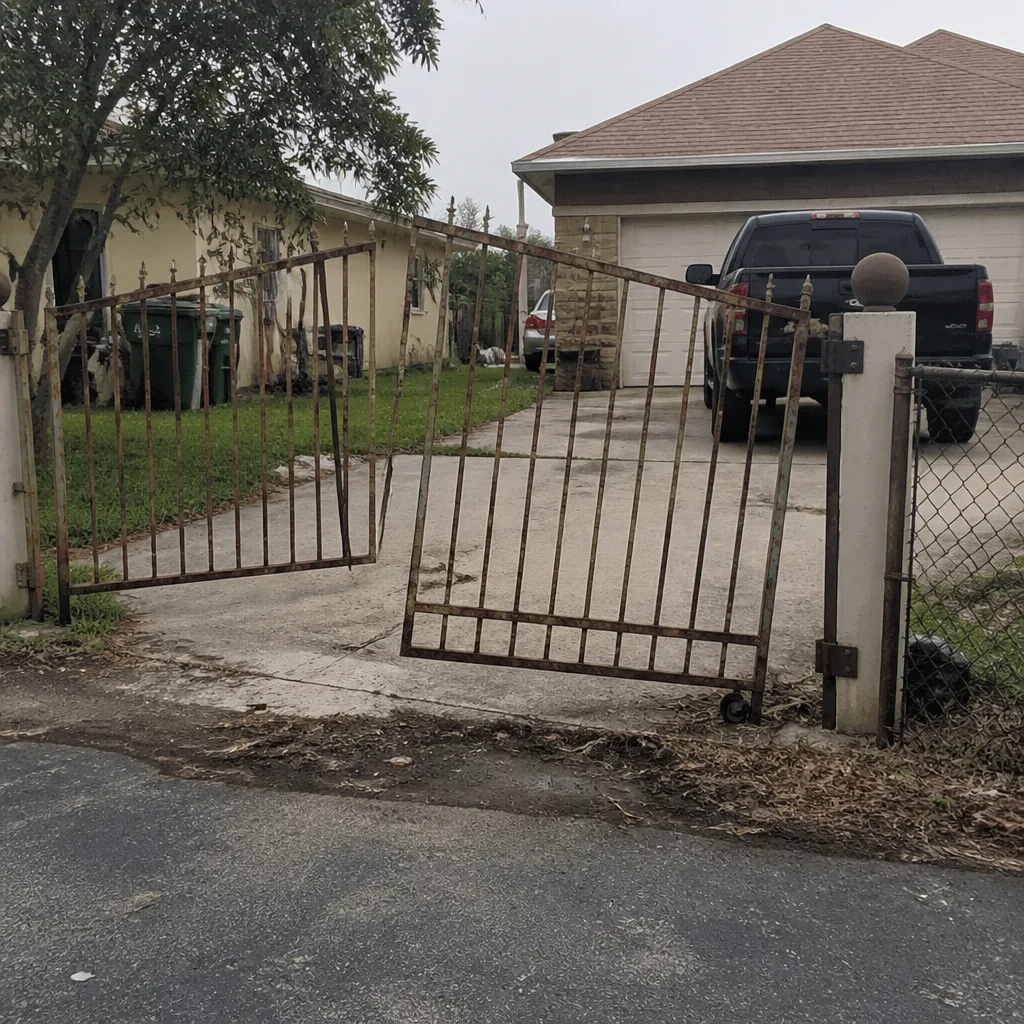 Before
 After
 Before
 After
When to Call a Professional
Some seasonal care is yours to handle: clearing debris, checking the enclosure for water, testing the manual release, and walking the travel path before you power up. Everything else is worth a call, especially if the gate has shifted on its posts, if a control enclosure took on water, if the gate only misbehaves in rain, if it fails on reactivation after a long idle period, or if it’s been through a storm and anything looks off. Those are all signs of a problem that a visual check can’t resolve. Cape Coral Gate Repair offers free estimates in Cape Coral. Call (855) 687-9638. We answer 24/7. Fast dispatch from 7am to 7pm, Sunday through Friday. The written estimate sets the price, and you approve it before any work starts.
Frequently Asked Questions
March and April are ideal, right before storm season opens. The weather is predictable, the gate isn’t needed for storm prep, and any issues found in the inspection can be fixed before the wet season tests them.
Because that’s when months of accumulated damage stops being hidden. Wet-season corrosion, surge wear on control boards, and post movement from saturated soil all build up silently, then surface when the stress of daily use continues but the conditions that masked the problem go away.
Yes, using your operator’s manual release, following the manufacturer’s instructions for your specific model. What you shouldn’t do is open control enclosures, touch live wiring, or force a heavy panel. If the release won’t move or the gate feels jammed, call a technician before the storm arrives.
That pattern almost always points to underground wiring, conduit joints, or a loop detector taking on water. Above-ground components look fine while buried connections are corroding. Mention the rain-only pattern when you call so the technician checks the wiring first instead of replacing parts at random.
Do a reactivation check first: clear the travel path, inspect the enclosure for nests or moisture, look at the posts for movement, and test the manual release. Then restore power, test the safety devices, and run one slow cycle while you watch. If it stumbles, stop and get it looked at.
No. The price is set per job by the written estimate, and that estimate is agreed before any work starts. Call (855) 687-9638. We answer 24/7. A call outside dispatch hours is booked into the next opening, Sunday through Friday, 7am to 7pm.
The Bottom Line
Cape Coral’s gate care calendar isn’t about four seasons. It’s about a dry season that wears on moving parts, a wet season that quietly destroys buried wiring and control boards, and a storm window that requires specific prep and a specific inspection order afterward. Add the snowbird reactivation trap and you have the whole picture. Our technicians have up to 10 years of experience working on residential and commercial systems from Viking, Ghost Controls, DoorKing, Elite, and other manufacturers. Match your maintenance to the calendar, don’t skip the underground checks, and call before a small seasonal problem becomes a motor or control board replacement.
Call (855) 687-9638 for a free estimate. We answer 24/7. Fast dispatch from 7am to 7pm, Sunday through Friday. The written estimate sets the price, and you approve it before any work starts.
Written by the team at Cape Coral Gate Repair.