
Last updated November 15, 2026
 Wrought iron
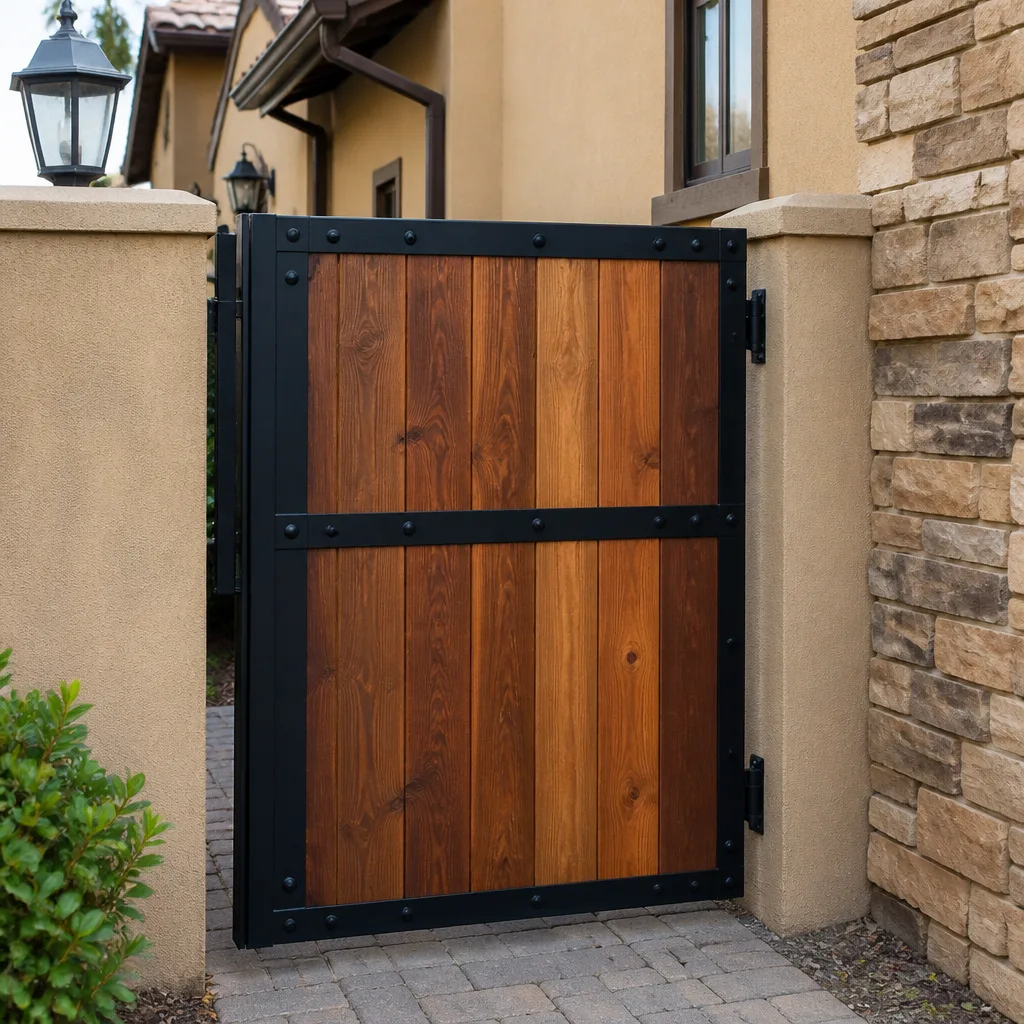 Wood & steel frame
 Farm & ranch
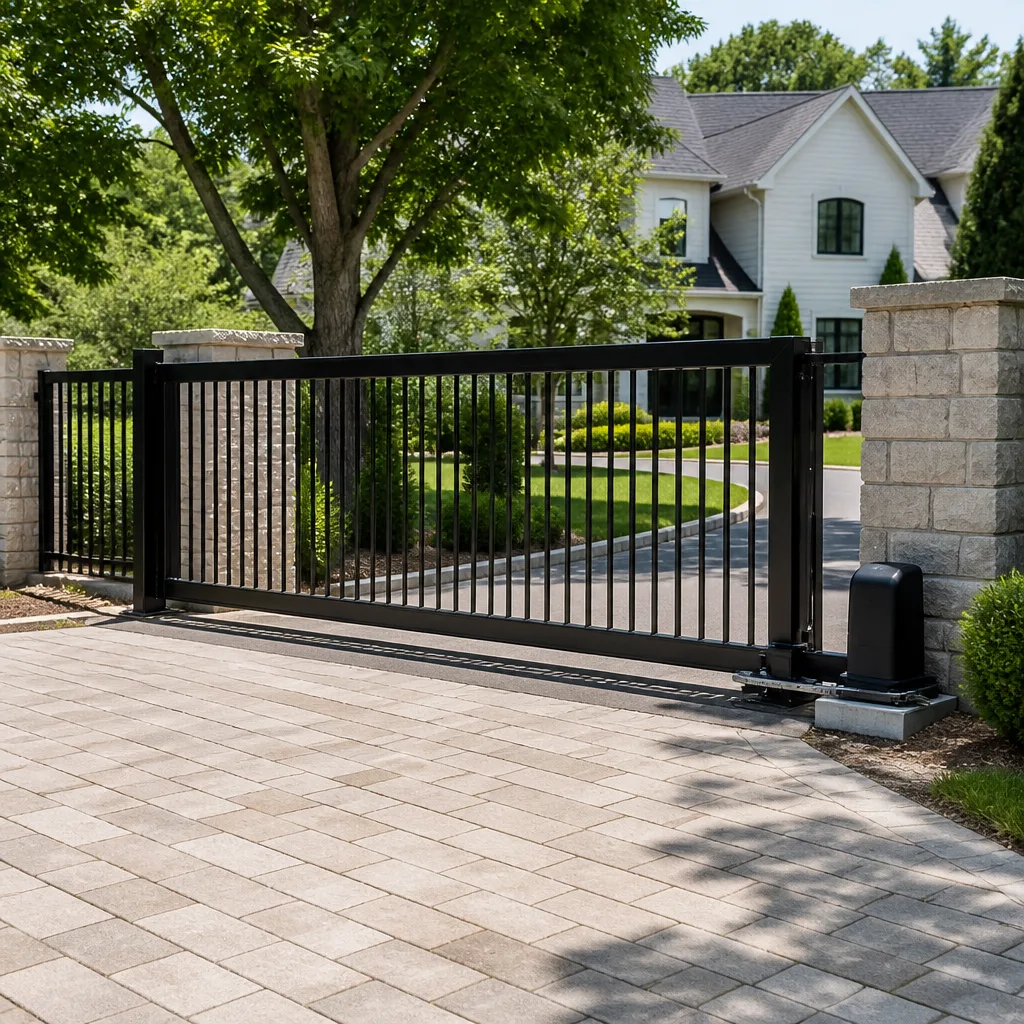 Sliding driveway gates
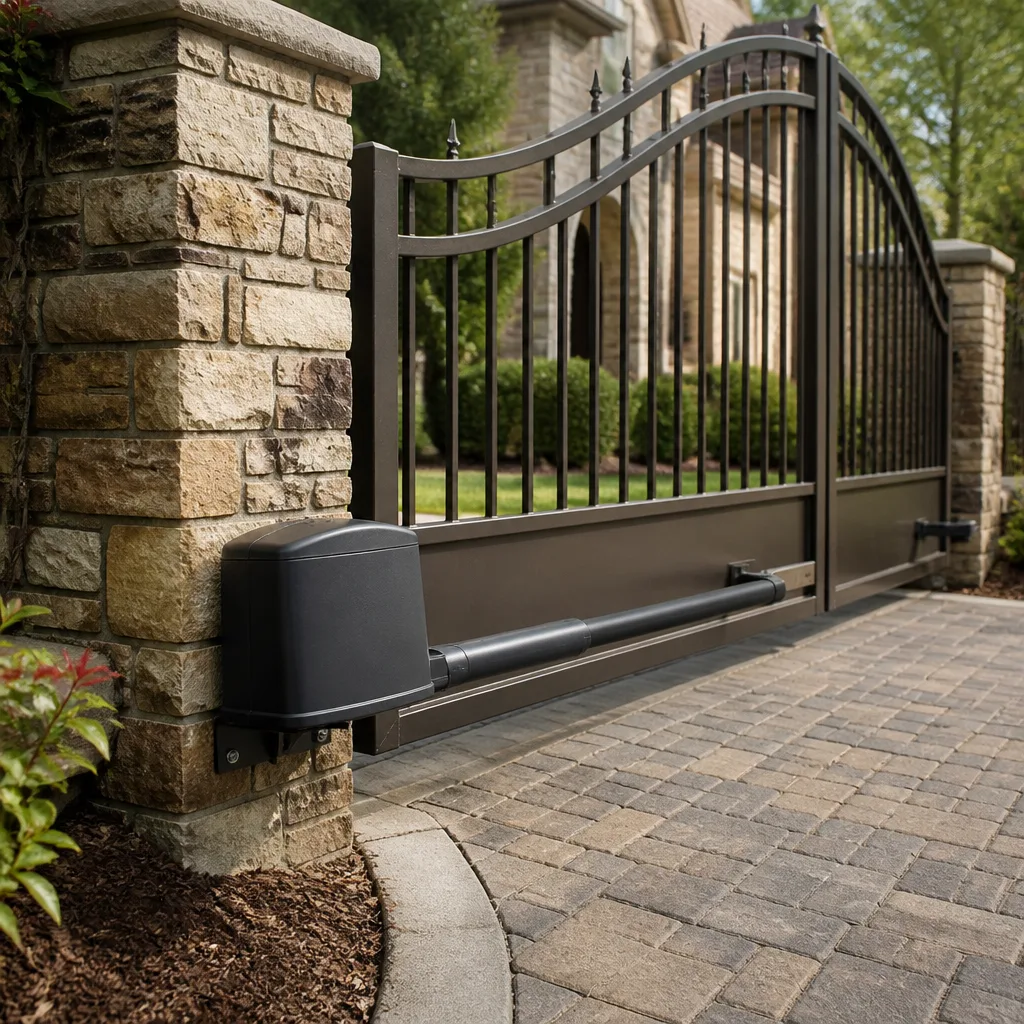 LiftMaster operators
Free on-site gate assessment - hinges, posts, and your LiftMaster or Nice gate operator checked before anything is quoted
The assessment is free and the quote is the invoice.
Get your free estimateDIY vs Professional Gate Repair: The Cape Coral Homeowner’s Decision Guide
Replacing a remote battery and replacing a control board feel like the same kind of task right up until they aren’t. One takes thirty seconds and a coin. The other puts line voltage, a moving gate panel, and a warranty you probably forgot you had into the same afternoon. The real question isn’t whether you’re handy. It’s whether you can tell which gate repairs have a narrow margin for error and which ones genuinely don’t. In Cape Coral, that line falls in a specific place, and this guide walks you to it: what’s safe to handle yourself, what isn’t, what a misdiagnosis actually costs, and how the heat and sun here change the math on getting it done.
Quick Answer
Battery swaps, lubrication, clearing obstructions, and remote reprogramming are genuinely safe DIY tasks. Anything inside the operator housing, on the wiring, or involving the control board is not: it’s low-voltage electrical work with real injury and shock risk, and on most brands it can void your warranty. For automated systems in Cape Coral, that means most repairs past the basics belong with a trained technician.
Styles & brands we work with
- Wrought iron
- Wood & steel frame
- Farm & ranch
- Sliding driveway gates
- LiftMaster operators
Table of Contents
- The Real Question: Not Skill, But Margin for Error
- What Is Genuinely Safe to DIY on a Cape Coral Gate?
- Why Gate Operator Wiring Is Not Basic Electrical Work
- How DIY Repairs Can Void Your Manufacturer Warranty
- The Hidden Cost: Replacing a $40 Part When the Problem Is a $200 Board
- Working in Cape Coral Sun: Heat Injury and Equipment Damage
- When DIY Is Actually the Right Call
- When a Professional Is the Only Sensible Option
The Real Question: Not Skill, But Margin for Error
A gate repair is not one kind of task. It’s a category, and the tasks inside it range from “anyone can do this” to “a professional with the right meter should be the only one in there.” We’ve seen what happens when that distinction gets missed. Not because homeowners are careless, but because the tasks get sorted by how they look rather than by how they fail.
Consider what actually goes wrong on an automated gate, and notice how broad that set really is.
- A remote that stopped pairing. Cosmetic, harmless, easy to fix.
- A gate that’s sluggish in the afternoon. Often mechanical resistance or wear, sometimes a battery going soft under the charge cycle.
- A gate that starts then immediately reverses. Usually an obstruction sensor or a limit setting that has drifted.
- A gate that does nothing when you press the button. This is the fork in the road: it’s either no power, a dead battery, a blown fuse, a stuck button, a failed remote receiver, a photo-eye in the wrong state, or a control board failure. Those are six completely different repairs with six different price tags, and pressing a new remote at the problem doesn’t tell you which one you have.
That last item is where the DIY line actually sits. A margin for error means that if you make a mistake, you notice it, fix it, and move on with no harm done. Battery replacement has a wide margin. Lubrication has a wide margin. Diagnosing a non-responsive automated gate by swapping parts has almost none, because you can’t see the failure, you can only see the symptom.
In Cape Coral, the margin narrows further because of how gates are used here. Many properties run their gates frequently, and the equipment sits under heavy UV, cycles through hot afternoons, and collects windblown debris in the tracks. A gate that’s “just acting up” has a hundred possible causes, and your gate has a specific one. The trick is knowing which repairs sit on your side of the line and which don’t.
What Is Genuinely Safe to DIY on a Cape Coral Gate?
Four tasks account for the vast majority of gate problems, and all four are safe for a homeowner to handle without technical training. The key with each is knowing when to stop and what result looks like “fixed.”
1. Battery replacement in remotes and keypads
This is the big one. If your remote works intermittently, needs to be held close, or stops altogether, replace the battery first. It’s cheap and it resolves the majority of “my gate won’t open” calls before they’re made. On most transmitters it takes a coin, a small screwdriver, or nothing at all. If the remote works fine from close range but not far away, that’s a low battery or an antenna issue, not a dead gate. If a fresh battery doesn’t fix it, move up the list.
2. Lubrication
Lubricate the hinge points, the rollers, and the contact surfaces, and use a product made for gate hardware rather than whatever’s nearest. Applying the right lubricant once is better than applying the wrong one five times. All metal-to-metal contact on outdoor gate hardware needs some protection, and this is one place where regular attention prevents bigger problems.
3. Clearing obstructions
If the gate reverses or stops, before you do anything else, look at the track. Look for debris in the path of a sliding gate, anything caught in the sweep of a swing gate, and a sensor or photo-eye that’s blocked or knocked slightly out of aim. Some gates stop on obstruction detection by design, and that counts as working correctly. Clear the obstruction, re-aim the sensor, and test. If the gate still won’t complete a full cycle, stop and leave it to a technician.
4. Remote reprogramming
If you’ve added a remote, replaced one, or your operator lost its paired devices after a power event, the operator’s manual walks you through pairing. Most brands, including Ghost Controls systems we see on residential driveways in Cape Coral, have straightforward pairing sequences. This is safe and does not touch the wiring.
Call (855) 687-9638 if a free estimate on anything beyond these four would save you a weekend of guesswork. We answer 24/7. Fast dispatch from 7am to 7pm, Sunday through Friday.
Why Gate Operator Wiring Is Not Basic Electrical Work
Automated gate operator wiring is low-voltage in the control circuitry, high-current in the motor circuit, and not the same as basic household wiring. Low-voltage control wiring is where most people who are comfortable with a light switch never develop any experience. The panel in your garage runs on protocols and connections that operate on different rules, and gate operator access-control components (keypads, receivers, loops, and intercoms) are their own category entirely.
Here’s the practical version of why professionals belong inside the operator housing:
- It’s electrical work, not a mechanical repair. Touching the wrong terminal inside the housing, on a system that’s still powered, is a shock risk. Gate operators run on mains power at the motor end and low voltage at the controls, and mixing those up damages equipment or injuries a person.
- Florida low-voltage licensing. Electrical contracting work in Florida is regulated, and if the work goes wrong and you’re not licensed for it, the problem becomes bigger than the gate. If you need an extra layer of confidence, ask anyone you hire to check their license before they start.
- Sensors and safety edges are wired, and they’re there to protect people. A photo-eye that is misaligned, miswired, or bypassed is a gate that doesn’t stop when someone’s in the way. That’s a safety system, not a convenience feature. This is not a place for trial and error, and any technician who works on your gate should treat sensor issues as a serious problem, not an annoyance.
- Control board damage compounds. One miswired connection can take out a board, a receiver, and the fuse that would’ve caught it, all at once. The labor to trace the resulting mess costs more than the original repair.
None of this means you can’t understand your operator. It means don’t reach the point where you’re guessing at wiring. If an operator or access component is the culprit, the fastest path back to a working gate is to have a qualified technician look at it. That work is what we do, and if your gate is down and you’re in Cape Coral, electric gate repair is the part of the job most homeowners stop at because they can’t safely reach it.
How DIY Repairs Can Void Your Manufacturer Warranty
Many automated gate operators carry a manufacturer warranty, and most of those warranties require installation and service to be performed by a professional. When DIY work is the cause of a failure, the manufacturer may decline to cover it. That’s the short version. The long version lives in the fine print, and it’s worth understanding before you open a housing.
Manufacturers can’t always tell who did what. But service documentation matters. A technician with brand knowledge of a system leaves a service record: what was tested, what was replaced, and what the readings were. When a covered part fails after documented professional handling, the warranty claim goes more smoothly than when the box has been opened and the wiring has been moved around by someone with no record of the work.
Here’s what we tell Cape Coral callers about brand warranties in plain terms: check the manual that came with the operator before touching anything inside the housing. Look for the words “authorized,” “certified,” “installation,” and “service.” Those terms define the line for many systems, and that line is often stricter than people expect.
- Battery and remote changes rarely affect coverage. They’re the low-risk end of the spectrum.
- Opening a housing and swapping internal parts is a different story, especially if damage can be attributed to the swap.
- Whether the work is covered by the manufacture date or the install date matters. If you bought a new-build home in Cape Coral with an existing gate, the original documentation may not have been handed to you, and a technician can often help identify the model and version.
If your gate came with the house and you’re not sure of the model, gate repair for many brands means a technician identifies the system before doing anything. That step alone tells you whose warranty (if any) is in play. It’s also a reason not to open the housing speculatively: one documented service call often turns into a faster repair than three afternoons of DIY guessing.
The Hidden Cost: Replacing a $40 Part When the Problem Is a $200 Board
Misdiagnosis is what undoes most DIY gate repairs, and the pattern is predictable. The gate doesn’t open. The remote is suspected to be the problem, a new remote is purchased. The gate still doesn’t open. The battery is now suspected, so the battery is replaced. Still no movement. The receiver is suspected, a receiver is ordered, and after all that, the control board was the failed component. Now you’ve spent more than a professional visit would have cost, and you still need the repair.
The “swap and hope” approach fails because it works on symptoms you can see, not on the failure you can’t. A professional diagnostic does something different: it measures.
- Power at the source. Is the operator getting the voltage it needs? A meter answers this in seconds. A new remote never can.
- Control signals. When the button is pressed, does the board see the command? That’s a read from the terminals, not a guess.
- Safety circuit state. Photo-eyes, edges, and loops are supposed to allow movement only when clear. A sensor stuck in the wrong state blocks or reverses the gate, and that looks exactly like a dead operator from the driver’s seat.
- Mechanical resistance. A gate that opens with help from a person but not on its own has a different problem than a gate that doesn’t move at all. Both can make the operator seem dead.
- Brand-specific behavior. A DoorKing access controller and a Mighty Mule residential operator fail in completely different ways. A technician who knows the system recognizes the fault codes and the odd behaviors.
This is also where our range matters. These problems come in on both residential and commercial systems, and they look different in each. Some failures are simple and some are the kind that doesn’t show up at all until the panel is open. Knowing a brand’s model before touching it is the difference between replacing the part that failed and replacing the part that happened to be nearby.
Cape Coral gate systems run the full spectrum, from heavy-duty commercial entrance equipment to residential operators. That range changes the diagnostic game, and it’s a big part of why brand familiarity matters as much as experience.
Working in Cape Coral Sun: Heat Injury and Equipment Damage
Most gate repair guides skip the one factor that’s specific to working outside in South Florida in July: the sun. Metal gate hardware in direct sun can reach temperatures that burn skin on contact. It isn’t merely uncomfortable, it’s a hazard, and it’s one of the quickest ways a DIY gate repair ends in a burn instead of a fixed gate.
The risks in the heat aren’t limited to burns:
- Heat illness. An afternoon spent on a ladder or behind an open gate in the sun can escalate quickly. Hydration, shade, and a reasonable work window are part of the plan, not an afterthought.
- Voltage under heat. A battery that seems fine in the morning can fail under the charge load in the heat of the afternoon, and charge cycles behave differently in high heat. What looks like “the system is dying at 4pm” is a battery symptom more often than a motor one.
- Heat and access control panels. Electronics in direct sun age differently and can exhibit intermittent faults. Work while the panel is hot and those readings can be misleading.
- Running the math before you start. Moving metal gates and lubricating hardware are physical work. Taking on a repair when you’re already overheated is where judgment slips.
The practical answer is scheduling. If you’re planning to lubricate or clear a track, do it early in the morning when the metal is still cool and the heat isn’t a factor. If the work involves a ladder, a housing, or anything overhead, that planning is more important. It’s also the reason a technician who works in Cape Coral season after season plans around the heat rather than through it. If you want the repair handled without an afternoon in the sun, that’s what we’re for. Call (855) 687-9638 for a free estimate.
When DIY Is Actually the Right Call
DIY is the right answer more often than the internet admits. There’s a real list of gate issues that belong to you, and handling them yourself saves money for the problems that don’t.
Here’s how to know if your situation is on the DIY side of the line:
- The gate still moves, but something’s off. A sticky hinge, a stiff roller, a binding latch: these respond to lubrication and adjustment.
- Your remote stopped working. Try a fresh battery first, then pairing. If neither helps and the gate does move from a keypad or other control, the remote is suspect and it’s a small problem.
- You just added or lost a remote. Pairing new transmitters is a homeowner task, and the manual has the steps.
- The gate reversed for no reason and cleared after you moved something out of its path. Obstruction is supposed to stop it, and clearing the path is the repair.
The test for all four: does the gate work afterward? If the answer is yes, you’re done. If it isn’t, or you’ve tried something twice with no change, you’ve moved from the DIY side to the professional side, and the professional side is now waiting on you.
One more thing worth understanding about a Cape Coral home gate: if it’s a brand you’ve been able to keep alive with basic attention, that’s working as intended. But “basic attention” is a short list, and it doesn’t grow. The moment you’re inside the housing, you’re no longer doing routine care.
When a Professional Is the Only Sensible Option
Some gate work doesn’t have a DIY version. The operator housing is one example. Anything that puts voltage on a terminal, a sensor in the wrong state, or moving gate panels into path of a person is professional territory, on the safety logic alone. Add in access-control components, and the case is closed.
If your gate is involved in a property-management or access-control context, the answer is more clear-cut, and that’s the world that Cape Coral has a lot of. Commercial entrance systems serve many people a day, and the liability of an unqualified repair doesn’t land on the person who did the repair, it lands on the property. That’s also true of HOA entrances and multi-family systems where the gate has to work for everyone.
As a full-service gate company, we repair systems that are down and install new ones, and we work on both electric and automated systems and manual hardware. When a problem goes beyond the DIY list, the work stays inside the brand: we work on systems from LiftMaster, FAAC, BFT, Linear, Viking, Ghost Controls, DoorKing, Elite, and Mighty Mule. That’s what brand-specific diagnostics means. Not every one of those systems fails the same way, and knowing yours is the start of fixing it.
If your gate needs help today, we answer 24/7. Fast dispatch from 7am to 7pm, Sunday through Friday. Call (855) 687-9638 for a free estimate, and the written price is agreed before any work starts.
Common Mistakes to Avoid
- Buying a new remote before testing the old one. A remote that works from ten feet away is usually just low on battery, and buying a new remote before ruling that out sends money down the drain. Test first, buy second, pair third.
- Swapping parts instead of diagnosing. Replacing the remote, then the battery, then the receiver without a meter doesn’t tell you which one actually failed. That’s the most expensive path in gate repair.
- Opening the operator housing to “take a look.” It’s the fastest way to expose yourself to voltage and move wiring you shouldn’t touch. An automated operator can look like a box; it isn’t.
- Ignoring a sensor that’s been bumped. A photo-eye that’s not aimed correctly is a gate that can block or reverse on you. It’s a safety device, and it’s not optional.
- Working on hot metal in the middle of a Cape Coral afternoon. Gate hardware in direct sun gets hot enough to burn. Getting the work done in the cooler hours isn’t a comfort issue; it’s a safety issue.
- Clearing growth around the track instead of off of it. Debris in the path of a sliding gate can set off an obstruction that seems like a mechanical failure. Check the track itself before assuming the gate is broken.
- Assuming your warranty is gone before you know it. Many operators carry coverage. Not checking first can mean paying for a repair the manufacturer would have covered.
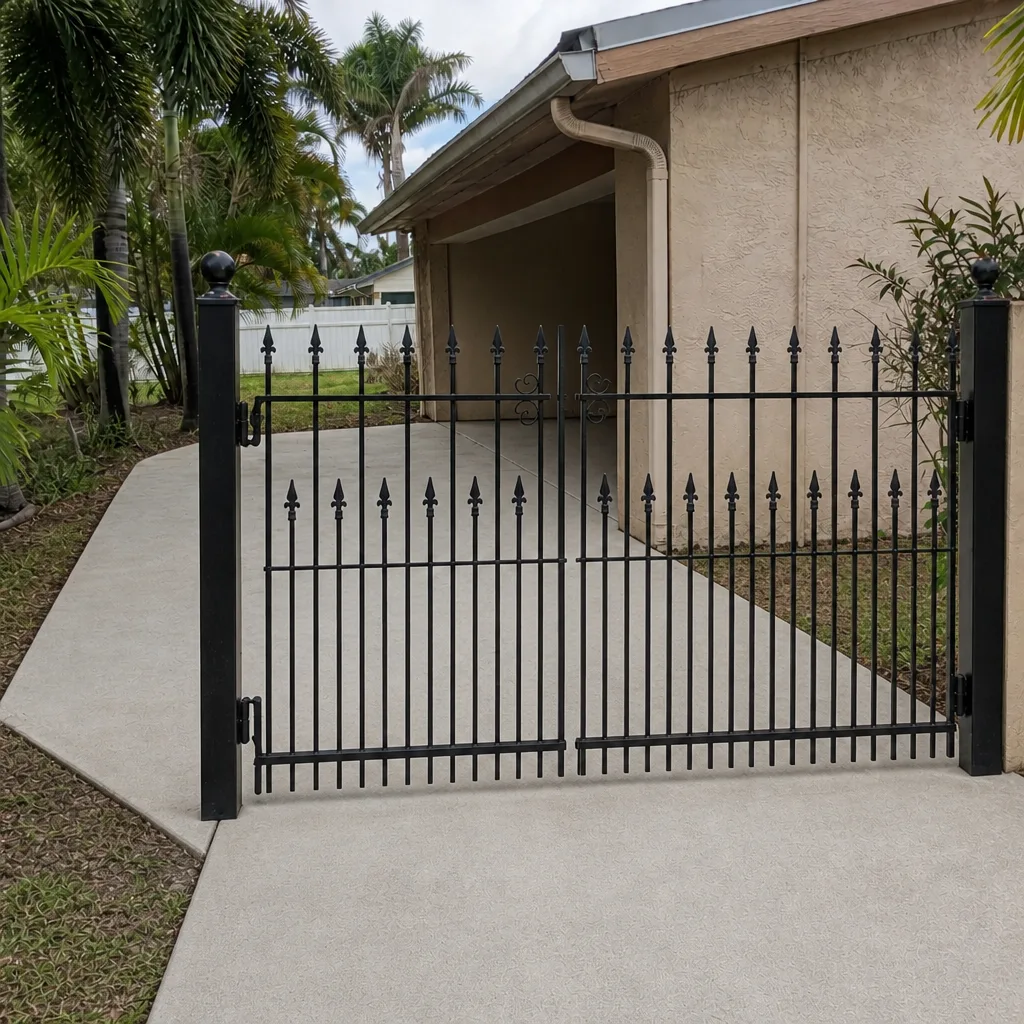
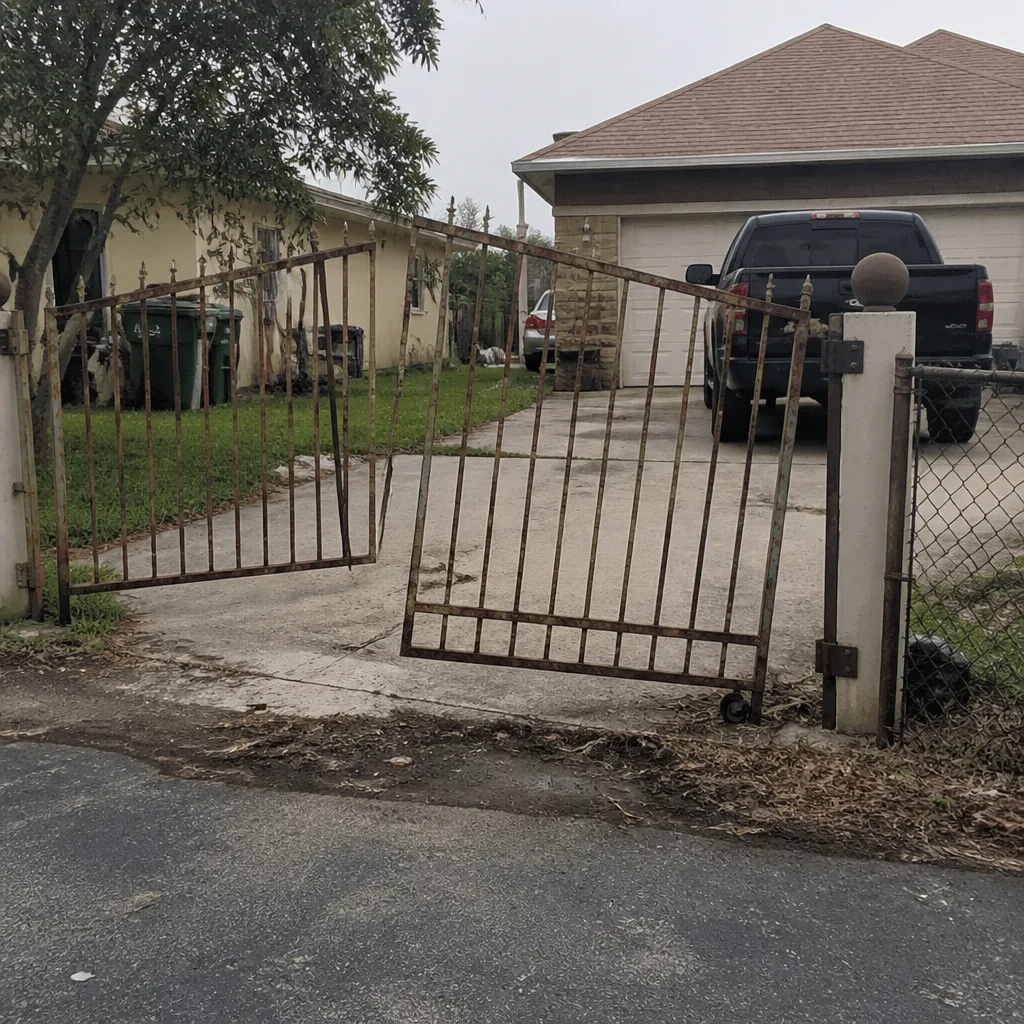
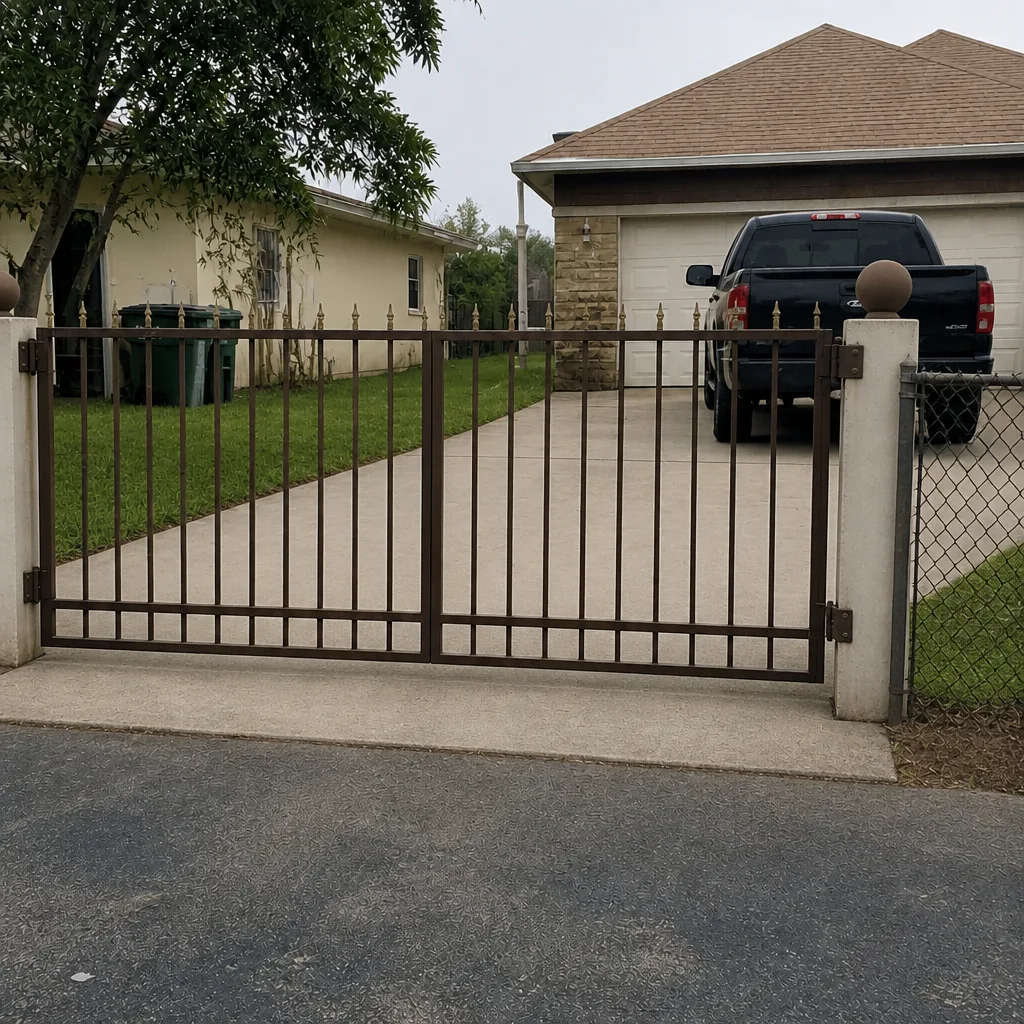
See the difference
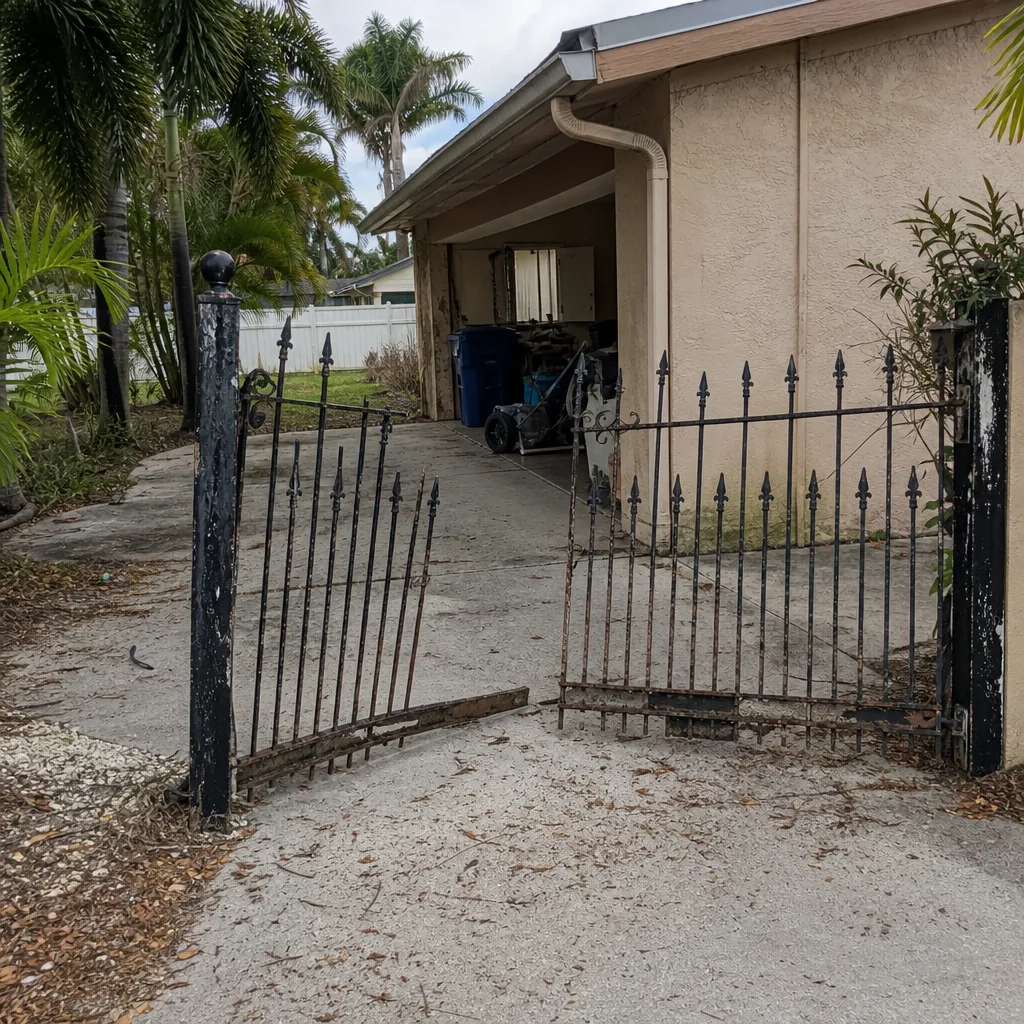 Before
 After
 Before
 After
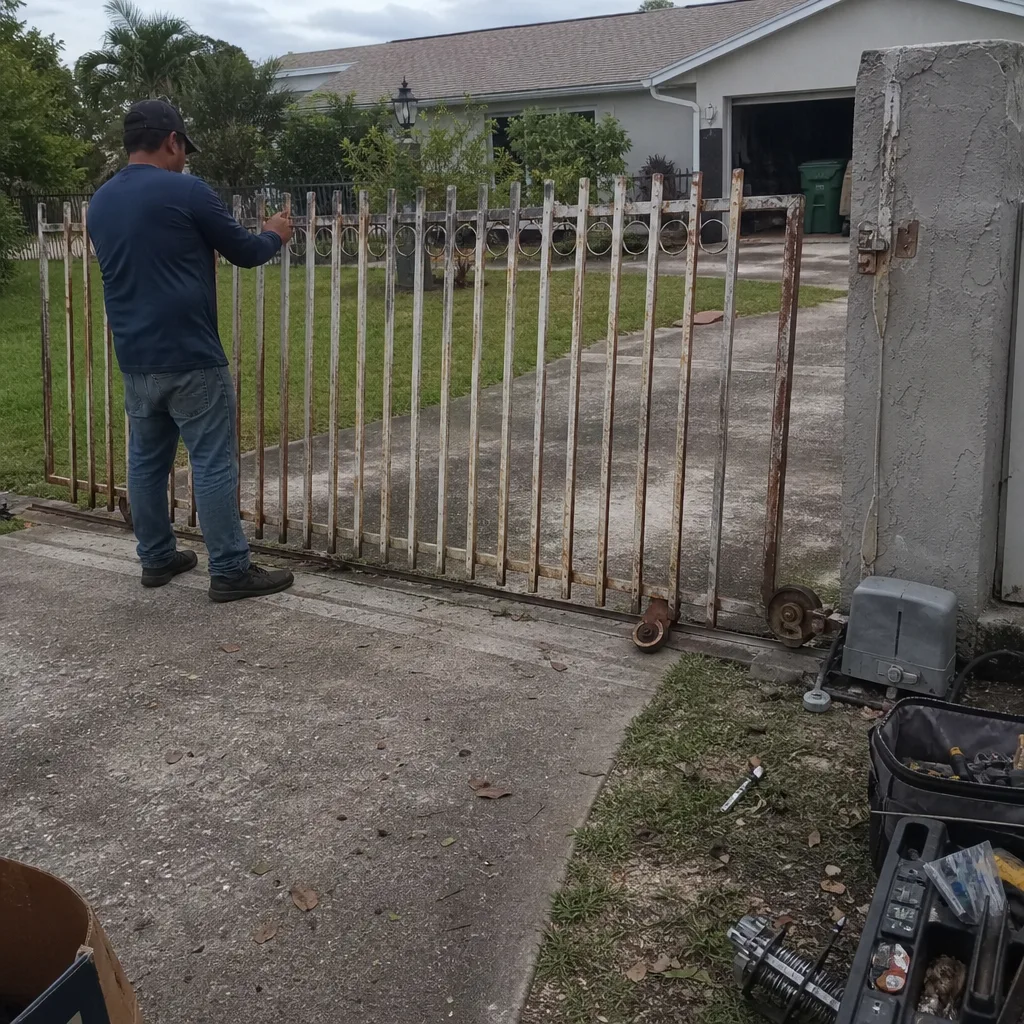 Before
 After
When to Call a Professional
Call a professional the moment a gate issue leaves the short DIY list. That includes any failure inside the operator housing, whenever the wiring, motor, control board, or access-control equipment is involved. Also call if your photo-eye or safety edge has been bumped or misaligned, if the gate is under manufacturer warranty and you’re unsure who’s allowed to service it, or if you’ve tried the simple fixes and the gate still won’t run a full cycle. It’s true for a homeowner with a stuck driveway gate and for a property manager with a commercial entrance that’s blocking access. Cape Coral Gate Repair offers free estimates in Cape Coral. Call (855) 687-9638.
Frequently Asked Questions
It’s safe only for battery replacement, lubrication, clearing obstructions, and reprogramming remotes. Anything involving the operator housing, wiring, the control board, or the safety sensors is not safe for DIY, because of shock risk, injury from a moving panel, and the chance of voiding the manufacturer’s warranty. For those, call a technician.
It can. Many manufacturer warranties require installation and service by a professional and won’t cover failures caused by DIY work. Check the manual that came with your operator before you open the housing, and when in doubt ask before you start.
That pattern usually points to a low remote battery or an antenna issue at the operator, not a gate problem. Replace the battery first, and if it still won’t work from a distance, have the system looked at. Call (855) 687-9638 for an exact quote. Estimates are free.
No. A gate that won’t move is a symptom, not a diagnosis. It can be a dead battery, a blown fuse, a safety sensor stuck closed, or a failed board, and replacing the operator before finding out which is usually unnecessary spending.
We don’t recommend it. Gate hardware in direct sun gets hot enough to burn skin, and heat illness is a real risk during a long outdoor repair. Do any allowed work early in the morning when the metal is cooler, and leave anything overhead or electrical to a professional.
Yes. We handle residential and commercial gate repair and installation, from a standard driveway operator to heavy-duty access systems. Call (855) 687-9638 for a free estimate. We answer 24/7. Fast dispatch from 7am to 7pm, Sunday through Friday.
The Bottom Line
The DIY versus professional question comes down to margin for error. A battery, some lubrication, a cleared track, and a re-paired remote are all safely yours to handle, and they solve a surprising share of gate problems. Everything past that, especially inside the operator and around the safety sensors, belongs with a trained technician. That boundary protects your safety, your warranty, and your wallet. In Cape Coral, sun and heat add another reason to plan the work or hand it off. If you’re unsure which side of the line your repair falls on, the phone call costs nothing. Call (855) 687-9638 for a free estimate. We answer 24/7. Fast dispatch from 7am to 7pm, Sunday through Friday.
You can also start with Cape Coral Gate Repair and get your gate back in operation, whether that means repair or replacement.
Written by the team at Cape Coral Gate Repair.