
Last updated November 15, 2026
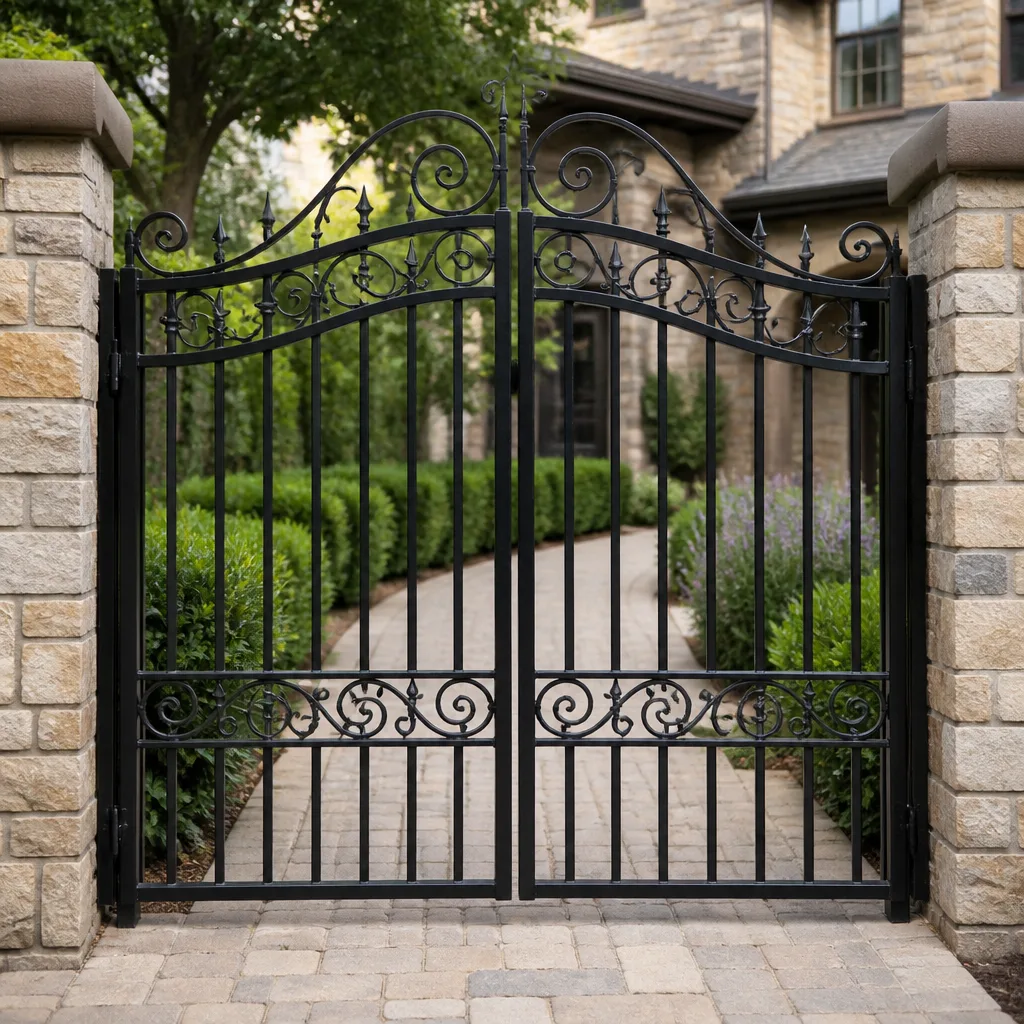 Wrought iron
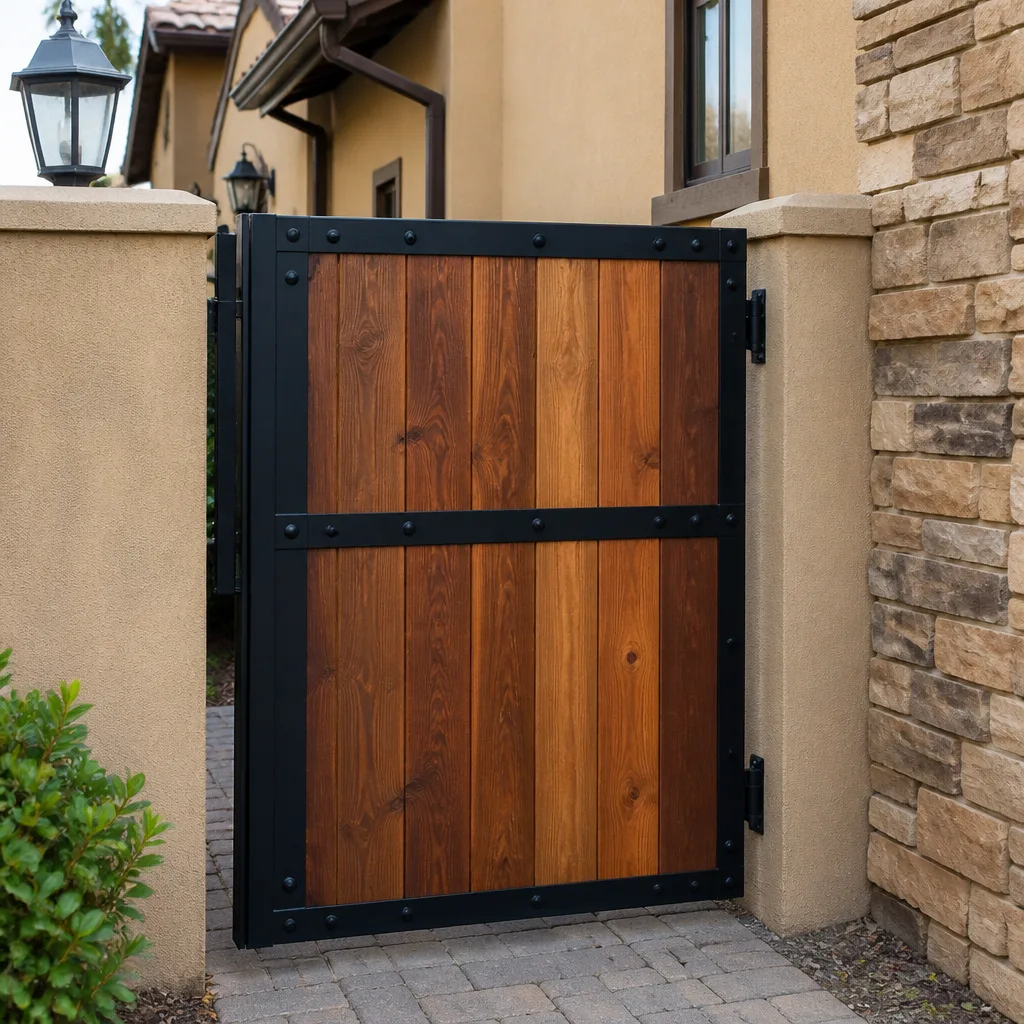 Wood & steel frame
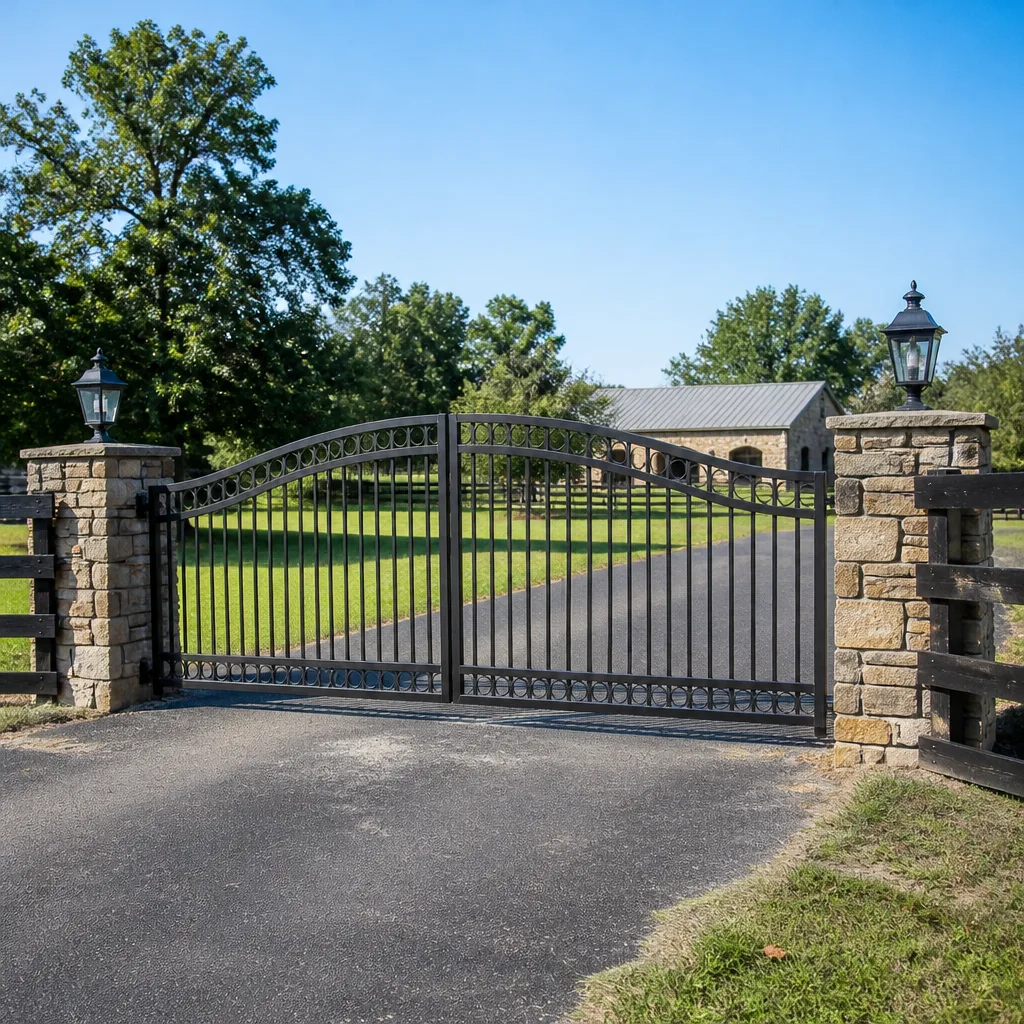 Farm & ranch
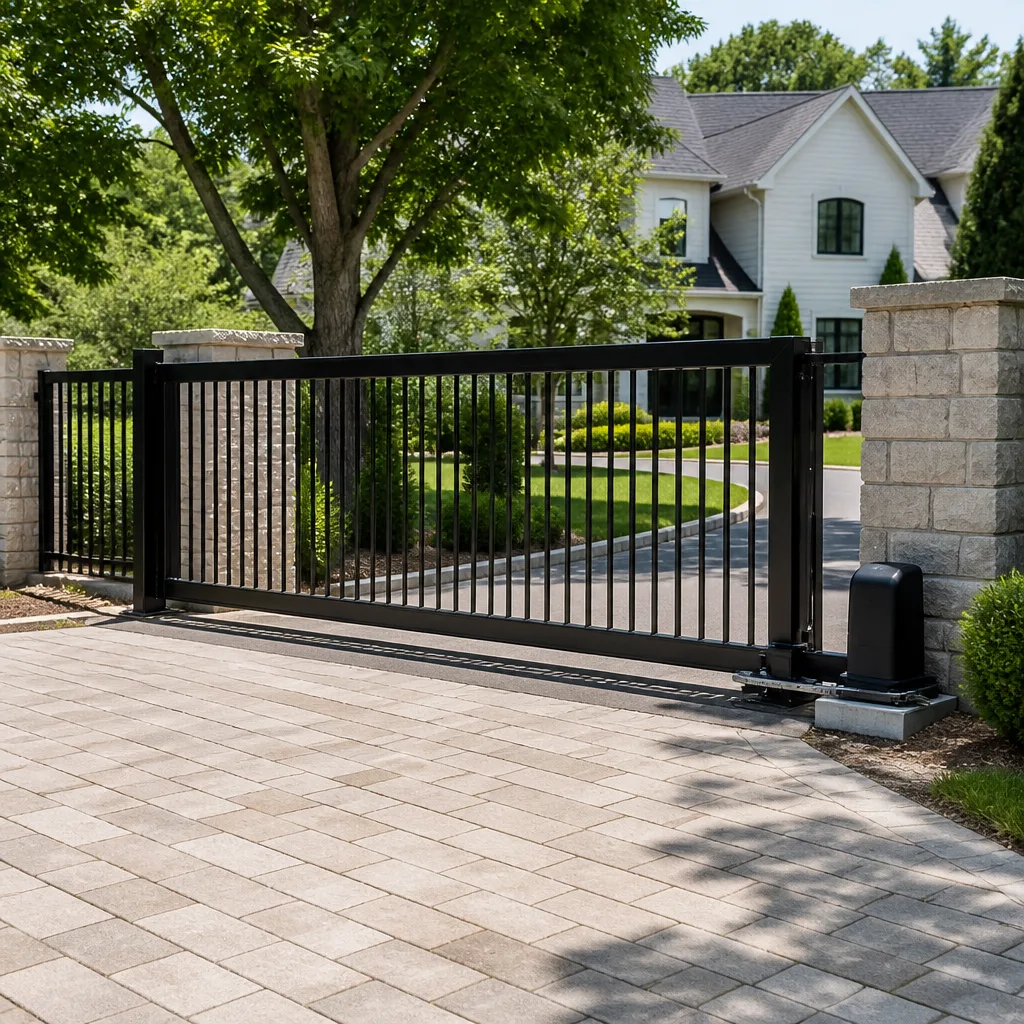 Sliding driveway gates
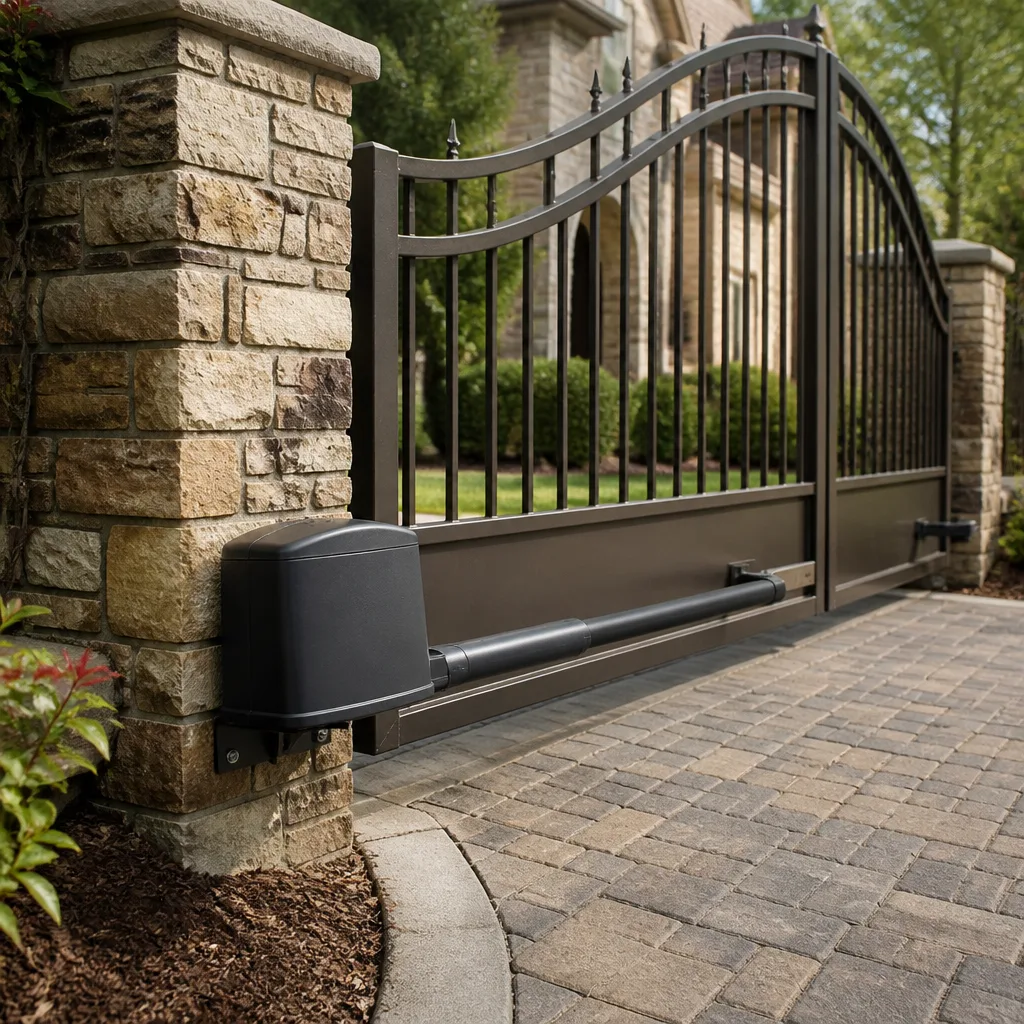 LiftMaster operators
Free on-site gate assessment - hinges, posts, and your LiftMaster or Nice gate operator checked before anything is quoted
The assessment is free and the quote is the invoice.
Get your free estimateGate Repair Cost Breakdown: The Cape Coral Homeowner’s Reference for 2026
The most expensive part of most gate repairs isn’t the component. It’s the second visit after the wrong part got replaced first. That happens when a technician diagnoses by swapping hardware instead of testing the system: a new control board goes in because the gate won’t open, the gate still won’t open, and the real culprit turns out to be a failed safety loop or a loose common wire. The homeowner pays twice for a guess. This guide breaks down what gate parts actually cost in Cape Coral in 2026, what labor should run by job type, and where contractors build in margin, so you can read a quote with real comprehension before you sign it.
Quick Answer
Most residential gate repairs in Cape Coral run roughly $250 to $750 for a single failed component, while control board and operator replacements typically land between $600 and $2,400 depending on brand and gate type. Commercial slide gate and barrier arm repairs run higher, commonly $900 to $3,500, because the load ratings, cycle requirements and access-control parts are heavier. Every figure here is a range; the written estimate you get after an on-site look is the price that counts.
Styles & brands we work with
- Wrought iron
- Wood & steel frame
- Farm & ranch
- Sliding driveway gates
- LiftMaster operators
Table of Contents
- What Drives Gate Repair Cost in Cape Coral
- 2026 Cost Ranges for the Most Common Repairs
- Why the Same Repair Costs More on a Commercial Slide Gate
- How to Read a Gate Repair Quote Line by Line
- What a Diagnostic Fee Should and Shouldn’t Include
- The Repair vs. Replacement Math on Older Operators
- When to Call a Professional
- Frequently Asked Questions
What Drives Gate Repair Cost in Cape Coral
Four things move the number on almost every gate repair: the part itself, how deep the technician has to go to reach it, the brand’s parts availability, and the access-control layer sitting on top of the gate. Nothing else explains the spread in quotes as reliably. A hinge repair on a residential swing gate and a hinge repair on a commercial slide gate involve different steel, different bolt hardware and different labor time, and that gap is where most cost confusion starts.
Cape Coral’s climate adds a specific layer. Long humid stretches and heavy summer rain do a number on outdoor electrical enclosures, on circuit boards that live in a control box in full sun, and on the photoelectric safety sensors that beam across a driveway. Boards that would last years in a dry climate can show water intrusion damage sooner when the enclosure seal has aged out. That’s not a brand problem; it’s an enclosure and maintenance problem, and it shows up in Cape Coral on gate systems of every make.
Parts availability matters just as much. A Mighty Mule residential operator is a common DIY-tier system with parts you can source quickly, so the repair is usually straightforward. A FAAC or Viking operator on a commercial barrier arm is a different story: correct parts have to be matched to the exact model and duty rating, and a wrong guess wastes a week. In our experience, brand-specific diagnostics are the single biggest lever on both cost and first-visit accuracy. A technician who knows the brand troubleshoots the right subsystem first instead of swapping parts to see what sticks.
If your gate has stopped and you’re trying to size the job before calling, Cape Coral Gate Repair is the place to start for a free on-site estimate.
2026 Cost Ranges for the Most Common Repairs
These ranges cover parts and labor for typical jobs and are estimated, not fixed. The written estimate sets the final price. Brand matters: where a range is wider, the spread usually reflects a residential operator on the low end versus a commercial-grade system on the high end.
| Repair Type | Typical 2026 Range | Notes |
|---|---|---|
| Operator (motor) replacement – residential swing | $900 – $1,800 | Includes new operator, wiring check and cycle test |
| Operator replacement – heavy-duty slide or barrier arm | $1,800 – $3,500 | Load rating and duty cycle drive the price |
| Control board replacement | $350 – $750 | Brand-specific; often the hidden fault on “won’t open” calls |
| Hinge repair or replacement | $150 – $450 | More on heavy commercial panels and multi-hinge gates |
| Loop detector repair or replacement | $400 – $900 | Includes saw-cut and sensor reset on commercial entrances |
| Intercom / access-control system | $500 – $1,500 | Wiring runs and call-box integration vary widely |
| Safety sensor / photo-eye realignment | $150 – $350 | Common after storm-driven misalignment |
Read that table the way you’d read a parts list. A LiftMaster residential swing operator replacement sits near the low end of the operator row. A FAAC or Viking commercial operator on a busy entrance sits near the high end because the unit has to match the gate’s actual load and cycle requirements, not just fit the cabinet.
We handle these jobs across brands because a borderline fault in one area often surfaces another: a board that’s failing can mask a bad sensor, and a motor that’s overheating can be a symptom of a gate that’s out of alignment and dragging. Brand-specific diagnostics find that faster, which is why gate repair here starts with testing, not replacing.
Why the Same Repair Costs More on a Commercial Slide Gate
A residential swing gate and a commercial slide gate can both fail at the operator, and the two bills will not look alike. Three factors explain nearly all the difference, and none of them are padding.
- Load ratings. A commercial operator has to move a much heavier gate panel, often continuously through a shift of incoming and outgoing traffic. The motor, gearbox and drive components are built to a higher duty class, and the parts cost more to source.
- Cycle requirements. A home gate might cycle a few dozen times a day. A commercial or HOA entrance cycles far more. That means the operator, and often a heavier-duty control board, has to be specified for continuous use, which pushes the whole job up.
- Parts sourcing and complexity. Access-control parts – loop detectors, card readers, intercoms, exit devices – stack on top of the operator on commercial systems. Diagnosing them means testing more subsystems and coordinating with property management on access during the repair.
We’ve seen this play out most clearly on barrier arms at multi-family entrances. A DoorKing or FAAC barrier arm repair that looks simple from the driveway can involve a loop detector, a call box and a control board all in one visit, because they’re all wired into the same traffic flow. That’s why commercial gate work deserves a company that handles the electrical and access-control side, not just the mechanical hinge and motor.
Cape Coral has a large share of HOA and multi-family entrances, and property managers here are rightly cautious about a gate that stays down for a day. Getting the diagnosis right the first time matters more on a commercial entrance because the downtime cost is shared across everyone who drives through it. When the system has also lost power or stopped responding entirely, that’s a job for electric gate repair rather than a general handyman.
How to Read a Gate Repair Quote Line by Line
A gate repair quote should be readable as a list of what will happen, in order, with a price beside each part. If you can’t tell from the quote whether the price is for the part, the labor or both, ask before you approve it. Here’s what belongs in a well-built quote versus what signals a thin or padded one.
- Legitimate: the specific part being replaced (with make and model), the labor for the diagnosis and the install, any wiring or sensor work required, and a line for disposal of the old part where applicable.
- Legitimate: a separate line for the access-control component if the job touches a loop detector, intercom or card reader, because that’s a different skill and part set.
- Padding: vague phrases like “shop supplies” or “miscellaneous” with no dollar breakdown, or a “system adjustment” line billed as if it were a repair.
- Missing: no line for a post-repair cycle test. If the quote doesn’t say the system will be tested and adjusted, add the question. Some quotes leave it off to look cheaper and then bill it separately.
- Missing: no mention of the safety sensors being checked after a motor or board replacement. A new operator is only as safe as the sensors it stops for.
- Find the part line and confirm it names the actual component, not “operator assembly, various.”
- Find the labor line and confirm it’s tied to the part, not a flat “service call.”
- Find the test line. If it’s absent, ask what the post-repair check includes.
- Find the total. If it’s a range instead of a number, ask what the range depends on.
The best quotes we’ve seen are the ones a homeowner can hand to a neighbor and have it make sense. If yours doesn’t read that way, that’s a signal. And always confirm the price is quoted and agreed before any work starts; a written estimate should lock the number, not open it.
The story behind a lot of these gaps is a general handyman who’s willing to change a Linear operator but not test the board controlling it. For brand-specific diagnostics on your system, Cape Coral homeowners and property managers can call us for a free estimate.
What a Diagnostic Fee Should and Shouldn’t Include
A diagnostic fee should pay for time and expertise, not for a guess. When we look at a gate, the diagnostic process involves testing the operator, the control board, the safety sensors, the power supply and the access-control wiring in a set order, and identifying the cause before recommending a part. That’s the value you’re buying, and it’s reasonable to charge for it as a separate line or to fold it into the repair estimate, depending on how the quote is structured.
What a diagnostic fee shouldn’t be:
- A mystery charge. If the fee isn’t explained, or isn’t tied to a specific scope of testing, ask what it covers.
- A substitute for repair. A fee that’s “credited toward the repair” only if you approve the entire recommended work isn’t a diagnostic; it’s a sales tactic.
- A red flag for a waive. A waived diagnostic fee can sound generous, but it sometimes means the company plans to make it up on the back end with marked-up parts or a larger repair recommendation. A waived fee isn’t a deal if it costs you accuracy.
This is where a brand-specific technician earns their keep. Because we work across LiftMaster, FAAC, BFT, Linear, Viking, Ghost Controls, DoorKing, Elite and Mighty Mule, the diagnostic follows the way that brand’s system is built, not a generic checklist. A Ghost Controls DIY residential opener and a BFT commercial operator fail differently, and the diagnostic should reflect that.
Our estimates are free, and the price is set per job by the written estimate. Call (855) 687-9638 if a quote from another company leaves you with more questions than answers. We answer 24/7. Fast dispatch from 7am to 7pm, Sunday through Friday.
The Repair vs. Replacement Math on Older Operators
Past eight years old, an operator in Cape Coral often reaches the point where the repair gets close to the replacement in total cost, and continuing to repair starts to cost more over the next few years than starting fresh would. That’s the math worth running before you approve a second or third fix.
The calculation involves three inputs:
- Remaining life of the operator. A residential operator that’s been failing at the same component (a board or a motor that keeps overheating) is telling you it’s near the end. A single failed hinge or a misaligned sensor on an otherwise healthy operator isn’t.
- Cost of the next fix. If the recommended repair is a substantial share of a new operator’s cost, replacement is the better long-term move.
- Parts availability. Some operators are common enough that parts are quick and cheap; others require sourcing specific components. On an eight-plus-year-old commercial unit, parts availability can tip the decision toward replacement even when the part is theoretically repairable.
In our experience, a residential swing operator over eight years old that’s failed twice in a short window is usually a replacement candidate. A commercial slide gate operator at that age is a judgment call that depends on the duty cycle it’s running and how well the gate panel itself has held up. What we don’t do is push a replacement when a repair is clearly the right call, because a warranty-chasing sale isn’t a repair.
Replacement isn’t always the answer, and a new operator isn’t always worth the cost on a gate that’s otherwise sound. What matters is getting the diagnosis right, then making the call with real numbers in front of you. If your system is on the fence, Cape Coral Gate Repair can walk through the repair vs. replace math with you on site.
When to Call a Professional
Some of what goes wrong on a gate is genuinely worth a call rather than a weekend project, and some of it is a training issue, not a skill issue. A gate that has stopped responding to its remote, a control board that’s failed, a commercial barrier arm stuck in the down position, an access-control system that no longer recognizes a card, or an operator that hums but doesn’t move are all cases for a trained technician. Electrical and access-control work is where untrained troubleshooting goes wrong fastest, and a gate that’s moving without its safety sensors functioning is a hazard to anyone who drives through it.
We’ve also seen property managers waste money trying to fix a board-level fault with a motor swap, or the reverse, because no one tested the system in order. Getting a technician who knows the brand on site is the fastest route back in operation. Cape Coral Gate Repair offers free estimates in Cape Coral – call (855) 687-9638. We answer 24/7, with fast dispatch from 7am to 7pm, Sunday through Friday.
Common Mistakes to Avoid
- Approving a part swap without a diagnosis. If the quote recommends a new board but doesn’t explain how the technician confirmed the board is bad, ask. A swap-first approach often lands on the wrong part, which is how the second visit happens.
- Assuming the cheapest quote is the best one. A quote that skips the post-repair cycle test or the safety sensor check isn’t cheaper; it’s incomplete. The missing line usually shows up as a follow-up bill.
- Letting a general handyman touch the control board or access wiring. Board-level and access-control diagnostics need brand knowledge and the right tools. A handyman who “can take a look” can turn a $400 board repair into a $1,200 replacement.
- Ignoring a gate that’s slow or intermittent instead of dead. In Cape Coral’s humid summers, a failing board or a water-intruded enclosure often shows up as intermittent behavior before it fails outright. Getting it tested early usually costs less than waiting for it to stop mid-cycle.
- Replacing an operator without checking the gate hardware first. A dragging gate, a bent hinge or a sagging post can wear out a new operator fast. The system has to be checked as a whole, not just the motor.
- Treating a commercial quote like a residential one. Load ratings, cycle requirements and access-control parts are different on commercial slide gates and barrier arms. A residential-priced quote for a commercial entrance is usually missing something.
- Signing off on a quote with no test line. If it doesn’t say the system will be tested and adjusted before the technician leaves, the job isn’t finished.
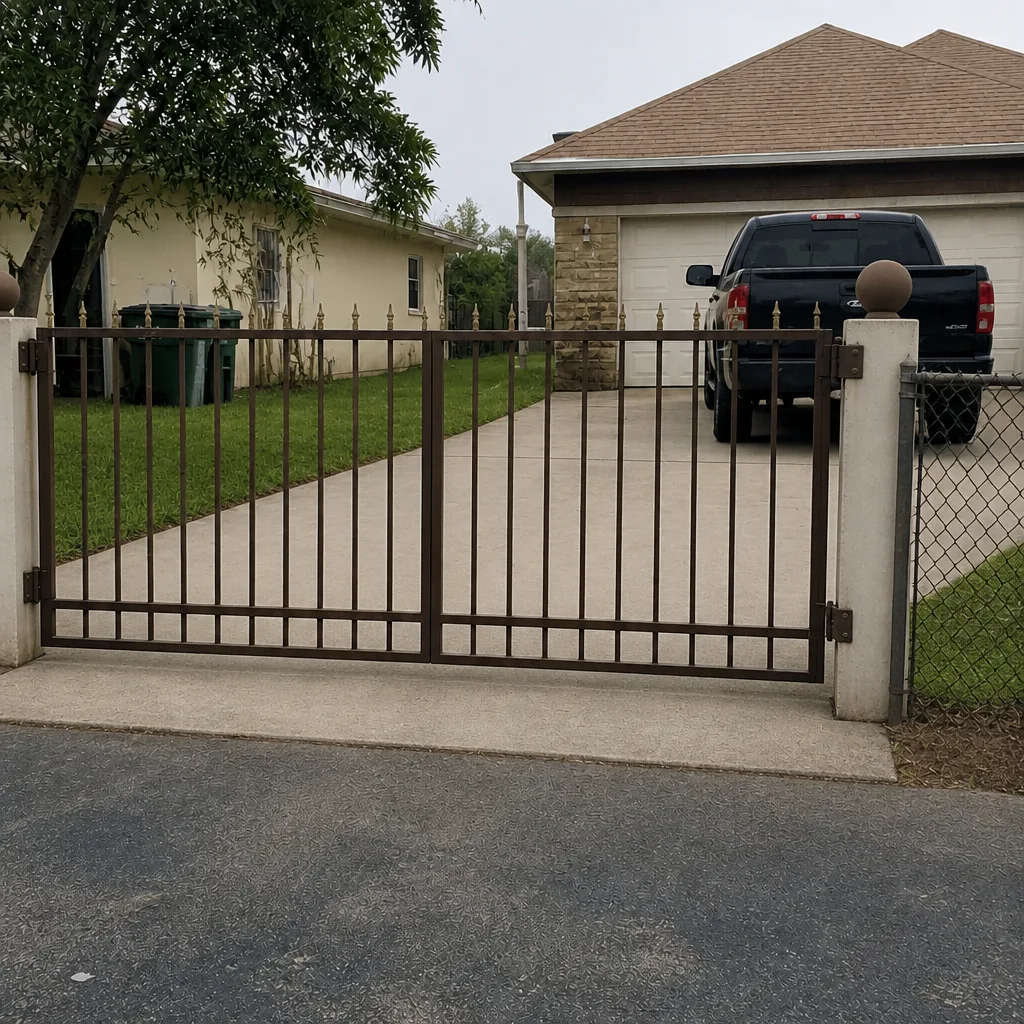
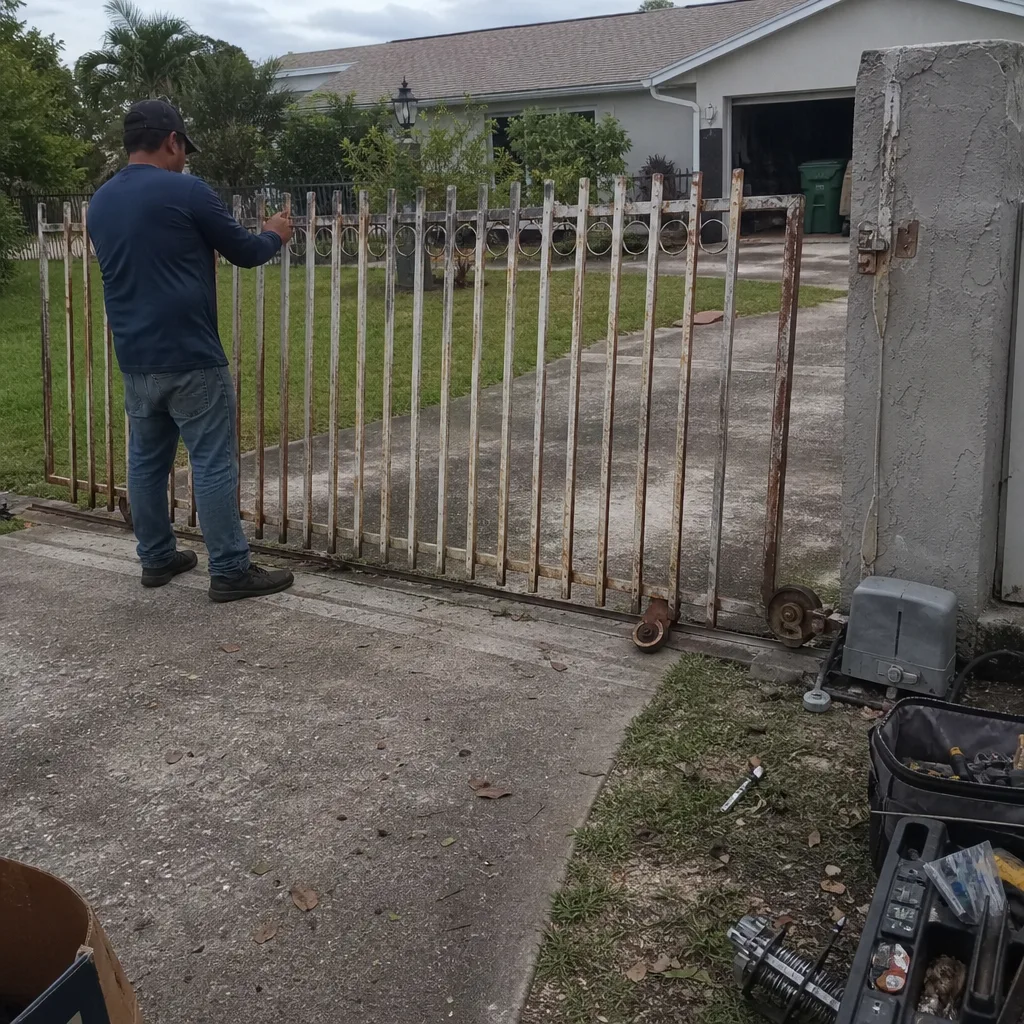
See the difference
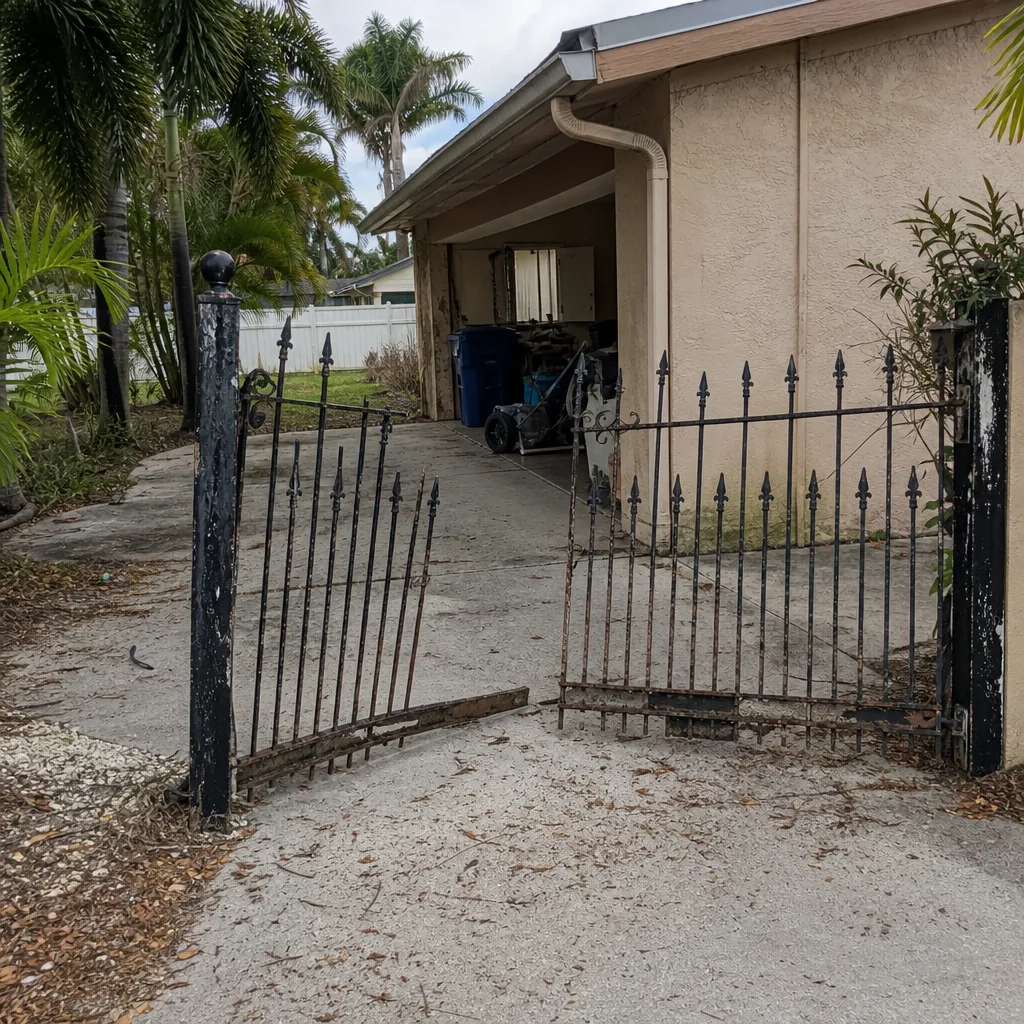 Before
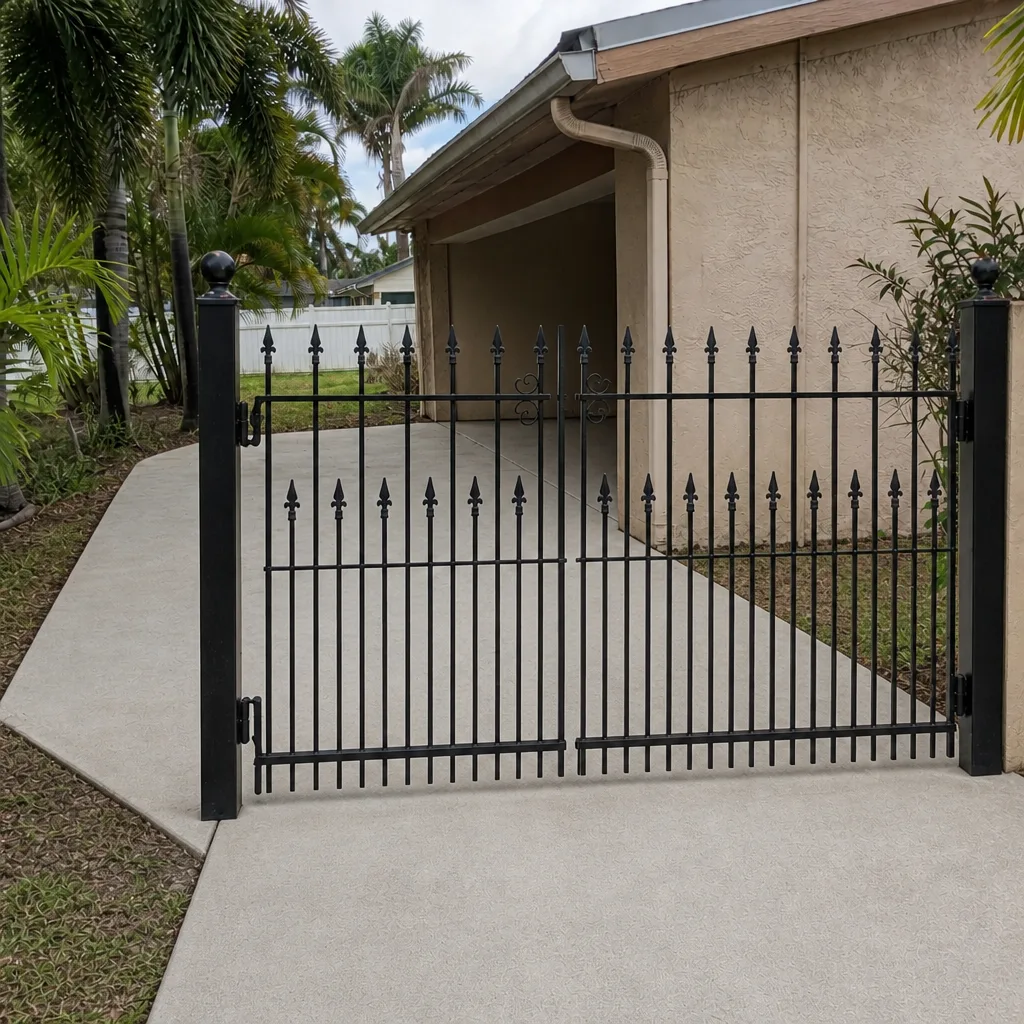 After
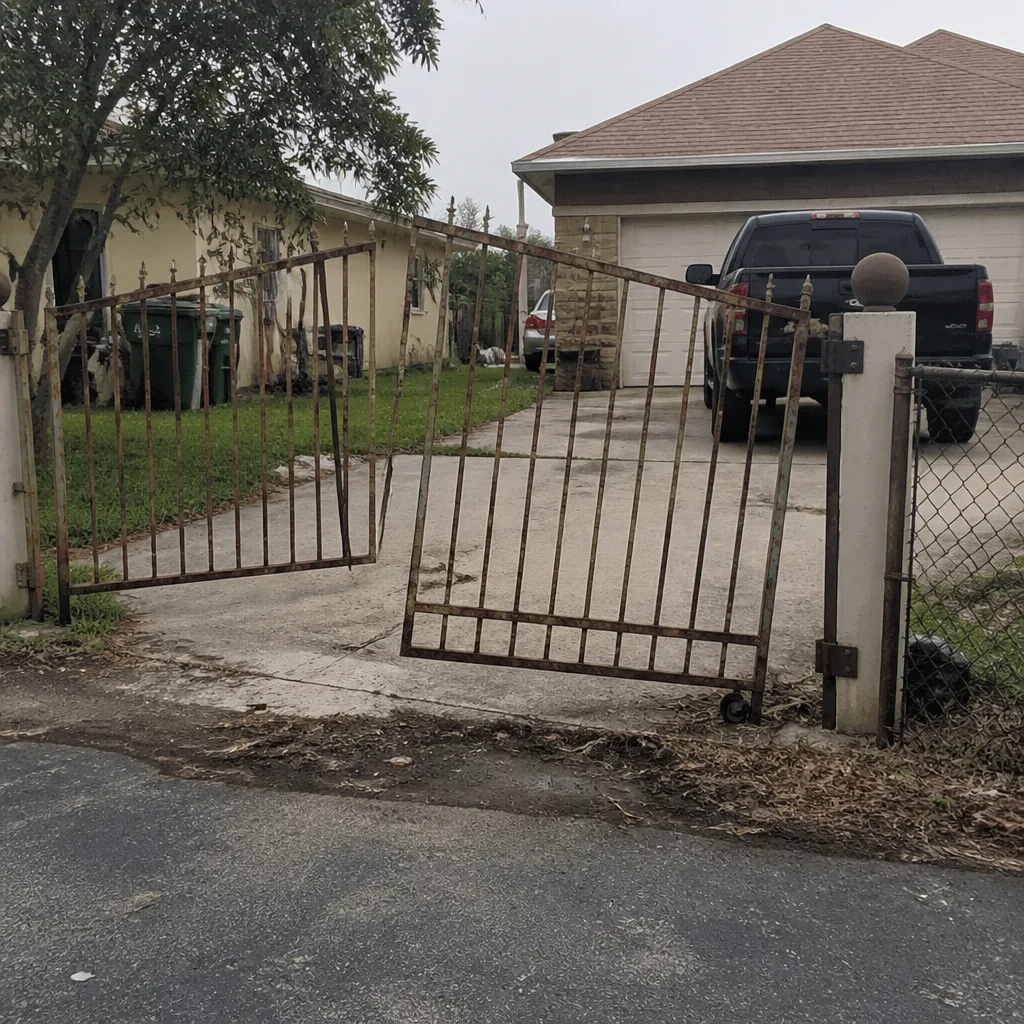 Before
 After
 Before
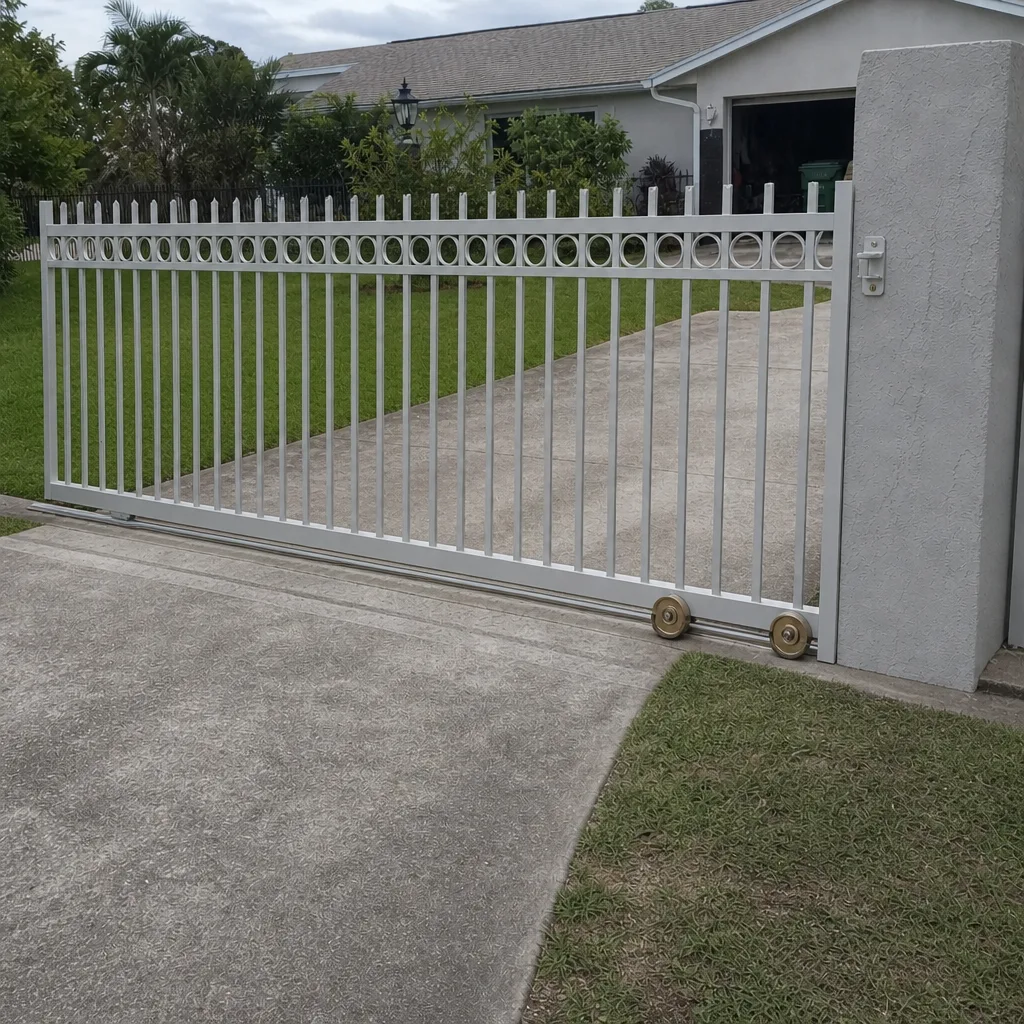 After
Frequently Asked Questions
Most residential gate repairs in Cape Coral run roughly $250 to $750 for a single component, while operator replacements typically land between $900 and $3,500 depending on residential or commercial grade. Every price is an estimate until the written quote; the written estimate sets the final number, and it’s quoted and agreed before any work starts. Call (855) 687-9638 for an exact quote – estimates are free.
Yes. The written estimate is the price, and we don’t start work until you’ve approved it. The on-site look is what makes the estimate accurate, since gate repairs depend on the actual brand, model and condition of the system. Call (855) 687-9638 to schedule the estimate – estimates are free.
Commercial slide gates carry heavier panels, run higher duty cycles and often include access-control components like loop detectors and card readers, so the parts and the diagnostic time are both higher. A residential swing operator replacement is usually the lightest job on the board, and a commercial barrier arm repair is often the heaviest. Call (855) 687-9638 and we’ll quote the job accurately.
A diagnostic fee covers the technician’s time testing the operator, control board, safety sensors, power supply and access wiring to find the cause before recommending a part. It shouldn’t be a mystery charge or a fee that only gets credited if you approve the full recommended work. Our estimates are free, and we walk you through what we found. Call (855) 687-9638.
Past eight years old, the answer depends on how often the operator has failed and whether the next repair is a large share of a new unit’s cost. A residential operator that’s failed twice in a short window is usually a replacement candidate; a commercial unit is a case-by-case call based on duty cycle. Call (855) 687-9638 and we’ll run the numbers with you.
We work on systems from LiftMaster, FAAC, BFT, Linear, Viking, Ghost Controls, DoorKing, Elite and Mighty Mule, across residential and commercial gates. Brand knowledge speeds up diagnosis, since each brand’s operator and control system is built differently. If you’re not sure of your model, we can identify it on the estimate visit – call (855) 687-9638.
The Bottom Line
The number on a gate repair quote is rarely a mystery once you know what’s in it: the part, the labor, the diagnosis and the post-repair test. The spread between quotes usually comes down to whether the technician diagnosed the actual fault or swapped parts hoping one of them would fix it. Residential repairs in Cape Coral generally land between $250 and $750 per component, operator replacements run $900 to $3,500, and commercial slide gates and barrier arms run higher for real reasons: load ratings, cycle requirements and access control. Read the quote, confirm the test line is in it, and get the written estimate before you approve anything.
Contact
If your gate has stopped and you want a straight answer on what the repair will cost, call Cape Coral Gate Repair at (855) 687-9638 for a free estimate. We answer 24/7, with fast dispatch from 7am to 7pm, Sunday through Friday. We work on electric and automated gate systems and manual hardware, repair and install, residential and commercial, across nine brands, and we’ll give you a written price before any work starts.
Written by the team at Cape Coral Gate Repair.