
Last updated November 15, 2026
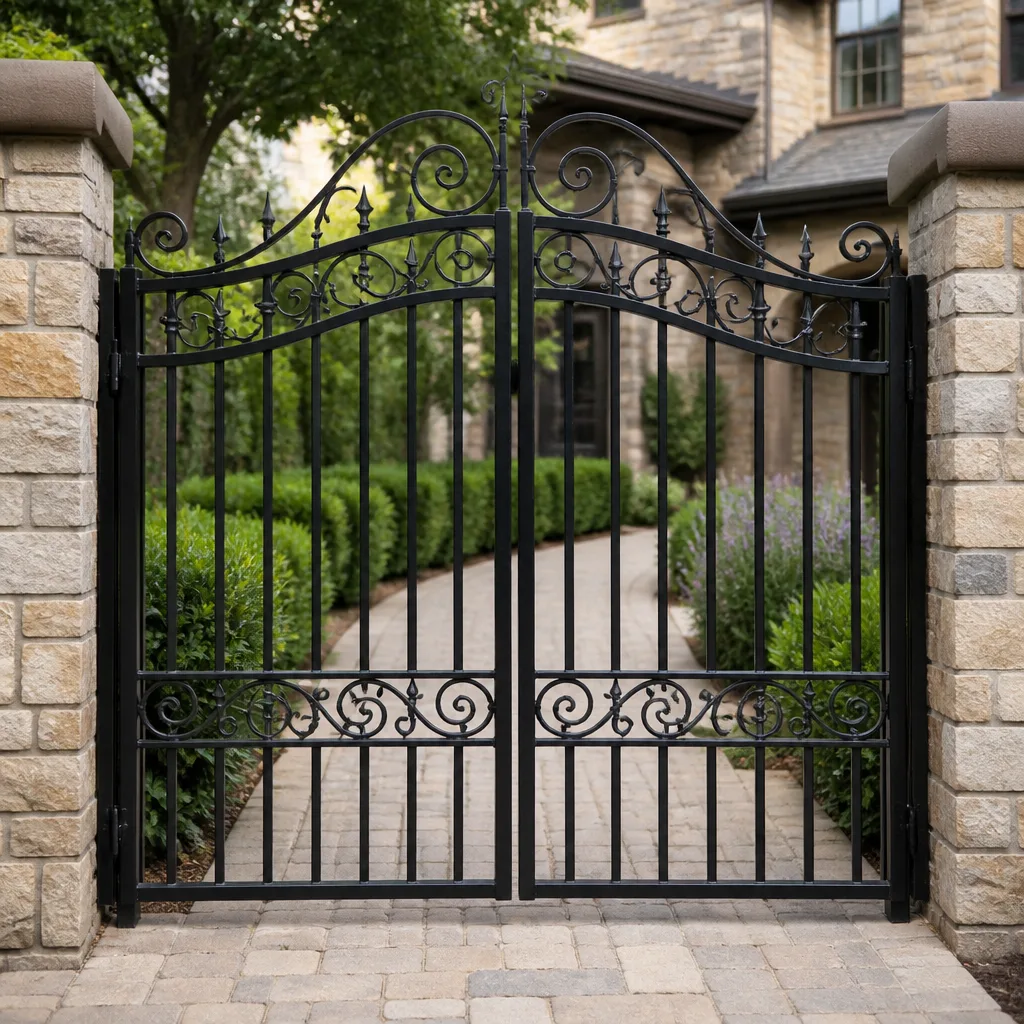 Wrought iron
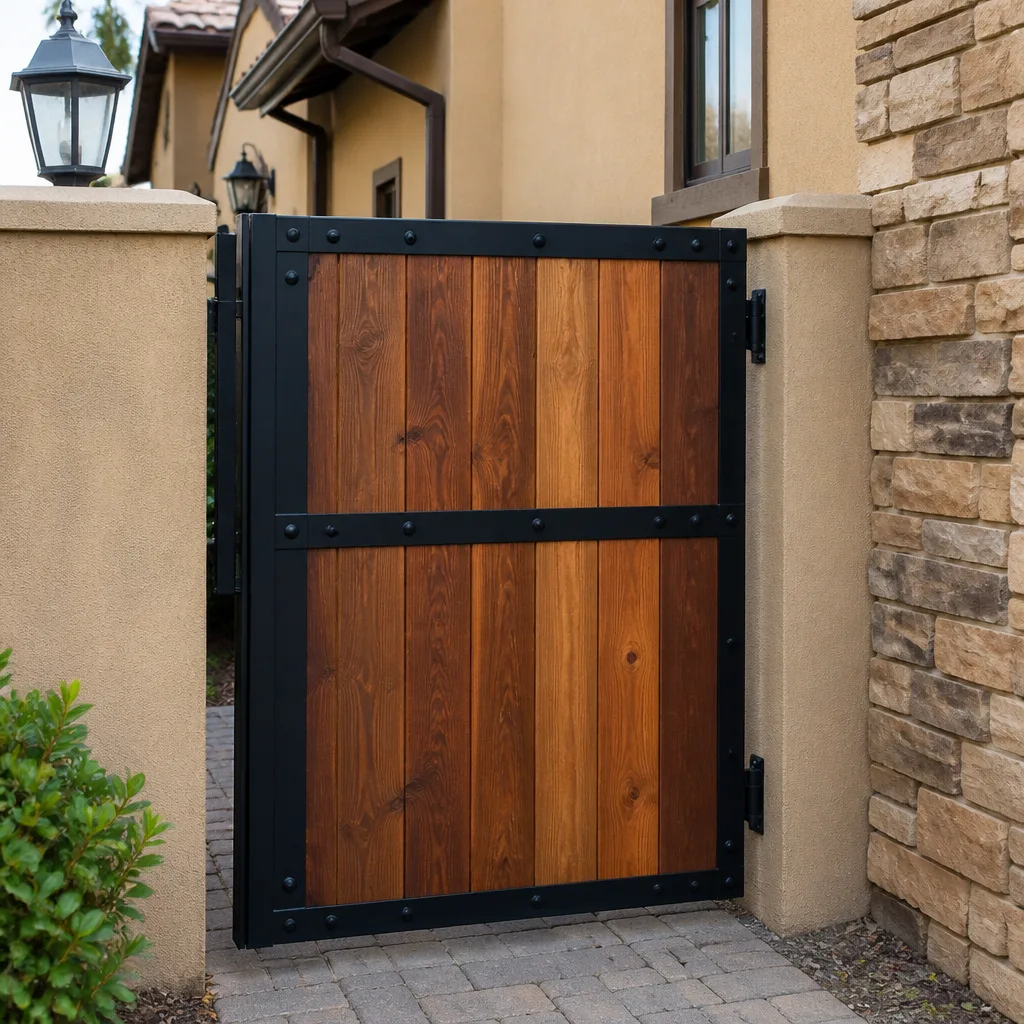 Wood & steel frame
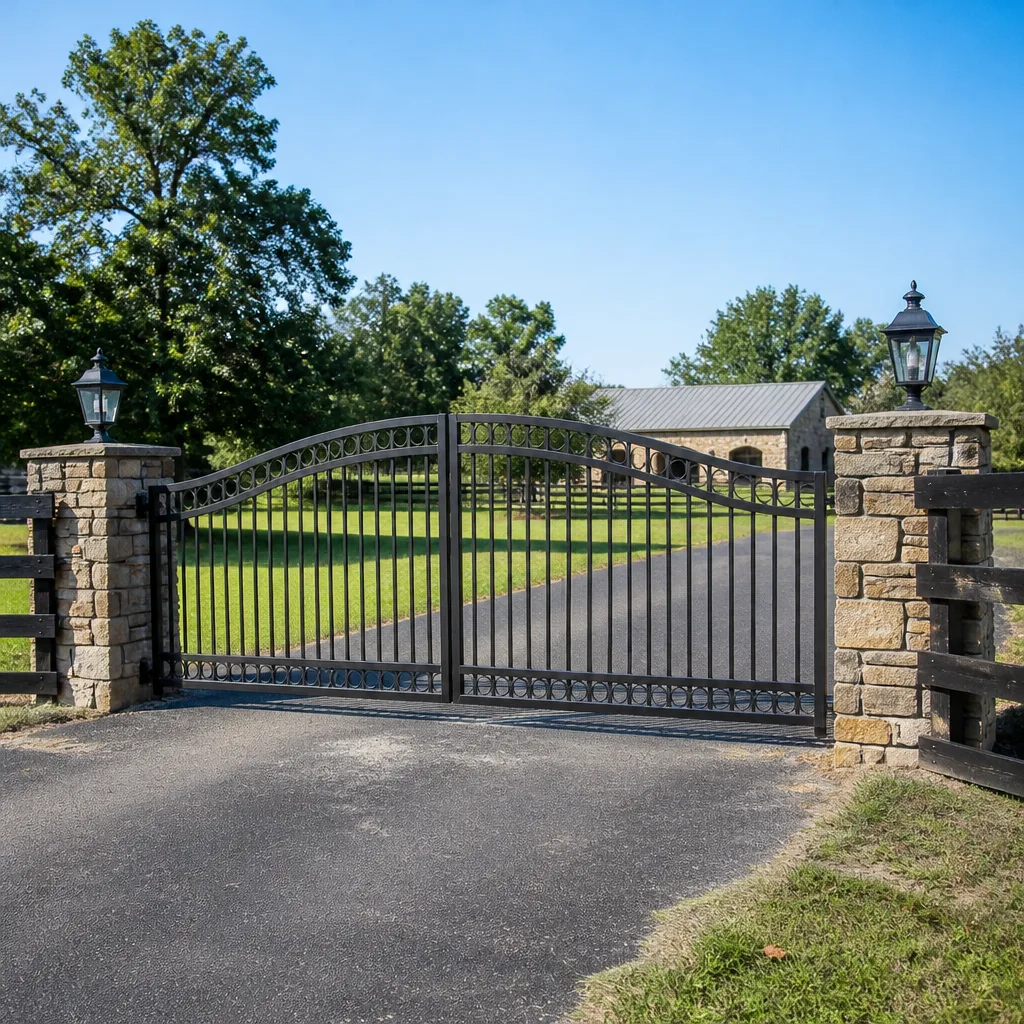 Farm & ranch
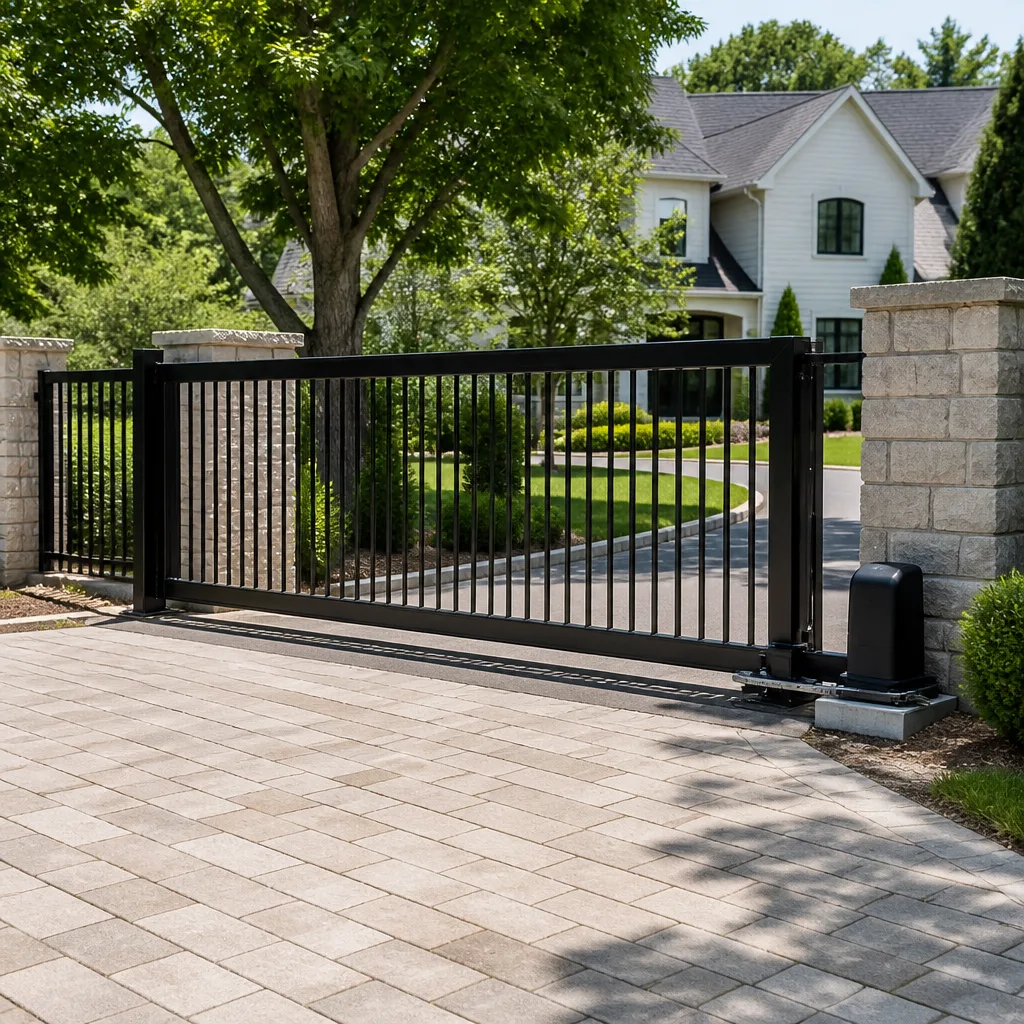 Sliding driveway gates
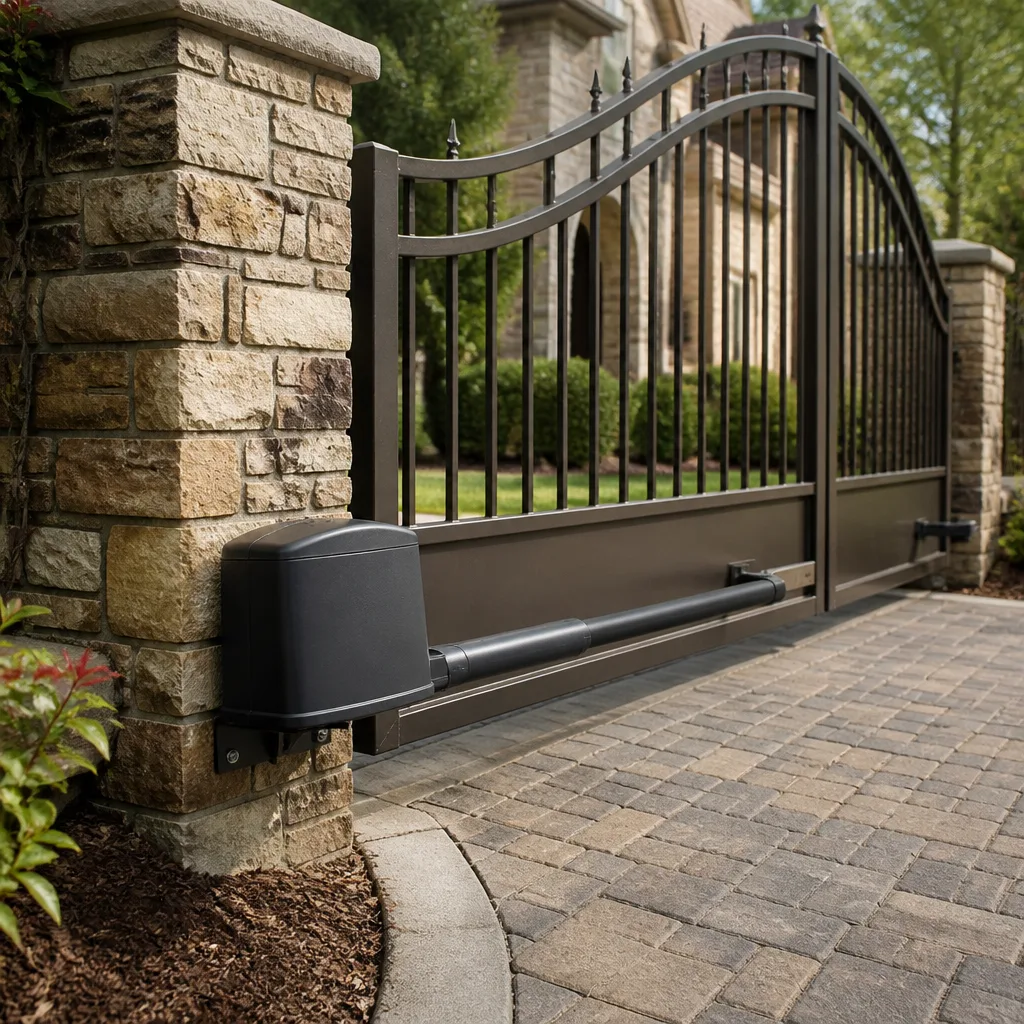 LiftMaster operators
Free on-site gate assessment - hinges, posts, and your LiftMaster or Nice gate operator checked before anything is quoted
The assessment is free and the quote is the invoice.
Get your free estimateChoosing the Right Gate Repair Brand: A Buyer’s Guide for Cape Coral
Most people pick a gate operator the way they pick a TV: compare specs, find the lowest price, click buy. Six months later the gate is stuck open and the nearest technician who knows that brand is a county away, so the “bargain” sits there waiting on a part. The brand question isn’t really a brand question. It’s a service-coverage question, a parts question, and a heat question. In a place as hot and humid as Cape Coral, the operator that performs best isn’t always the one with the biggest national name. This guide walks through how the major gate brands actually behave here, how duty cycle affects a busy entrance, and how to match an operator to gate weight and material so you buy once.
Quick Answer
The right gate brand in Cape Coral is the one a qualified local technician can source parts for and repair quickly, one whose operator is rated for your gate’s weight and daily cycle count, and one whose electronics tolerate prolonged heat and humidity. For most homes a mid-tier residential operator from a widely supported brand beats a premium national name with no local service depth. For high-traffic commercial and HOA entrances, duty cycle and parts availability matter more than the logo on the housing.
Styles & brands we work with
- Wrought iron
- Wood & steel frame
- Farm & ranch
- Sliding driveway gates
- LiftMaster operators
Table of Contents
- The Gate Brand Landscape in Cape Coral
- Parts Availability: The Filter Most Buyers Skip
- Duty Cycle: What the Rating Actually Means
- Why Premium Operators Can Struggle in Florida Heat
- Matching Operator Brand to Gate Weight and Material
- Residential vs. Commercial: Choosing by Application
- How to Evaluate a Gate Brand in Seven Steps
- Common Mistakes to Avoid
- When to Call a Professional
The Gate Brand Landscape in Cape Coral
Walk down a residential street in Cape Coral and you’ll see a mix of swing and slide gates driven by operators from a handful of manufacturers. Some are entry-level units sold online and installed by a handy homeowner. Others are heavy-duty commercial operators doing real work at an HOA entrance or a multi-family property. The brands you’ll most often encounter break into three rough groups.
- Residential-first brands: Operators built for homes and light driveways, sold through retail and online channels. These are common on single-family properties across Cape Coral.
- Mid-range workhorses: Brands like FAAC and BFT that span residential and light commercial, with a strong dealer and parts network. These tend to be the sweet spot for multi-family communities and busy driveways.
- Commercial-duty brands: DoorKing and heavy-duty LiftMaster and Viking units built for barrier arms, slide gates at apartment entrances, and access-controlled commercial entries.
What matters is not which group is “best.” It’s which group your gate belongs to, and whether the brand has real local support. We work on all of these categories, from a Mighty Mule driveway gate to a FAAC or Viking commercial barrier arm, so we’ve seen how each behaves after a few summers. The pattern is consistent: brands with local parts depth get fixed fast. Brands without it sit broken longer, no matter how good the spec sheet looked.
Parts Availability: The Filter Most Buyers Skip
Before you compare torque ratings or remote options, ask one question: if this operator fails, how fast can a replacement motor, control board or limit switch be sourced in Southwest Florida? That single question may save you more downtime than any feature comparison.
Some brands have regional distribution and next-day sourcing for common parts. Others ship from across the country, which can turn a one-day repair into a week of waiting. Here’s how to check before you buy:
- Ask a local gate technician which brands they can get parts for quickly. Their answer tells you more than any brochure.
- Look up whether the manufacturer lists regional parts distributors or authorized dealers in the area.
- Check that consumable parts (control boards, receivers, safety edges, batteries) are stocked domestically, not special-ordered.
- Ask how the brand handles discontinued models. A brand that drops support quickly leaves you with an expensive paperweight.
- Confirm the operator’s control board is a current model, not a legacy version that’s already on its way out.
In our experience, this is where a national “best seller” can lose to a less famous brand with strong regional support. A gate that’s back in operation in a day beats one with better specs that’s stuck for a week.
Duty Cycle: What the Rating Actually Means
Duty cycle is the percentage of time an operator can run without overheating, and it’s the single most overlooked spec. A light residential operator might handle a handful of cycles per hour. A commercial operator can run nearly continuously. Get this wrong and you’ll burn out a motor on a gate that was “totally fine” on paper.
For high-traffic Cape Coral communities and commercial entrances, the math matters. Picture an HOA entrance where hundreds of vehicles pass through during peak hours. Each pass is a cycle. A residential-rated operator installed there will hit its thermal limit repeatedly, and eventually the control board or motor gives out. That’s not a brand failure. It’s a duty-cycle mismatch.
- Low-traffic home driveway: a standard residential operator is usually enough.
- Multi-family or busy HOA entrance: step up to a higher duty-cycle unit, often from a mid-range or commercial brand.
- Commercial entrance or barrier arm: a commercial-duty operator with a clearly stated cycle rating.
Match the duty cycle to real traffic, not to what the property manager hopes traffic will be. When we size a gate for a commercial or multi-family property, we ask about peak vehicle counts and how the gate is used through the day. The operator brand should follow the duty requirement, not the other way around.
Why Premium Operators Can Struggle in Florida Heat
Here’s a counterintuitive fact: a more premium operator isn’t automatically more reliable in Cape Coral. Some high-end units are engineered for climates with wide temperature swings and cooler average highs. In prolonged heat and humidity, their thermal cutoff settings can trigger earlier, or their sealed enclosures can trap heat instead of shedding it.
Mid-tier competitors sometimes do better here, not because they’re built better, but because they’re built differently. Their enclosures, fan behavior and thermal limits are tuned for hotter, more humid service. That’s the kind of detail you only learn from working on these systems in Florida, not from a spec sheet. We’ve seen operators that perform flawlessly on paper that go into thermal shutdown on the hottest afternoons at a Cape Coral entrance.
If you’re evaluating a brand, ask:
- How does the operator’s thermal cutoff behave in prolonged heat?
- Is the enclosure vented or sealed, and does it trap heat?
- Are the control electronics rated for high ambient temperatures?
- Does the manufacturer document performance in hot, humid conditions?
A slightly lower-spec operator with better heat behavior will outlast a premium unit that shuts down every afternoon. In a place like Cape Coral, that difference shows up every summer.
Matching Operator Brand to Gate Weight and Material
The most common brand-selection mistake is choosing the operator before considering the gate. An operator that drives a lightweight aluminum residential gate perfectly will strain on a heavy ornamental iron commercial entry. The brand that works for your neighbor’s gate may be the wrong brand for yours.
Match the operator’s rated capacity to the gate’s actual weight and material, then filter brands by which ones cover that range well:
- Weigh the gate or confirm the leaf weight. Manufacturers publish the maximum leaf weight each operator handles.
- Note the material. Light aluminum and steel behave differently from heavy ornamental iron, especially on slide gates that carry more inertia.
- Check the operator’s torque and cycle rating against that weight. A unit at the top of its capacity will wear faster.
- Confirm the mounting style. Some operators are swing-only or slide-only, so the brand must match your gate type.
- Pick a brand with a model in the right class. Brands that span residential to commercial give you options; brands stuck in one class force a mismatch.
Because we work with nine major brands, spanning DIY residential to heavy-duty commercial, we can usually match the operator to the gate rather than forcing the gate to fit one brand. That flexibility is the practical benefit of choosing a brand-agnostic technician.
Residential vs. Commercial: Choosing by Application
The right brand for a home is often the wrong brand for a commercial entrance, and vice versa. Matching the brand to the application keeps you from overpaying on one end and underbuilding on the other.
- Residential driveway: focus on duty cycle for typical home use, sane parts pricing, and support for access controls like keypads and remote receivers. A brand like Linear or a residential unit from a mid-range maker often fits well.
- Multi-family and HOA entrances: prioritize duty cycle and access control integration. FAAC and BFT are common in this space because they cover the light commercial range and integrate with the access hardware properties run.
- Commercial entrances and barrier arms: value commercial-grade duty cycle, serviceability and access-control compatibility. Viking and DoorKing units are typical here, and the brand choice hinges on parts depth and technician familiarity.
Our whole point is that we cover both ends: residential and commercial within the same company, from a Mighty Mule driveway gate to a FAAC or Viking commercial barrier arm. That means a property manager in Cape Coral doesn’t need one contractor for the home side and another for the commercial side of a mixed-use site.
How to Evaluate a Gate Brand in Seven Steps
Here’s a repeatable process you can run before you buy or replace an operator. It’s the same filter we apply when we size a gate for a property.
- Identify your gate type and weight. Swing or slide, manual or automated, residential or commercial. This narrows the brand options before anything else.
- Estimate real daily cycle counts. Count peak-hour passes, not a low-traffic guess. That sets the duty cycle you need.
- Check local parts availability. Confirm a technician in the Cape Coral area can source the common parts quickly.
- Ask about heat and humidity behavior. Thermal cutoff and enclosure design matter in Florida’s climate.
- Confirm access-control compatibility. Keypads, remote receivers and intercom integration should match the brand’s ecosystem.
- Ask who services it. A brand is only as good as the technician network behind it. If no one local handles it, the spec sheet is irrelevant.
- Get a written estimate. Final price should be set per job by the written estimate before work starts.
If you want a shortcut, call us and describe your gate and how it’s used. We can often point you to a brand and model range that fits before you commit to a purchase.
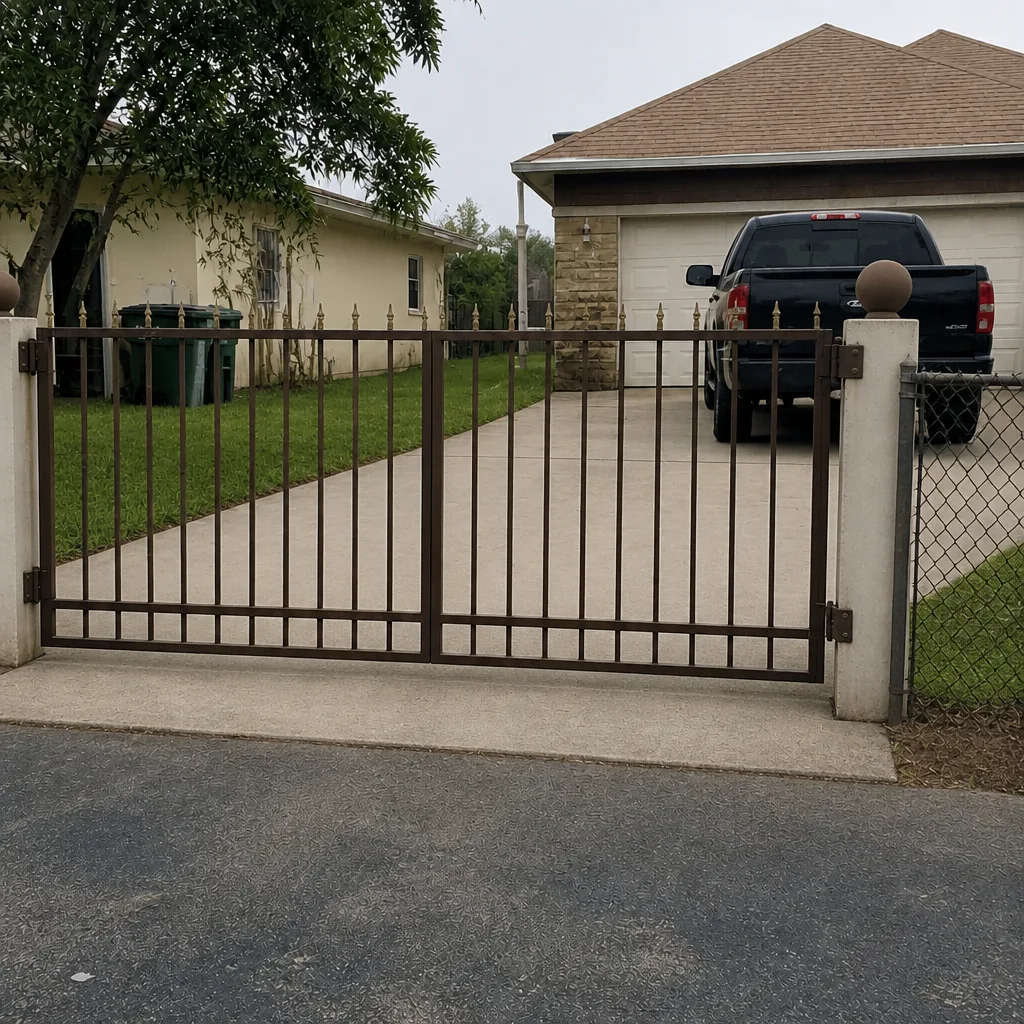
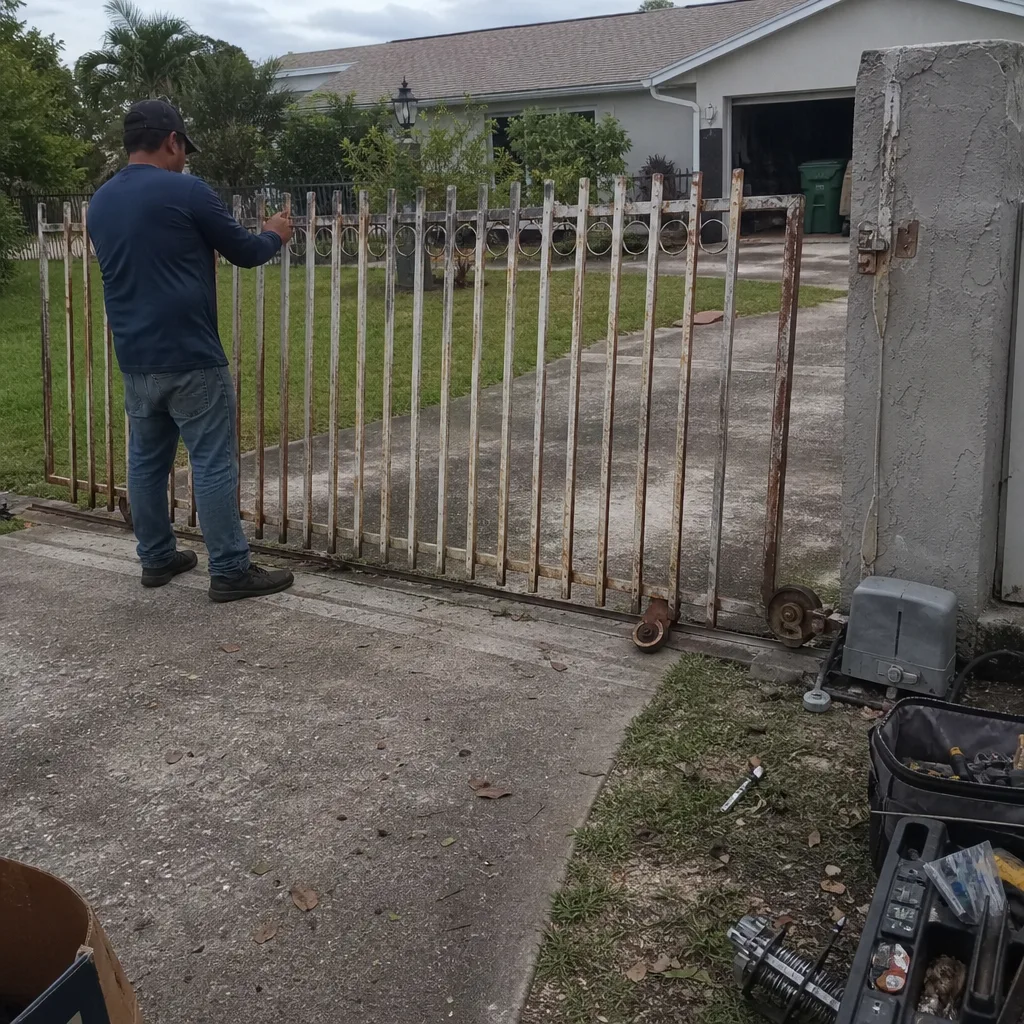
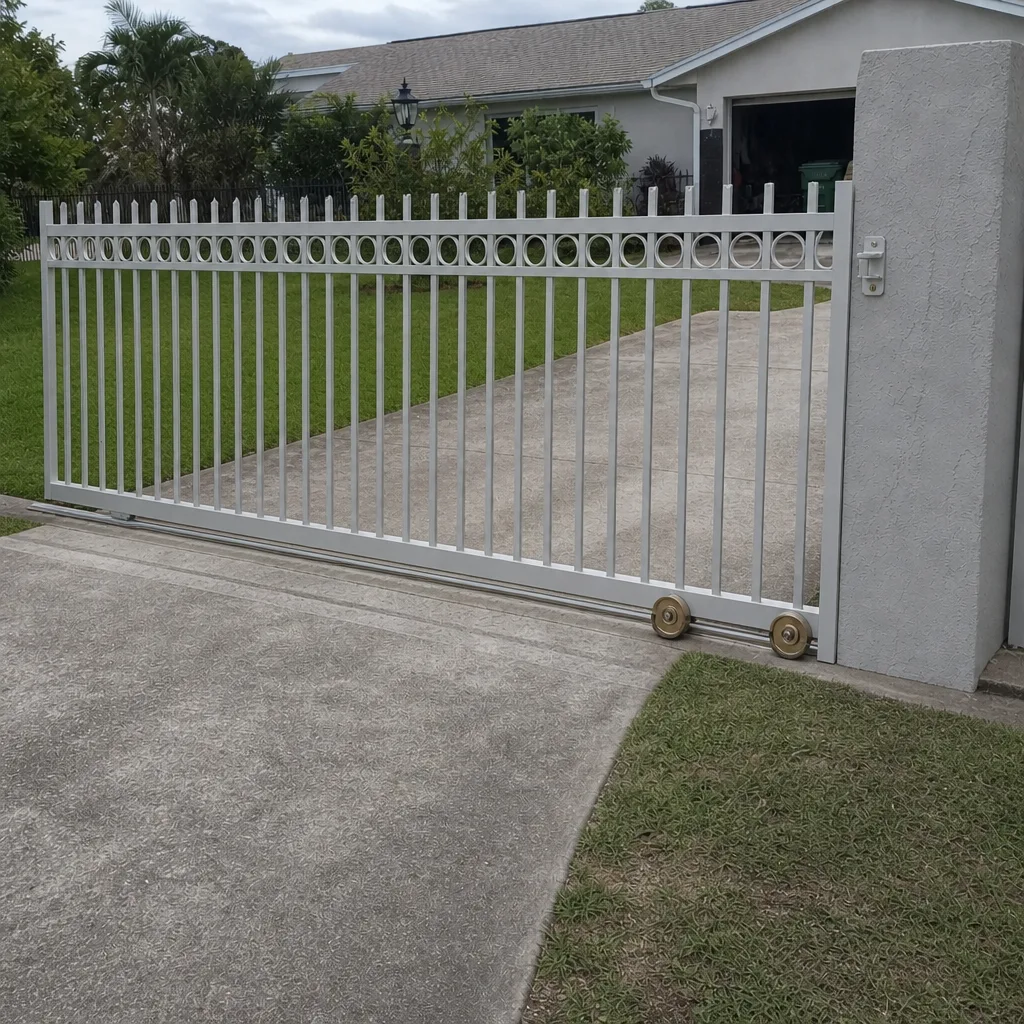
See the difference
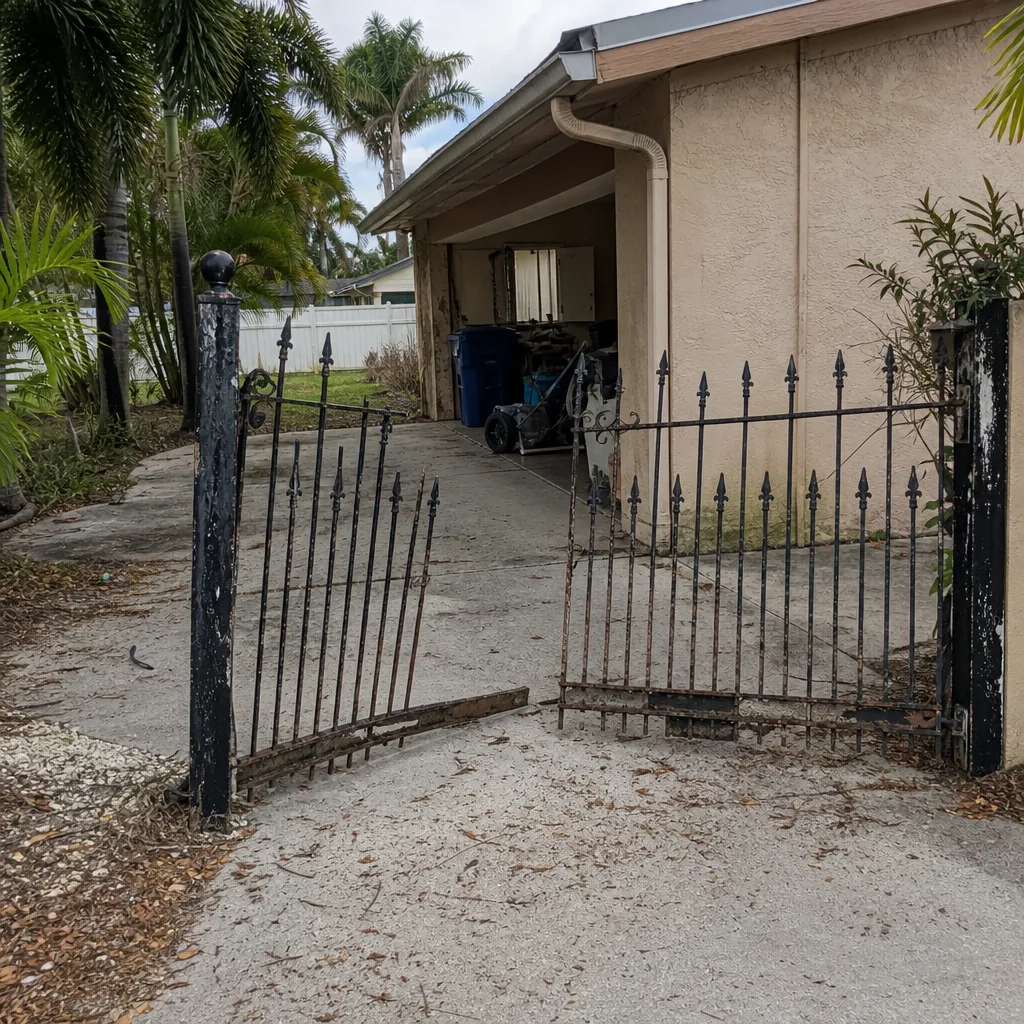 Before
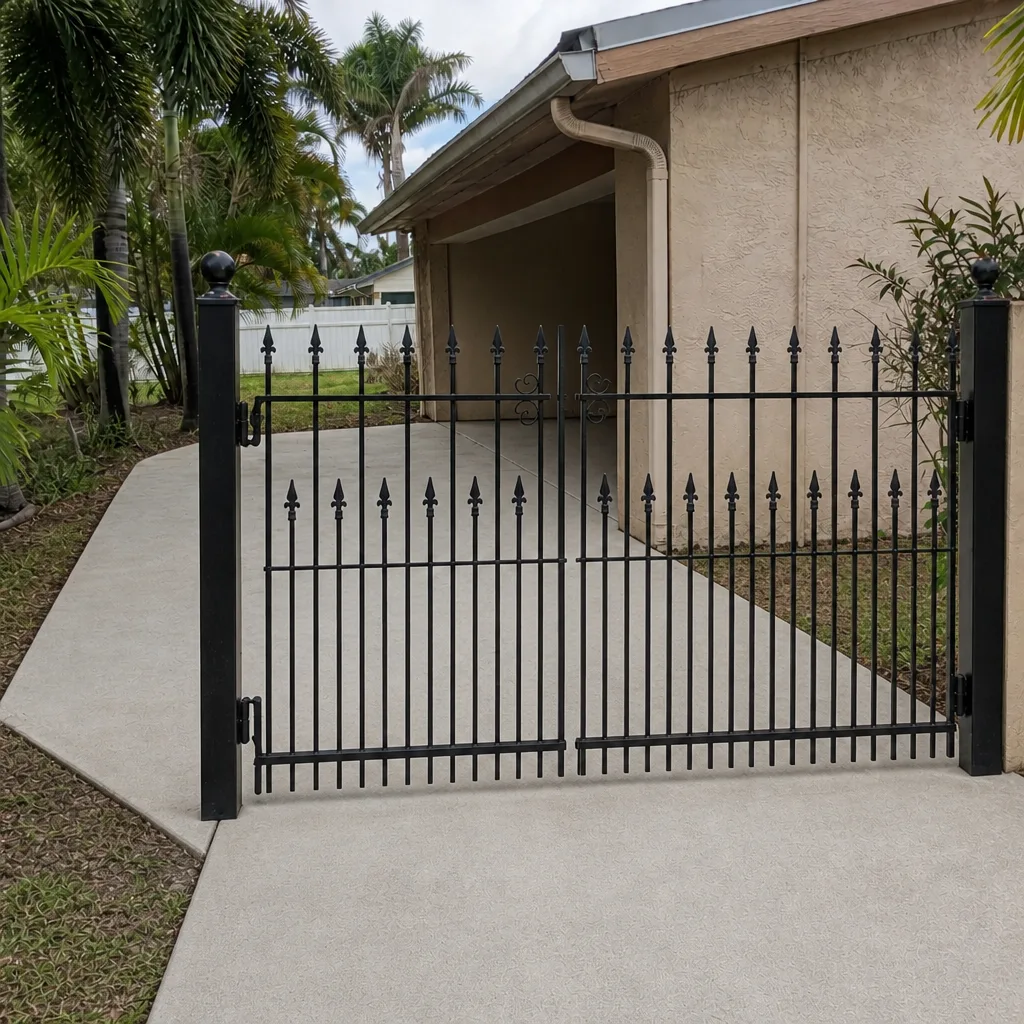 After
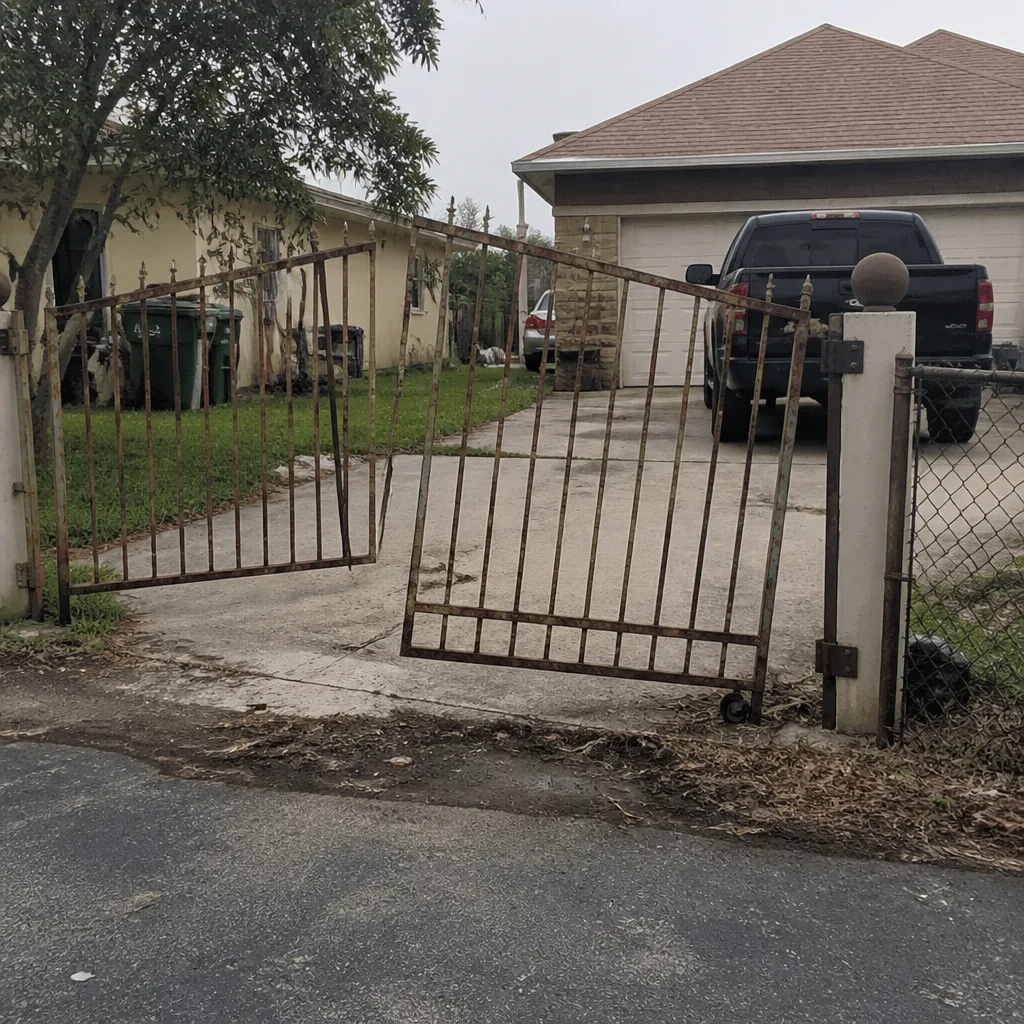 Before
 After
 Before
 After
Common Mistakes to Avoid
- Buying the cheapest operator online. Lowest price often means no local parts support, and a gate stuck for a week. The bargain disappears the first time it breaks.
- Ignoring duty cycle. Installing a residential-rated operator at a high-traffic Cape Coral HOA entrance guarantees premature failure. Match cycles to real traffic.
- Assuming premium means reliable here. Some high-end operators struggle in Florida heat due to thermal cutoff and enclosure design. Heat behavior matters more than the name.
- Matching brand to gate without weighing the gate. A lightweight-gate operator on a heavy ornamental iron entry strains every cycle. Confirm leaf weight first.
- Trusting a general handyman with electrical or circuit-board work. Automated gate electronics, motors and access controls need a technician who works on them specifically, not a generic fix.
- Skipping the access-control check. A brand that won’t integrate with your keypad or intercom creates friction you didn’t plan for.
- Not asking who repairs it locally. A brand is only as good as the service depth behind it. In Cape Coral, that’s the difference between a day and a week of downtime.
When to Call a Professional
Some gate issues are safe to inspect yourself. Others aren’t. If your gate won’t open, won’t close, reverses randomly, or the motor hums without moving, that’s a professional call. If the operator is tripping a breaker, the control board has visible damage, or the access control stopped responding, don’t keep cycling it. Automated gates carry heavy panels that can crush and operators wired to mains power, and a technician who works on that equipment daily is the right person to diagnose it.
We also get called when a property manager in Cape Coral is stuck between two brands and doesn’t know which fits the gate. That’s a good time to ask. Cape Coral Gate Repair offers free estimates in Cape Coral. Call (855) 687-9638 and we’ll help you sort the brand question from the gate question.
Frequently Asked Questions
For most single-family homes, a mid-tier residential operator from a brand with local parts and service support performs best. Linear and similar residential-first brands work well for typical driveway gates. The key is that a qualified local technician can service it quickly and source parts, not that it carries the biggest national name. Call (855) 687-9638 for an exact quote; estimates are free.
The brands with the strongest regional support in Southwest Florida generally include the mid-range workhorses like FAAC and BFT, plus widely distributed residential brands. Some premium and specialty brands require cross-country shipping for parts, which extends downtime. Before you buy, ask a local technician which brands they can get parts for quickly. That one question often decides the choice for you.
Some premium operators are engineered for cooler climates with wide temperature swings, so their thermal cutoff settings and sealed enclosures can trigger earlier in prolonged heat and humidity. Mid-tier competitors sometimes perform better here because their enclosures and electronics are tuned for hot, humid service. It’s a climate-fit issue, not a quality issue. Ask about heat behavior and thermal cutoff before you commit to a brand.
Duty cycle is the percentage of time an operator can run before overheating, and high-traffic entrances rack up cycles fast. A residential-rated operator at a busy HOA entrance will hit its thermal limit repeatedly and fail early. Match the duty cycle to real peak-hour traffic, not to lower-traffic assumptions. For multi-family and commercial entrances, step up to a commercial-duty brand and get a written estimate before work starts.
We work on the nine major brands that cover the vast majority of residential and commercial systems, from LiftMaster, FAAC, BFT and Linear to Viking, Ghost Controls, DoorKing, Elite and Mighty Mule. That includes electric and automated gate repair, not just mechanical work. We can also handle electric gate repair on the motor, control board and access-control components. Call (855) 687-9638 for an exact quote; estimates are free.
Yes. A brand that’s a great fit for a home driveway may be underbuilt for a commercial entrance, and vice versa. Commercial-duty brands like Viking and DoorKing are built for higher duty cycles and access control, while residential units focus on typical home use. Matching the brand to the application keeps you from overpaying on one end and underbuilding on the other. We cover both residential and commercial with the same team.
The Bottom Line
Choosing a gate brand in Cape Coral isn’t about which name is most popular nationally. It’s about parts availability in Southwest Florida, duty cycle matched to real traffic, heat behavior in a hot and humid climate, and how easily a qualified local technician can service it. Premium doesn’t always mean better here, and the cheapest option online is often the most expensive over time. Match the operator to your gate’s weight and material, confirm local parts support, and get the price set per job by a written estimate before work starts. If you want help choosing or repairing, call (855) 687-9638 for a free estimate. We answer 24/7, with fast dispatch from 7am to 7pm, Sunday through Friday.
Written by the team at Cape Coral Gate Repair.