
Last updated November 15, 2026
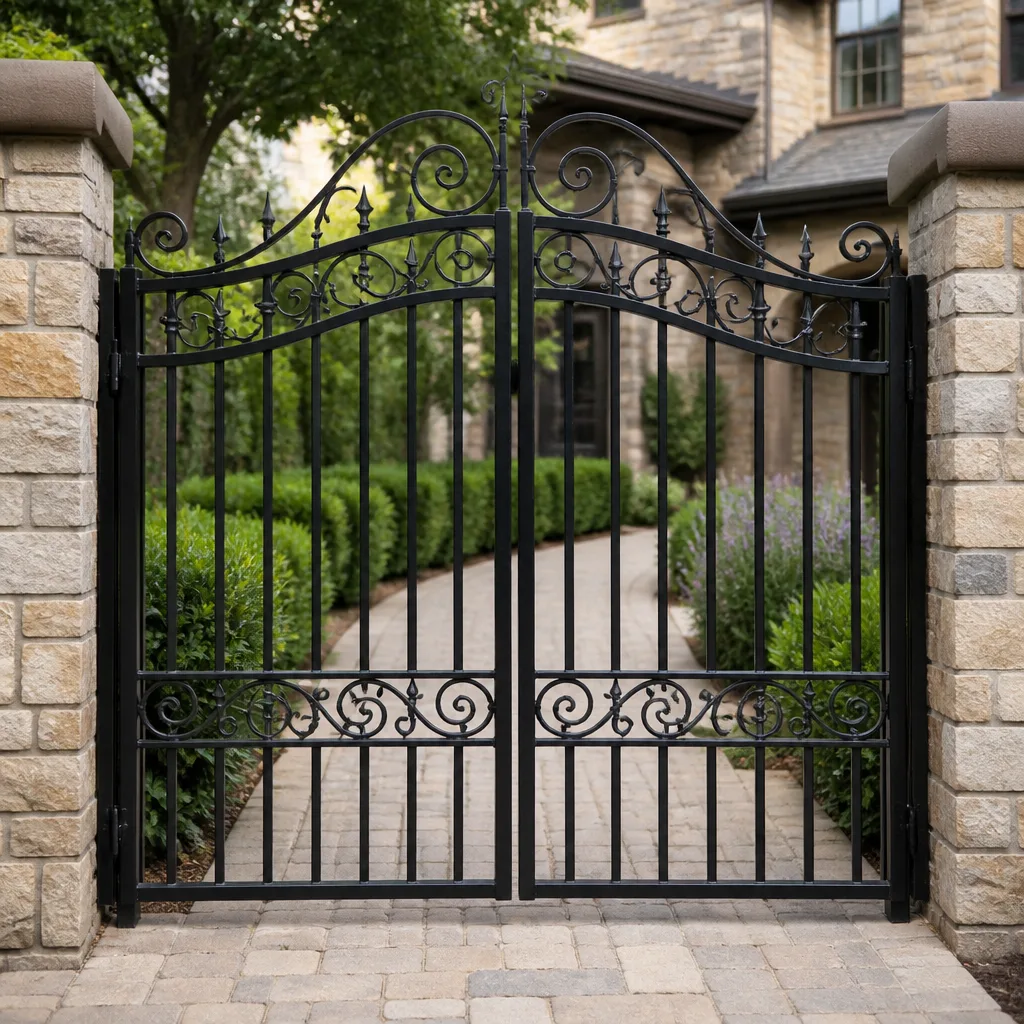 Wrought iron
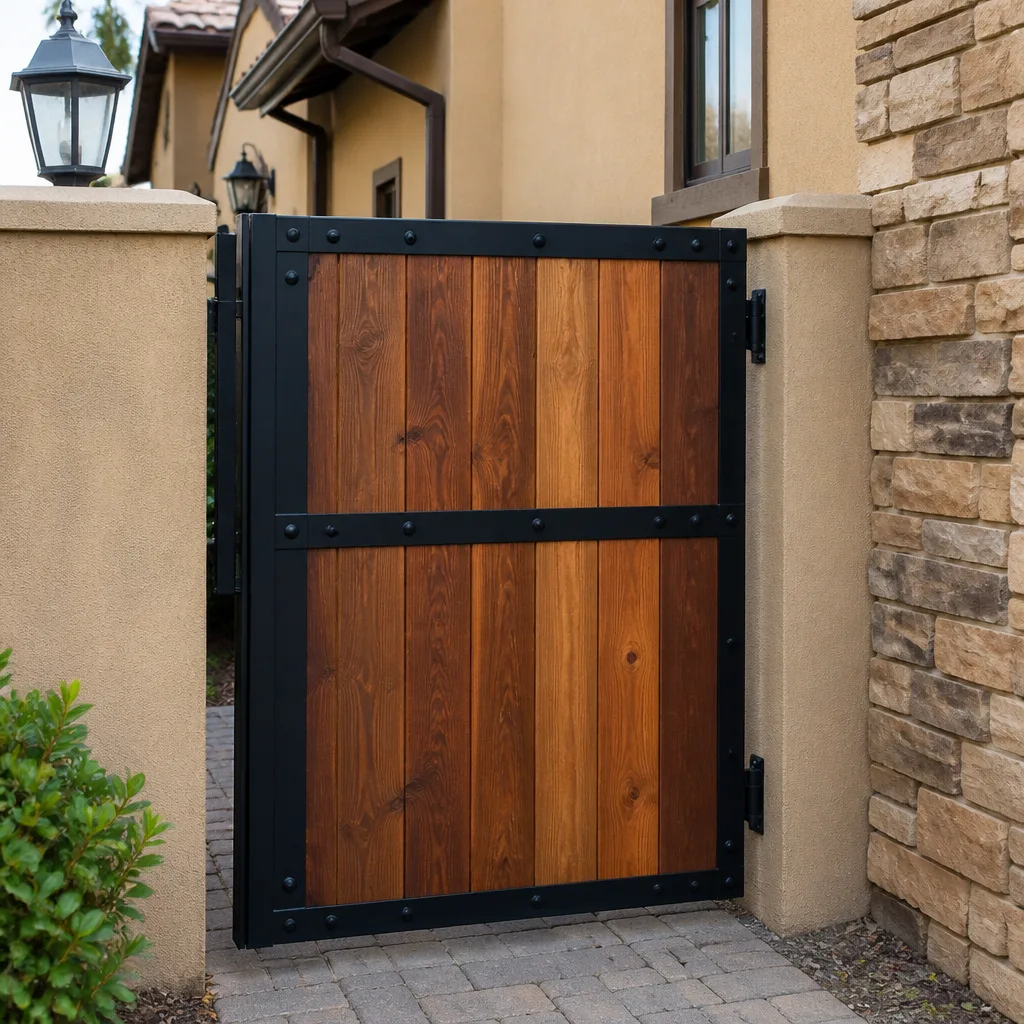 Wood & steel frame
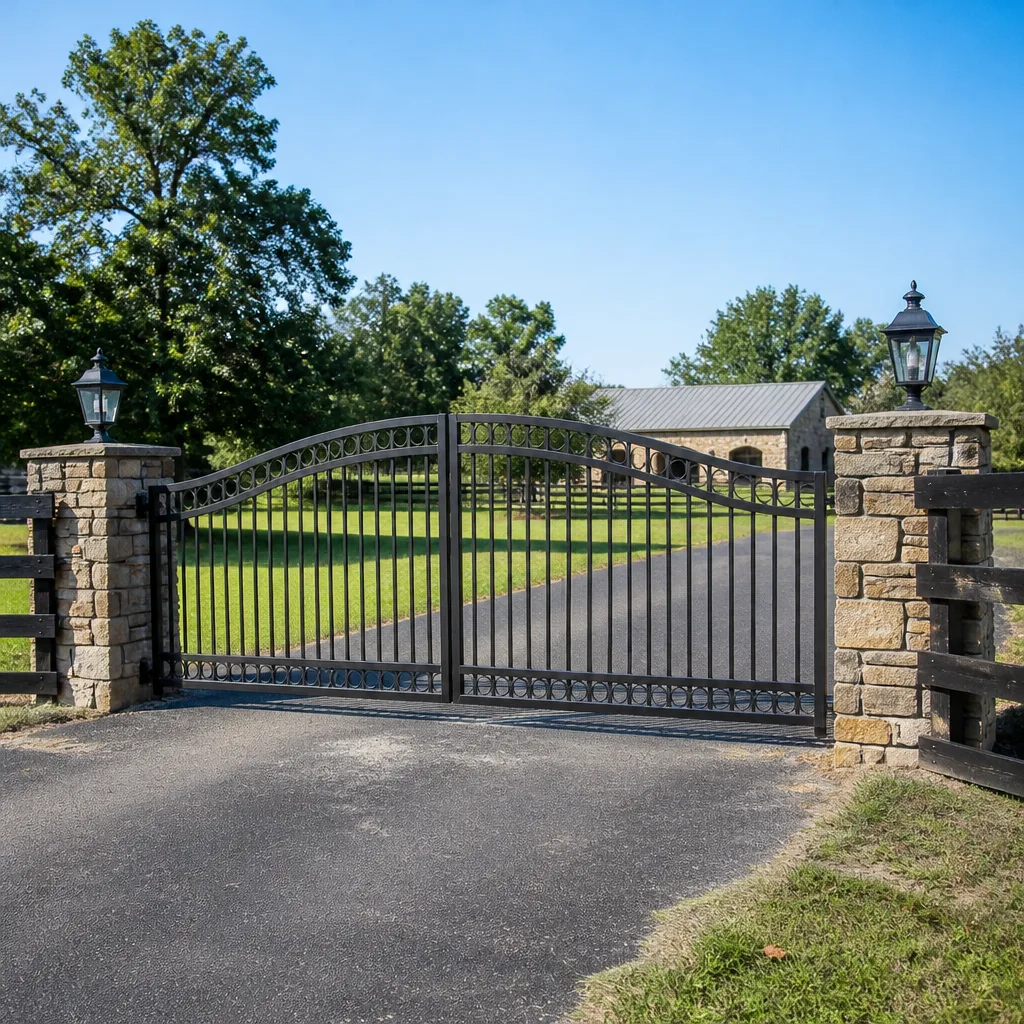 Farm & ranch
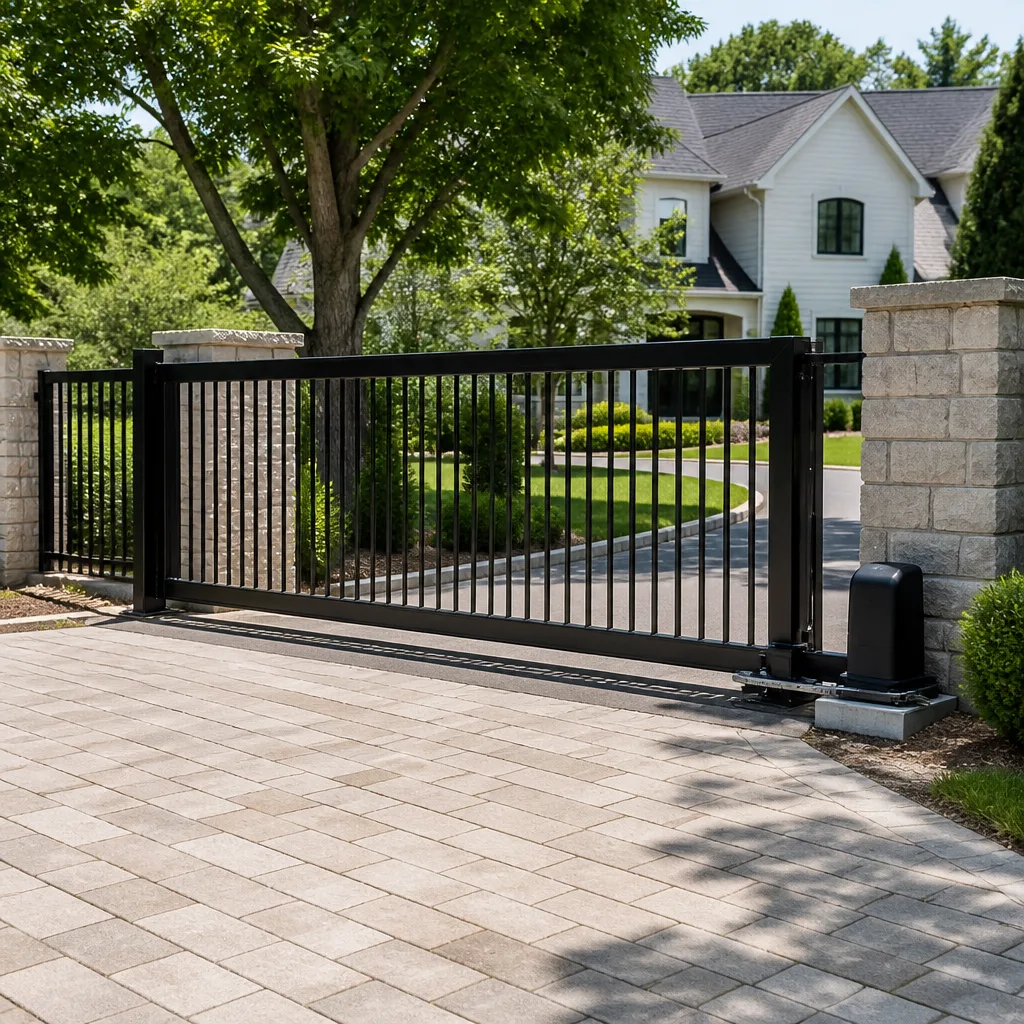 Sliding driveway gates
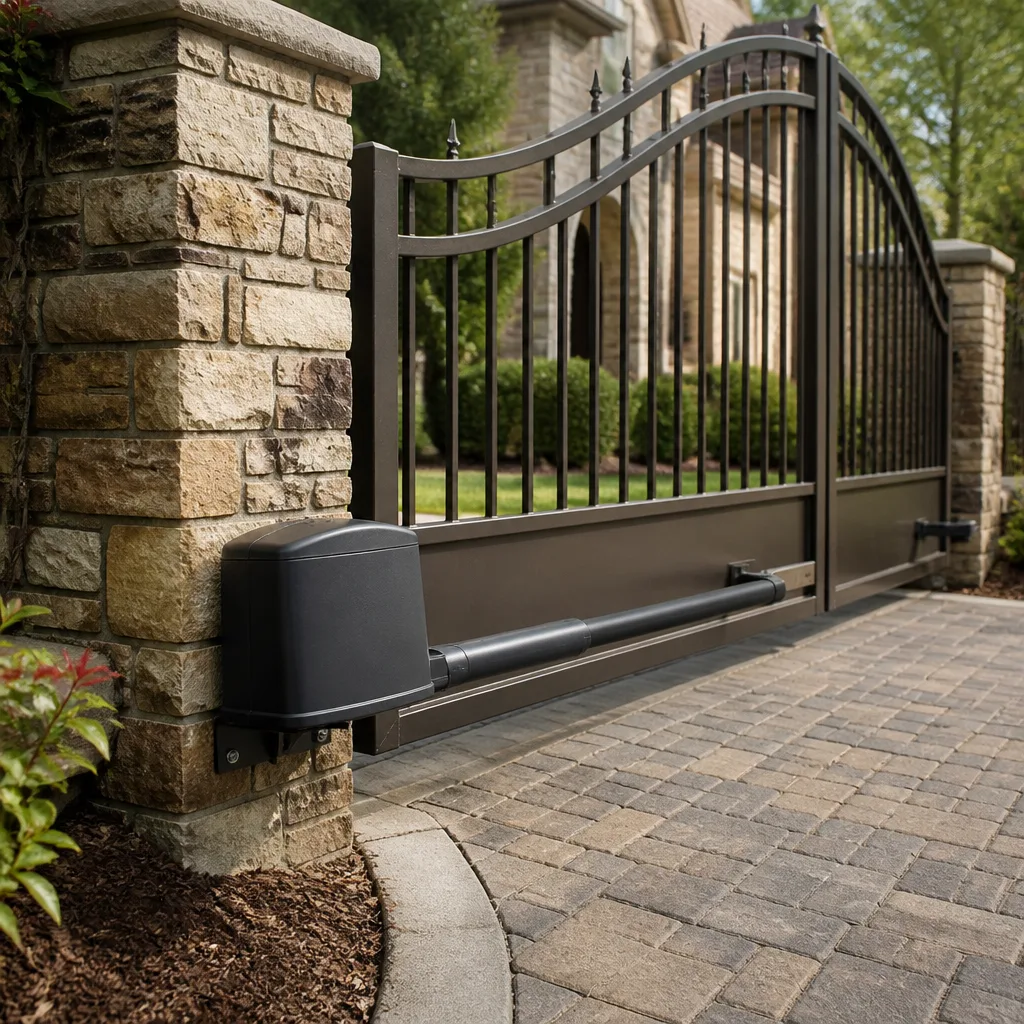 LiftMaster operators
Free on-site gate assessment - hinges, posts, and your LiftMaster or Nice gate operator checked before anything is quoted
The assessment is free and the quote is the invoice.
Get your free estimateThe Complete Guide to Gate Repair in Cape Coral
Most gate repair advice you’ll find online assumes a dry climate, a mild winter, or at least some distance from the water. That advice breaks down hard in Cape Coral, where a gate on a canal lot lives in a completely different environment than one a few blocks inland. The symptom that brings you to this page – a gate that won’t open, reverses midway, or drags along the ground – is rarely the actual problem. It’s usually the result of months of salt-humid air, water intrusion into a control board, or a track that has shifted in the soil. This guide maps the most common gate failures in Cape Coral to the specific local conditions that cause them, so you fix the root cause instead of replacing the same part twice. Whether you have a Mighty Mule on a residential driveway or a heavy commercial slide gate, you’ll find the answer here.
Quick Answer
Gate repair in Cape Coral usually involves one of four failures: a motor or operator that has stopped responding, a control board damaged by water or power surges, an access system that won’t read a remote or code, or mechanical damage to the track, hinges, or rollers. Because Cape Coral’s canal-side humidity, storm season, and sandy soil accelerate and complicate these failures, the right repair depends on diagnosing the specific cause on-site – not just swapping parts. We repair and install both electric and automated gates across residential and commercial properties, and we work on the specific brand you own, from LiftMaster and DoorKing to Mighty Mule.
Styles & brands we work with
- Wrought iron
- Wood & steel frame
- Farm & ranch
- Sliding driveway gates
- LiftMaster operators
Table of Contents
- How Cape Coral’s Waterfront Microclimates Damage Your Gate
- Swing, Slide, and Vertical Pivot: Why the Repair Approach Is Different for Each
- Which Gate Brands Perform Best in Southwest Florida Conditions
- How Hurricane Season and Power Surges Damage Gate Operators
- Repair or Replace? How to Tell Before You Spend Money on Parts
- What Electric Gate Diagnostics Actually Involve
- Preventive Checks That Keep a Gate in Service
- What Gate Repair Costs in Cape Coral
How Cape Coral’s Waterfront Microclimates Damage Your Gate
Cape Coral has more miles of canals than any city in the world, and that geography creates something most repair guides never mention: dramatically different corrosion timelines for gate hardware depending on where your property sits. A gate on a canal lot is exposed to persistent moisture, while a gate on an inland lot a few streets over may last considerably longer between repairs. Understanding your microclimate is the first step to understanding why parts fail.
On canal-front and near-water properties, metal components – hinges, rollers, tracks, and the operator housing – sit in an environment that stays humid around the clock. That means oxidation never gets a full dry-out. Fasteners seize, gate frames pit, and moving parts that should glide start to bind. The binding then puts extra load on the operator, which is exactly when motors and control boards begin to fail. So the corrosion problem on the hardware turns into an electrical problem on the operator. This is the single most common chain of failure we see across Cape Coral.
Inland properties aren’t immune, but the timeline stretches. Gates in the interior neighborhoods of Cape Coral deal more with heat cycling and soil movement than with constant humidity. The practical takeaway is this: two identical gates in Cape Coral can fail months apart because of nothing more than their distance from a canal. If a neighbor’s gate is holding up and yours isn’t, the water may be the difference.
- Canal-front lots: expect faster oxidation on hinges, tracks, and roller hardware; inspect movement quarterly.
- Near-canal inland lots: moderate exposure; watch for binding that loads the motor.
- Interior lots: track soil settlement and heat cycling more than corrosion.
Swing, Slide, and Vertical Pivot: Why the Repair Approach Is Different for Each
A gate is not a gate. The repair approach for a swing gate, a slide gate, and a vertical pivot system shares almost nothing beyond the fact that a motor may be involved. Assuming otherwise is how homeowners end up buying the wrong part or paying for a fix that doesn’t hold. Here’s how the three main residential and commercial systems differ.
Swing gates
Swing gates open on hinges around a fixed post. The mechanical wear concentrates on the hinges, the post footing, and the operator arm or actuator. In Cape Coral’s sandy soil, hinge posts can settle or work loose over time, which throws the geometry off and forces the operator to fight the gate. A swing gate that suddenly stops mid-travel is often a footing or hinge issue disguised as a motor problem. The operator’s limit switches are also exposed to moisture and can drift out of adjustment.
Slide gates
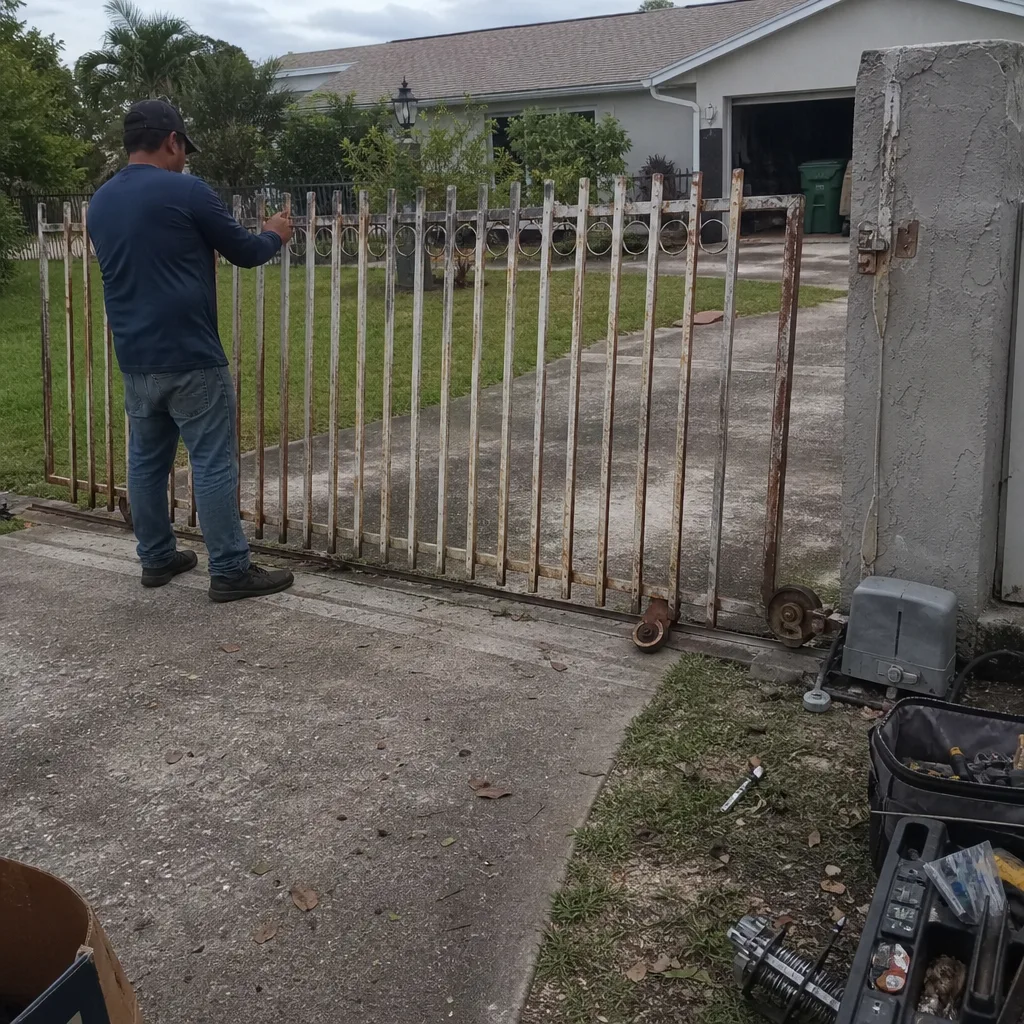
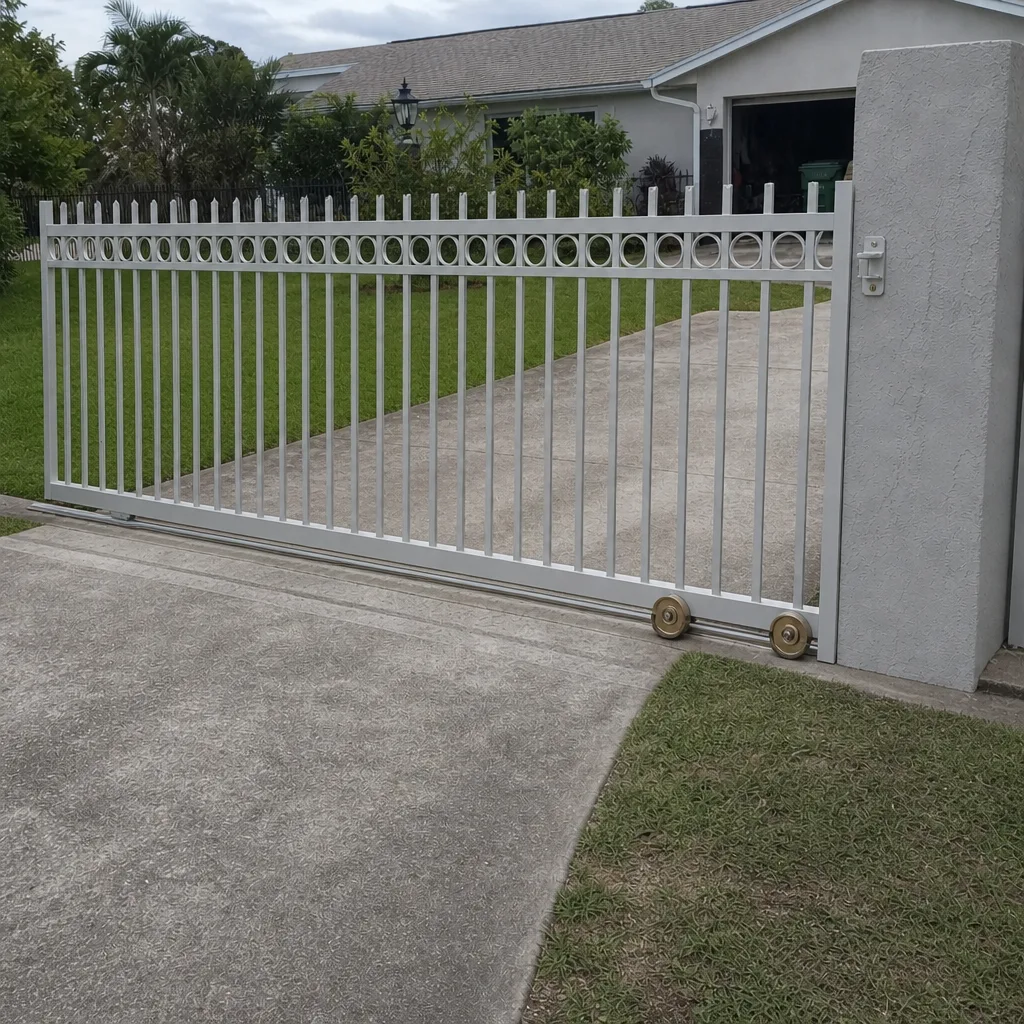
Slide gates run on a track or cantilever rollers. Nearly every slide gate failure starts with the track. A track that has shifted, filled with debris, or worn unevenly creates drag, and the operator either strains or refuses to move. On Cantilever systems there’s no ground track, but the roller carriages and guide rollers still take the load. Slide gate repair is mostly about restoring smooth, level travel – get the track right and the operator usually behaves.
Vertical pivot gates
Vertical pivot gates lift or swing on a vertical axis and are common on commercial entrances. The critical components are the pivot bearing, the counterbalance, and the operator linkage. A pivot gate that binds or drops can be genuinely dangerous because of the weight involved. These systems demand careful adjustment, not guesswork.
The point: know your gate type before you buy anything. Our technicians have up to 10 years of experience across all three.
Which Gate Brands Perform Best in Southwest Florida Conditions
Brand choice matters less than installation and maintenance, but some systems tolerate Cape Coral’s conditions better than others. The honest answer is that any of the major brands will work well when installed correctly and checked regularly – and any of them will fail early when moisture and power problems go unaddressed. Still, there are real differences worth knowing.
We work on nine gate brands: LiftMaster, FAAC, BFT, Linear, Viking, Ghost Controls, DoorKing, Elite, and Mighty Mule. They span the full range from DIY residential openers to heavy-duty commercial systems, and brand-specific diagnostics matter. When we know the system you own, we aren’t guessing at generic fixes – we know how that operator’s control logic, limit settings, and access components behave.
- Residential openers (Mighty Mule, Ghost Controls, LiftMaster): well-suited to driveway swing and slide gates. LiftMaster and Ghost Controls tend to hold up well when paired with a properly sealed control enclosure.
- Commercial and multi-family (FAAC, BFT, Viking, DoorKing): built for heavier duty cycles and constant use. DoorKing access control systems are common at gated communities and commercial entrances.
- Elite and Linear: solid across both residential and light commercial applications.
The most important rule is that a control enclosure that seals well against humidity extends the life of any brand. We see Mighty Mule and DoorKing systems alike fail early when moisture reaches the board. If you’re choosing a new system, pick a brand and model rated for your gate’s weight and duty cycle, then protect the electronics. If you have questions about which gate repair calls for which brand, we’re glad to talk it through.
How Hurricane Season and Power Surges Damage Gate Operators
This is where Cape Coral’s storm season rewrites the standard repair manual. A gate operator’s control board is an electronic brain, and electronic brains do not survive voltage spikes well. When a tropical storm or summer thunderstorm rolls through and the power flickers, spikes, or browns out, the surge travels into the operator and can damage the control board, the access receiver, or the motor’s internal electronics. This is one of the leading causes of “my gate just stopped working” calls in Cape Coral.
The failure often appears right after a storm, but the damage isn’t always instant. A control board can take a hit and still function for a while before it fails completely. That’s why a post-storm, non-responsive gate isn’t automatically a dead motor – it may be a stressed board that needs diagnosis, not replacement.
Beyond surges, storms bring wind-blown debris into tracks, drive rain into operator housings, and shift gate posts in saturated soil. A gate that worked before the storm and drags after it may have a bent track or a settled footing, not an electrical fault at all.
- After any major storm, check whether the gate moves freely by hand (with the operator disengaged and the system powered down safely) before assuming it’s electrical.
- Look at the track and hinges for debris, bending, or misalignment.
- If the gate moves smoothly but the operator won’t respond, the fault is likely in the control board, access receiver, or power path.
- Leave circuit-board and wiring diagnosis to a professional – the voltages involved and the risk of further damage make this a trained-technician job.
A surge-protection device on the operator’s power feed is a smart investment for any Cape Coral gate, and it’s the kind of small step that prevents bigger repair bills down the road.
Repair or Replace? How to Tell Before You Spend Money on Parts
Sometimes a repair is really a replacement in disguise. Spending money on a new motor or control board when the underlying gate is failing means you’ve paid for parts that will fail again. Here’s how to decide before you spend.
A repair usually makes sense when the problem is isolated. If the gate structure, track, and hinges are sound and the failure is confined to a worn part, a motor, or a control board, a targeted fix restores the gate and you move on. A replacement makes more sense when the failure is systemic – when corrosion, structural damage, or an operator that’s being constantly overloaded means you’ll be back in the same spot soon.
Consider replacement if most of the following are true:
- The gate frame or track shows extensive corrosion or bending that can’t be corrected.
- The operator has failed repeatedly or is being asked to move a gate that binds and drags.
- The control board has been damaged more than once, suggesting a power or moisture problem that will recur.
- Parts for the current system are hard to source or no longer supported by the brand.
- The gate’s weight or duty cycle has outgrown the operator that’s installed.
Because we handle both repair and full gate installation, we can give you an honest read on which path is right. When a replacement is the smarter move, we install new systems from the brands you already trust. It’s better to know that before you buy the next part.
What Electric Gate Diagnostics Actually Involve
An electric gate is only as good as its electronics, and the electronics are what generic handymen won’t touch. When a gate stops responding, our job is to trace the failure along the entire chain – from power to board to motor to access component – rather than guess. That’s the difference between a fix that lasts and a part-swap that doesn’t.
A proper diagnostic starts at the power source and works forward. We check the incoming power, the operator’s control board for visible damage or moisture, the limit and safety settings, the motor itself, and the access system – remotes, keypads, receivers, and loop detectors. On commercial entrances, access control adds another layer, and DoorKing systems in particular combine the operator and the access logic, so both need attention.
- Safety check first: confirm the gate is powered down and disengaged before touching the mechanics.
- Mechanical check: verify the gate moves freely and the track, hinges, and rollers are sound.
- Power and board check: inspect the control board for moisture, burn marks, or damage from surges.
- Access check: test remotes, keypads, and receivers to isolate whether the fault is in the access component or the operator.
- Adjust and test: reset limits and safety edges, then run the gate through full cycles to confirm it works.
This is specialist work – the electrical side of gates is genuinely dangerous, and wiring or control-board work should only be handled by a trained technician. If you need electric gate repair in Cape Coral, we bring the brand knowledge to diagnose it accurately instead of guessing.
Preventive Checks That Keep a Gate in Service
The cheapest repair is the one you prevent. A handful of routine checks – especially in Cape Coral’s humid, storm-prone conditions – can catch small problems before they become motor or board failures. This isn’t a maintenance plan and it isn’t a contract; it’s just what to look at, and when to call us for a one-time visit if something looks off.
Because corrosion is the great accelerant here, focus your attention on the moving parts and the electronics enclosure. Check that the operator housing seals properly and that water isn’t pooling near the board. Keep the track clear of debris. A gate that starts to drag is telling you something – don’t ignore it until the motor fails.
- Movement: does the gate travel smoothly through its full cycle without binding or jerking?
- Hardware: check hinges, rollers, and tracks for rust, wear, and debris.
- Electronics: confirm the control board enclosure is sealed and free of moisture.
- Safety edges and sensors: make sure the gate reverses correctly when an obstacle is detected.
- Post-storm: after every storm, run the gate and listen for new sounds or drag.
If any of these checks turns up a problem, a single diagnostic visit can sort it out. We price each visit per job based on what we find, and the estimate is free.
What Gate Repair Costs in Cape Coral
Gate repair pricing depends on the failure, the brand, and the gate type, so there’s no single number – but you can absolutely get a clear estimate before any work begins. The price you agree to is the price you pay, set per job by the written estimate. We never surprise you with a larger invoice after the fact.
What drives the cost up or down:
- The type of failure: a mechanical adjustment is simpler than a control-board or motor replacement.
- The gate type: swing, slide, and vertical pivot systems require different work and parts.
- The brand: parts availability and system complexity vary across the nine brands we service.
- Corrosion and underlying damage: if the failure traces back to seized hardware, restoring the mechanics adds to the job.
- Access components: repairs involving remotes, keypads, receivers, or loop detectors are their own category.
Because pricing is set per job after we look at your gate, the best way to get an accurate number is a free estimate. Call (855) 687-9638 for an exact quote – estimates are free, and the written estimate sets the final price.
Common Mistakes to Avoid
- Swapping the motor before checking the mechanics. A binding gate loads the operator and kills motors. Replace the motor without fixing the drag and you’ll be back with the same problem.
- Ignoring the track. Most slide gate failures start on the track. Cleaning and leveling it costs far less than the operator damage it prevents.
- Assuming a dead gate is a dead board. After a Cape Coral storm, a non-responsive gate is often a power or access issue, not a failed board. Diagnose before you replace.
- Treating corrosion as cosmetic. On canal lots, oxidation on hardware is a warning sign. Left alone, it seizes moving parts and stresses the electronics.
- Buying generic parts for a brand-name system. LiftMaster, FAAC, DoorKing, and the others each have specific components. The wrong part can fail immediately or damage the board.
- Letting a handyman touch the electronics. Wiring, control boards, and access systems are electrical work. General handymen shouldn’t be in there; a gate specialist should be.
- Waiting until storm season to think about surge protection. A simple protection device on the power feed is easiest to add before the next storm, not after a board fails.
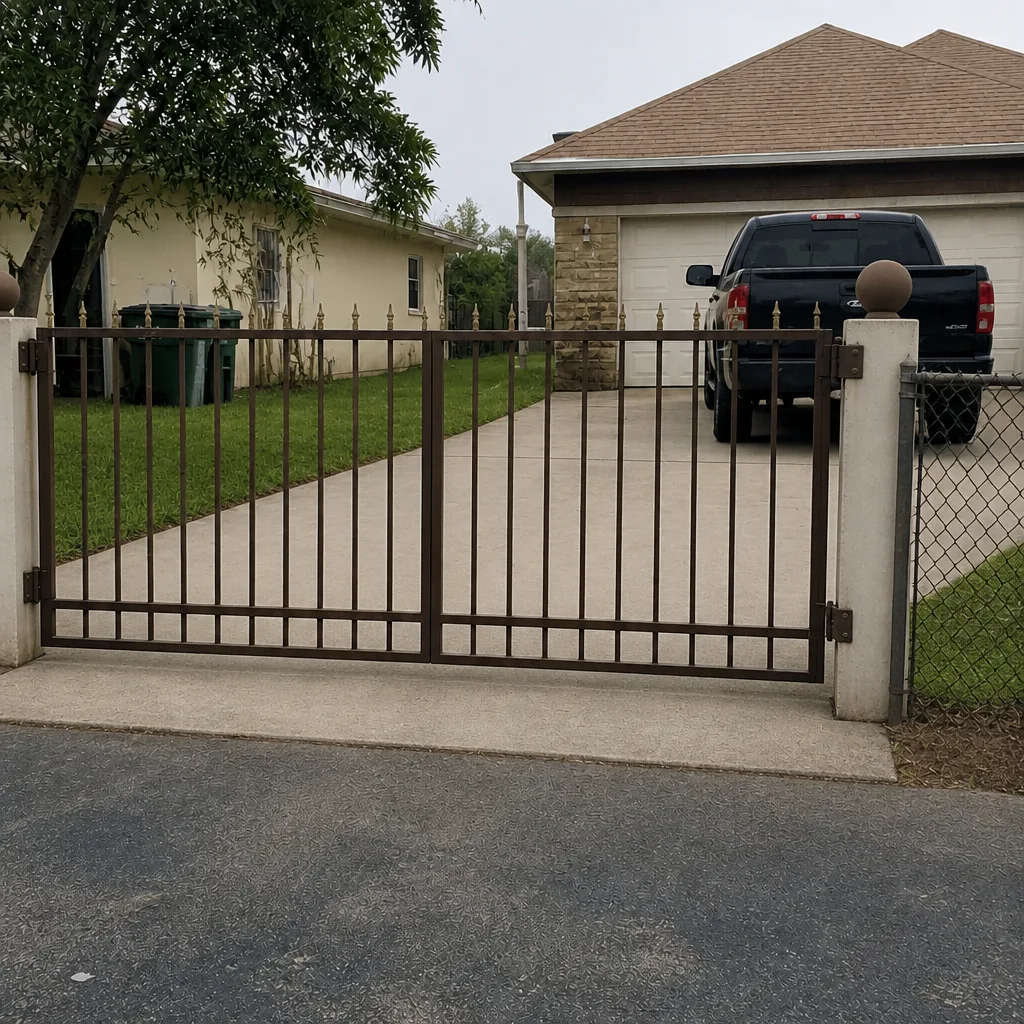
See the difference
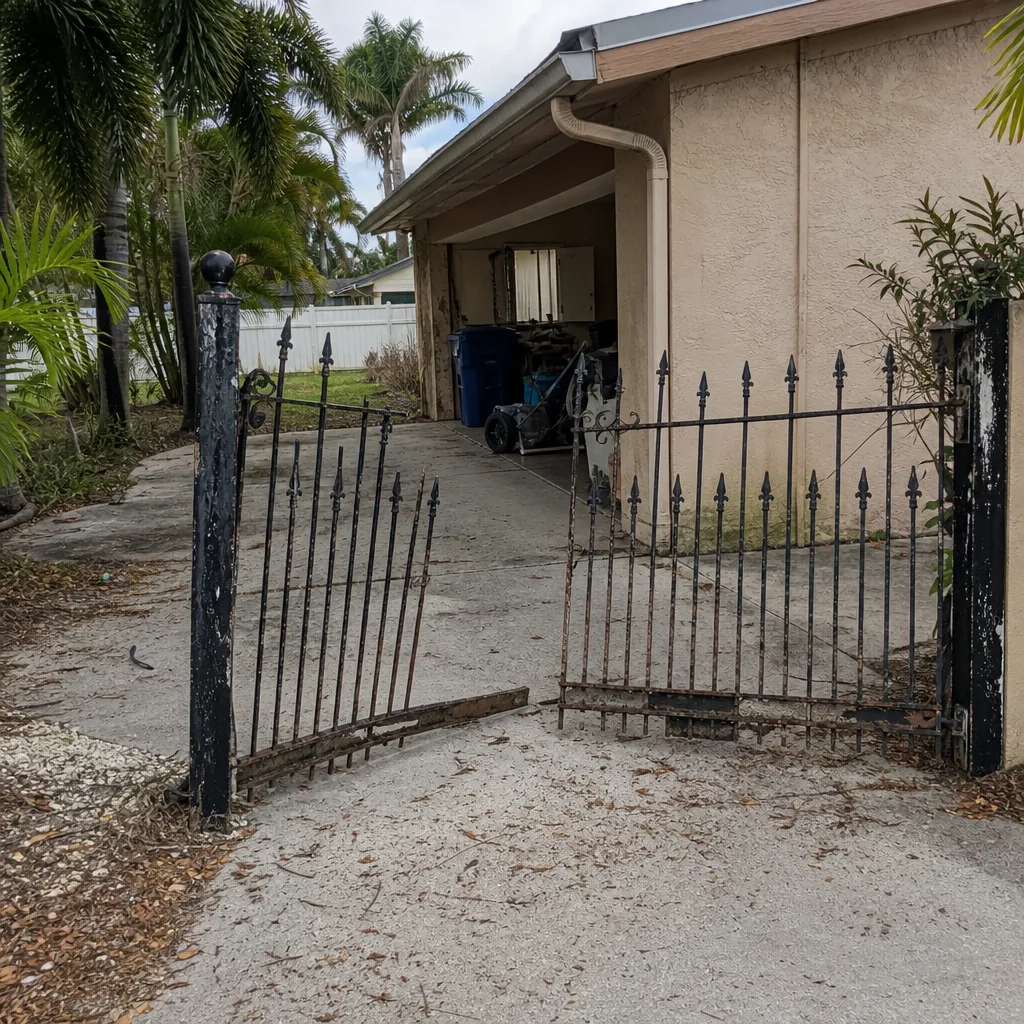 Before
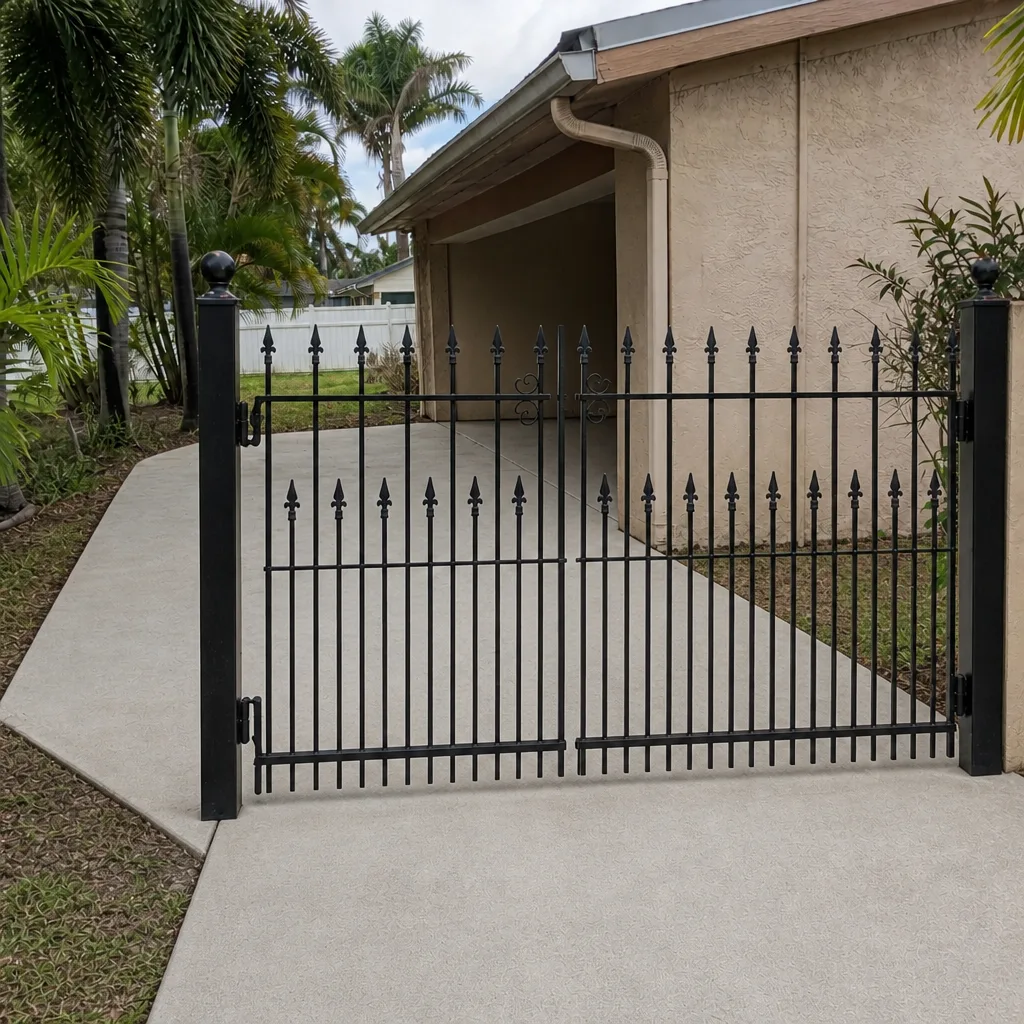 After
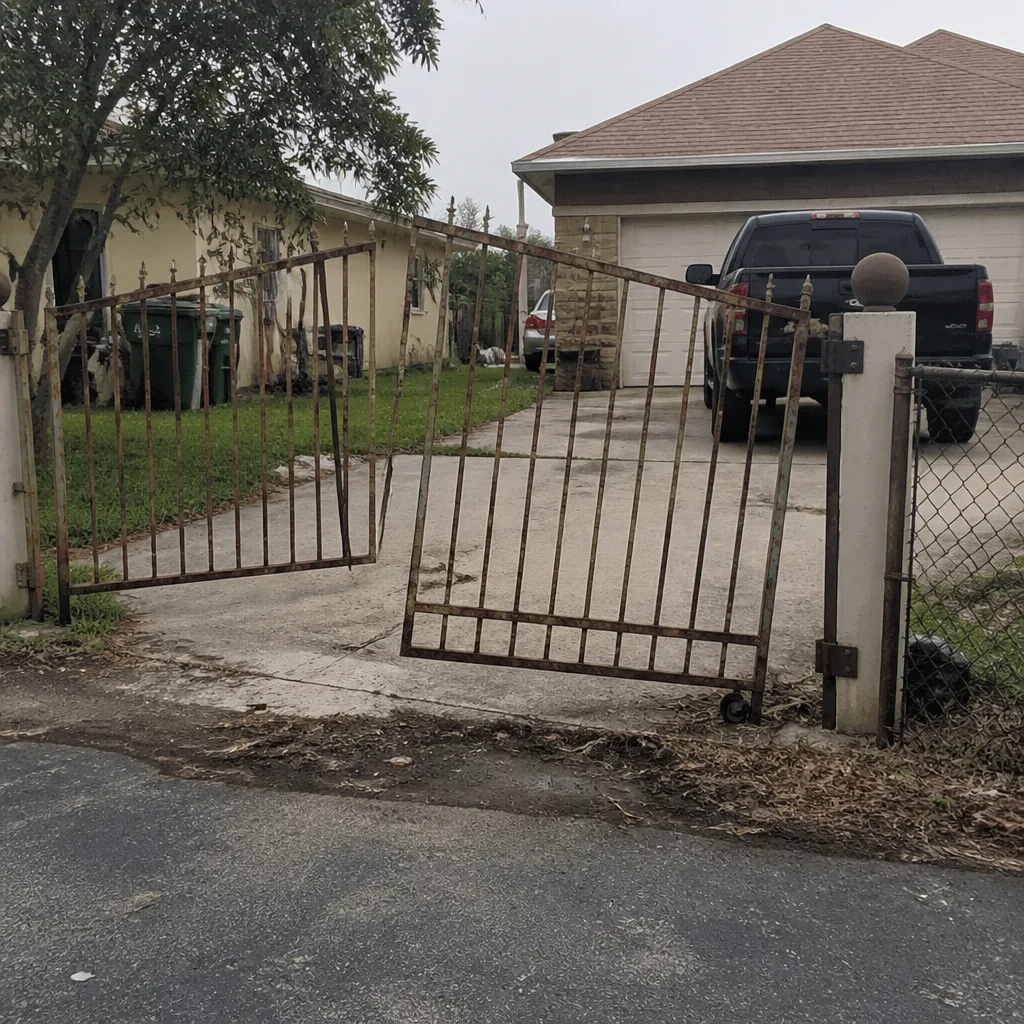 Before
 After
 Before
 After
When to Call a Professional
Call a professional the moment your gate stops responding, reverses unexpectedly, drags along the track, or makes new noises. Electrical faults, control-board problems, and access-system failures demand a trained technician – the wiring and power involved make DIY diagnosis genuinely risky, and the wrong fix can cause further damage. If your gate has suffered structural damage in a storm, if corrosion has reached the track or frame, or if you’ve already replaced a part and the problem returned, that’s a signal to get a proper diagnosis rather than another guess. The same goes for any gate that’s repeatedly failing: the root cause is probably in the mechanics, the power, or the electronics, and it needs a specialist who knows your brand. Cape Coral Gate Repair offers free estimates in Cape Coral – call (855) 687-9638. We answer 24/7. Fast dispatch from 7am to 7pm, Sunday through Friday.
Frequently Asked Questions
Gate repair in Cape Coral is priced per job after a technician looks at the gate, because cost depends on the failure, the type of gate, and the brand. There’s no flat rate, but the estimate is free and the written estimate sets the final price before any work starts. Call (855) 687-9638 for an exact quote – estimates are free.
Yes – electric and automated gate repair is our specialization, not a sideline. That means motors, control boards, and access-control components, the electronics that general handymen won’t touch. We also service manual gate hardware under the same company, so we cover the full system.
We service nine brands: LiftMaster, FAAC, BFT, Linear, Viking, Ghost Controls, DoorKing, Elite, and Mighty Mule. That spans DIY residential openers through heavy-duty commercial systems, and brand-specific diagnostics mean we aren’t guessing at generic fixes. Call (855) 687-9638 if you’re unsure which brand you have – we’ll sort it out.
Mounting evidence points to Cape Coral’s canal-side humidity, storm-season power surges, and sandy soil as the common culprits. Humidity accelerates corrosion that seizes moving parts and overloads the motor; surges damage control boards; saturated soil shifts posts and tracks. The fix is to address the root cause, not just the part that failed. A free estimate can pinpoint what’s actually happening.
We do. We work on everything from a Mighty Mule driveway gate to a commercial barrier arm, across both residential and commercial properties. The same team handles both categories, so property managers and homeowners deal with the same experienced specialists.
We answer, ask about your gate, and get a trained technician out to diagnose it. We answer 24/7; a call outside dispatch hours is booked into the next opening, Sunday through Friday, 7am to 7pm. Call (855) 687-9638 to get your gate back in operation.
The Bottom Line
Gate repair in Cape Coral isn’t a generic job – the canal-heavy geography, humid air, and storm-season surges create failure conditions that landlocked repair advice simply doesn’t address. The key takeaways: know your gate type before you buy a part; watch for corrosion that turns mechanical strain into electrical failure; protect your control board from surges before storm season; and get an honest repair-or-replace read when a failure keeps coming back. You don’t need to diagnose it alone. We work on your brand, repair or replace the full system, and handle both residential and commercial gates. When your gate stops working, Cape Coral Gate Repair is ready to get you back in operation – read more about our gate repair and electric gate repair services, and learn about our work across Cape Coral. Call (855) 687-9638 for a free estimate. We answer 24/7. Fast dispatch from 7am to 7pm, Sunday through Friday.
Written by the team at Cape Coral Gate Repair.